Getting stranded on Mount Koressos because you let your taxi driver leave is the fastest way to ruin your visit. Reaching this sacred site requires strict logistical planning, from negotiating a round-trip fare to knowing exactly what to wear to pass the gatekeepers.
- Entrance fee: 700 TL (2026), charged at the parking gate. Cash only.
- Opening hours: 08:00-18:00 (summer), 08:30-17:00 (November to February). Last entry 30 minutes before closing.
- Dress code: Strict modesty required for both men and women.
- Photography: Strictly forbidden inside the shrine.
- Time needed: 45 minutes to one hour.
What to Expect at the House of the Virgin Mary
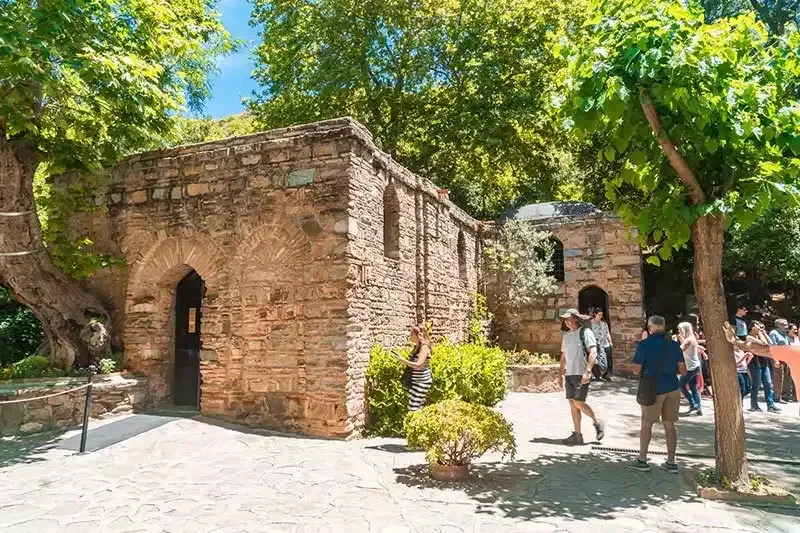
The walk from the main parking lot involves a steep incline. The air up here is surprisingly crisp, the surrounding forest dense and deeply green. Once you reach the small stone building, do not expect a quiet moment of reflection inside.
The interior is extremely compact, and guards keep the line moving at a brisk pace. You get just a few seconds to view the altar before exiting. On busy days, a 40-minute wait in the queue is not unusual. If you want to light a candle, purchase one outside the shrine before entering.
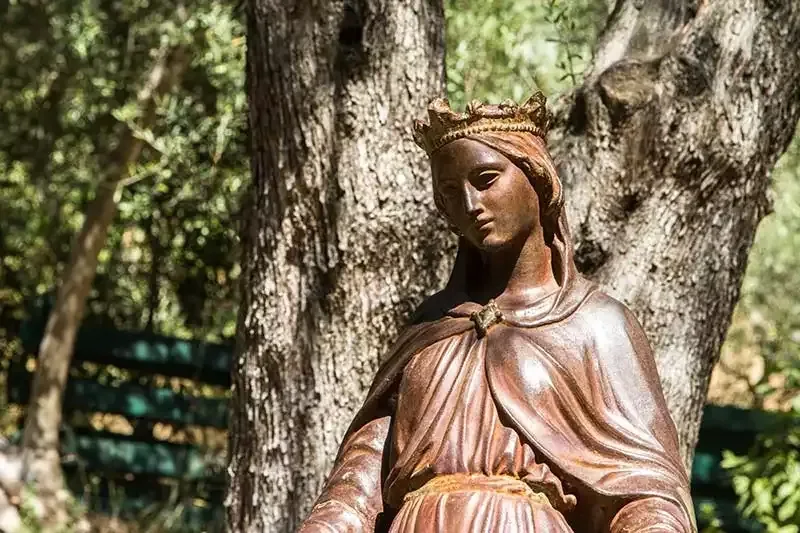
One thing many visitors do not anticipate: the house is largely a restoration. The original foundations from the first century are incorporated into the structure, but most of what you see is a rebuilt chapel. This does not diminish the spiritual significance for most pilgrims, but it is worth knowing before you go.
The Wishing Wall and the Three Healing Fountains
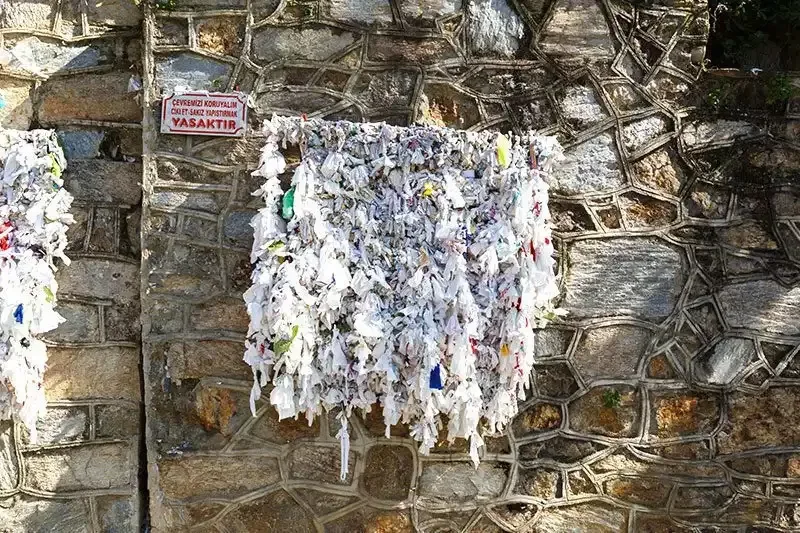
Just below the house sits a stone wall completely covered in tied pieces of paper and cloth. Visitors from all over the world write their prayers and attach them here. Bring your own small piece of paper and a pen to leave your mark.
Right next to this wall are three drinking fountains. Local legend associates each tap with health, wealth, and fertility. Bring an empty bottle to take some of the spring water home with you.
Mass Times and Religious Ceremonies
The site functions as an active chapel. Outdoor mass takes place regularly, often led by resident priests. English-language services are held daily. Arriving right at the opening time on a Sunday is the best way to experience a quieter atmosphere before the large tour groups from Selcuk and Kusadasi arrive. The feast of the Assumption on August 15 draws particularly large crowds and includes a formal outdoor ceremony.
The Strict Dress Code: What to Wear
This is an active place of worship with zero tolerance for inappropriate clothing. Shoulders and knees must be fully covered. Men cannot wear gym shorts or sleeveless tops. Women need to avoid low-cut shirts, short skirts, and leggings. If your outfit fails the check, staff will hand you a covering, but arriving properly dressed saves time and hassle.
How to Get to the House of the Virgin Mary
Public transportation does not run up the mountain. Walking from the town center is a grueling two-hour uphill trek along a busy road with charter buses.
From Selcuk
Hiring a taxi from the town center or the train station is your only viable option. Always negotiate a round-trip fare that includes at least 45 minutes of waiting time. Paying for a one-way drop-off leaves you stranded, as finding an empty taxi for the return trip is nearly impossible. Expect to pay around 250-350 TL for a return trip with waiting, though rates vary by season and negotiation.
From Kusadasi Cruise Port
Booking an organized port tour is the safest strategy here. These tours handle the tricky mountain logistics and usually combine the trip with other historical landmarks in the valley.
Entrance Fee and Practical Details
The 700 TL (2026) admission fee is collected at the parking gate by the local municipality. Cash is the only accepted payment method at the entrance. Card machines are not available at the gate, so withdraw Turkish lira before you head up the mountain. Inside the sanctuary grounds, entry to the house itself does not require a separate ticket, though donations for candles and maintenance are welcomed throughout.
The Discovery: The Story of Anne Catherine Emmerich
The origin of this site relies entirely on the visions of a German nun who never set foot in Turkey. Anne Catherine Emmerich described the exact location and layout of the house in the late nineteenth century.
Years later, Lazarist priests followed her documented visions and discovered the ruined foundations on the mountain. Today, the restored structure rests on those original stones, attracting popes and pilgrims alike. Three popes have visited and blessed the site, giving it a level of Vatican recognition that sets it apart from other claimed Marian sites worldwide.