Getting hit with hidden audio guide fees at the ticket booth and hiking entirely uphill in the scorching sun ruin countless visits to this site. Starting your journey at the correct gate and knowing exactly what you are paying for transforms a grueling trek into an effortless walk through history.
- Entrance Fee: 30 Euros (Covers ruins, travertines, and the museum)
- Cleopatra Antique Pool: 13 Euros (Optional extra swim fee)
- Buggy Cart Rental: 10 Euros per person per hour
- Best Entry Point: North Gate (Ensures a downhill walk)
- Must-Have Gear: Thick socks, a backpack for your shoes, sunscreen, large water bottles
Why is Hierapolis Famous? (The Ancient Healing Center)
This expansive settlement served as the premier thermal healing center of the Greco-Roman world. Wealthy citizens from all over the empire traveled here seeking cures in the mineral-rich hot springs. Many stayed permanently, explaining the massive scale of the nearby necropolis. The landscape presents stark and beautiful contrasts. White calcium terraces stretch across the valley edge. Colossal ancient columns rest beneath the shallow thermal waters.
Navigating the Site: North Gate vs. South Gate Strategy
The terrain spans over two kilometers of exposed, hilly landscape. Arriving at the South Gate forces you to climb steep inclines alongside heavy bus traffic. Enter through the North Gate instead. This route lets you gently descend through the ancient cemetery, pass the Frontinus Gate, and reach the main attractions without burning out. The mid-day heat becomes an absolute oven during the summer months. Arriving right at 08:00 AM or after 04:00 PM offers the perfect golden hour lighting and a much cooler breeze. If mobility is an issue, rent an electric buggy cart for 10 Euros per person to easily cover the vast distances.
Top Things to See in Hierapolis
The sheer size of the complex requires proper pacing. Focus your energy on these specific spots to get the most out of your visit.
The Grand Roman Theater
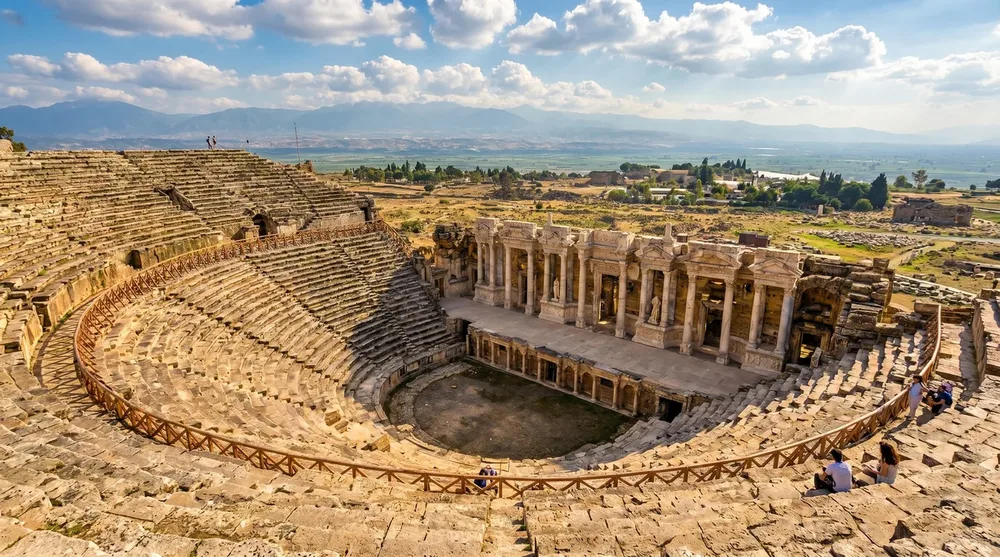
Make your way up the slope to witness one of the best-preserved theaters in Asia Minor. The structure accommodated up to 12,000 spectators. The restoration work here is phenomenal. Stand at the very top row and speak in a normal voice. The acoustic engineering remains so flawless that your words will clearly reach the orchestra pit below.
Cleopatra Antique Pool (Is Swimming Worth It?)
Swimming among fallen, two-thousand-year-old marble columns feels completely surreal. The mineral waters stay comfortably warm all year round. However, the space gets extremely crowded by noon, and the 13 Euros entry fee feels steep for a single dip. Arrive early to experience the magic before the large tour groups descend. Be highly cautious while walking in the water. The submerged ancient stones get dangerously slippery.

The Ploutonion (Gate to the Underworld)
Ancient priests used this exact cave to demonstrate their divine power to the masses. Toxic carbon dioxide gas still leaks from the underground thermal activity here. Animals brought near the entrance would instantly perish. This convinced the ancient crowds that Pluto, the god of the underworld, was actively breathing out death.
The Northern Necropolis (City of the Dead)
Over 1,200 tombs dot the landscape here, making it one of the largest ancient cemeteries in Turkey. You will spot everything from simple graves to grand family sarcophagi. The sheer scale of this area proves how many people flocked to these thermal springs hoping for a miraculous cure, only to spend their final days in the city.
The Hierapolis Archaeology Museum
Housed inside a well-preserved set of Roman baths, the museum displays marble statues, sarcophagi, and carved friezes recovered from the site. Allow 20 to 30 minutes here. It is not air-conditioned, so visiting during the cooler morning hours makes the experience far more comfortable.
Nearby Sites Worth Combining
Laodicea sits just 15 minutes from Hierapolis and is a solid add-on for anyone with a car. The ancient city of Aphrodisias, roughly one hour away, is one of the best-preserved Roman cities in Turkey and well worth the drive if you have an extra half-day.
The Audio Guide Trap and Essential Survival Tips
Do not let the official ticket desk overcharge you. Staff often hand you wireless headphones without asking and quietly bump your 30 Euros ticket up to 40 Euros. Always check your receipt and demand a refund if they add a Bluetooth headset you did not request. Relying on your own research saves both money and a massive headache.
Walking on the famous white travertine terraces requires taking off your shoes entirely to protect the natural wonder. The calcium surface feels incredibly rough and sharp on bare feet. Pack a thick pair of socks to protect your soles. Bring a lightweight backpack to carry your shoes while exploring the water channels. Food and drinks sold near the antique pool carry heavy tourist markups, so bringing your own water bottle is absolutely vital.
Important note on water levels: Many travertine terraces are maintained rather than naturally flowing due to conservation management. Only specific sections are kept filled for visitors. This is normal, not a disappointment.
Hierapolis vs. Ephesus: Which Ancient City is Better?
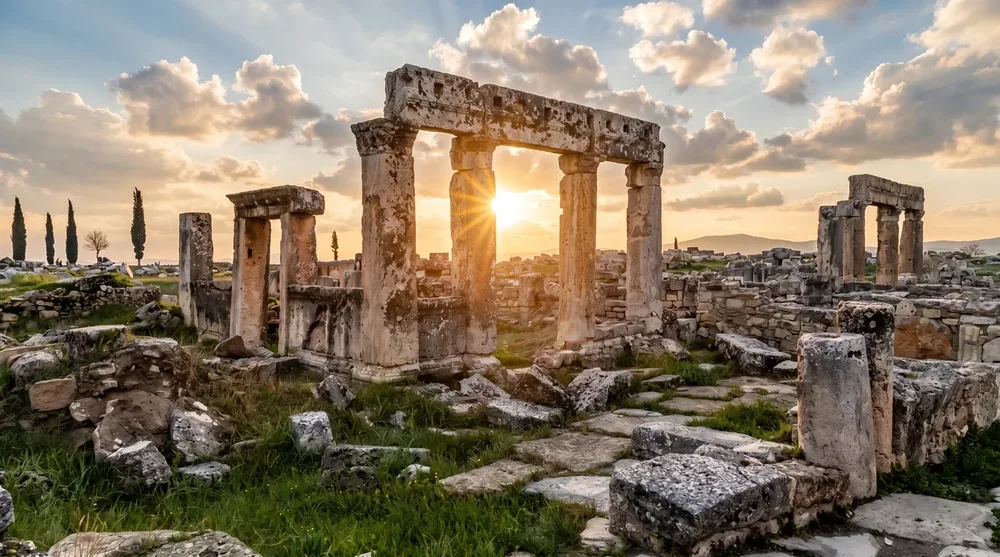
Many travelers struggle to choose between these two historical giants. If you want pristine, towering Roman architecture, Ephesus takes the lead. Hierapolis delivers a much wilder, nature-integrated experience. The combination of ancient ruins blending seamlessly into the stunning natural hot springs creates a unique atmosphere that pure archaeological sites simply cannot match.