Relying on generic navigation apps to explore the Gallipoli Peninsula often leads you down closed military roads and past missed historical landmarks. Navigating the rugged terrain around Anzac Cove requires a solid logistical plan, especially if you want to avoid massive crowds and experience the solemn atmosphere in peace.
- Entrance fee: free of charge
- Opening hours: accessible 24 hours
- Facilities: no toilets, markets, or drinking water on site
- Average visit duration: 1 to 2 hours
- Swimming: possible but challenging due to a rocky seabed and occasional jellyfish
The Historical Significance: What Happened on April 25, 1915?
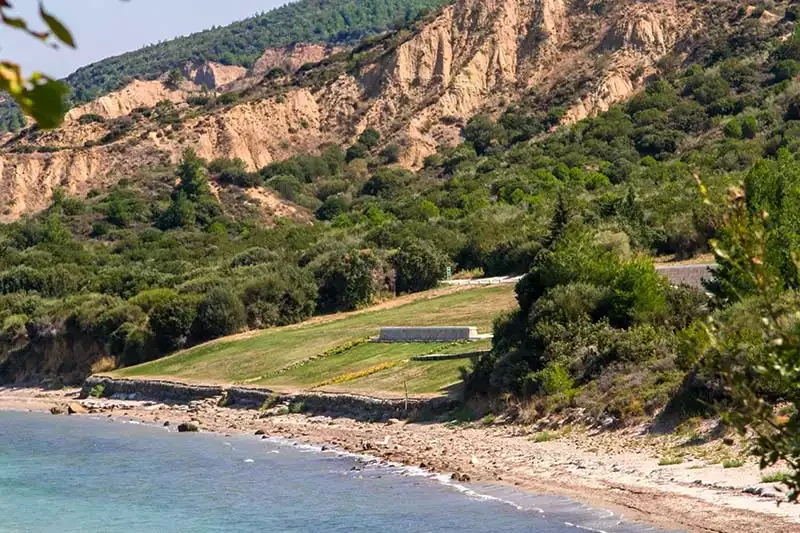
On a quiet morning, troops from Australia and New Zealand landed on this exact stretch of the Aegean coast. They expected a gentle slope but found themselves facing the steep, unforgiving cliffs of Arıburnu. The soldiers even compared the towering rock formations to the Sphinx they had recently seen in Egypt.
The ensuing battle lasted for months, trapping the forces on this narrow beachhead. Today, the landscape serves as a powerful reminder of endurance and loss. Walking along the shoreline gives you a physical connection to the past, and you can easily see why advancing up those hills was nearly impossible.
Where is Anzac Cove Located?
The cove sits on the western coast of the Gallipoli Peninsula, directly facing the Aegean Sea. The setting is striking - the water is crystal clear, while the hills above are dense with green pine forests.
The beach itself is narrow and composed of small pebbles rather than fine sand. A short distance offshore, the remains of an old sunken vessel are visible when the water is calm. The air is still, and the entire area feels profoundly isolated from the modern world.
How to Get to Anzac Cove from Istanbul and Çanakkale
Driving is the most efficient way to navigate the peninsula. From Istanbul, head towards the Gallipoli Peninsula via the main highway. If you are starting from Çanakkale (the Asian side), take a ferry across the Dardanelles to Eceabat - ferries run every hour and take about 25 minutes.
From Eceabat, it is roughly a 15-minute drive to the ANZAC sites. The road splits at Mimoza car park, where you go left for Anzac Cove directly or take the 11 km one-way loop road right to reach Lone Pine and Chunuk Bair. Public transportation does not reach the cove, so renting a car gives you the freedom to explore at your own pace. If you are planning a wider western Turkey trip, Ephesus Ancient City is a natural add-on further south along the same coastline.
Can You Visit Anzac Cove Without a Guided Tour?
You absolutely can visit independently. Exploring on your own lets you sit quietly by the water and absorb the atmosphere without a rushed schedule. Park in the designated pull-off areas along the road and walk down the short path to the beach.
There are zero commercial facilities here. Bring enough drinking water, sun protection, and snacks - the sun beats down intensely on the exposed beach during the day. A guided tour helps with historical context, but going solo offers a much more personal and reflective experience. If you plan to visit multiple historical and natural sites across Turkey, check whether the Turkey Museum Pass covers any of the other sites on your itinerary.
Anzac Day Dawn Service: Planning Your Commemoration
Attending the annual dawn commemoration on April 25 requires serious advance preparation. You cannot simply drive up to the site on the morning of the ceremony. Visitors must register online months beforehand to secure a free attendance pass through the official commemorations portal.
Access to the ceremonial area is strictly controlled. You must leave your vehicle behind and enter via official shuttle buses. Security is tight, and the logistical rules are strictly enforced to manage the massive international crowds safely.
Expect overnight temperatures around 8-15°C in late April. Accommodation in Eceabat and Çanakkale books out 6 to 12 months in advance for Anzac Day, so plan early.
What to Bring and Expect at the Ceremony
The temperature drops significantly before sunrise. Dress in heavy layers and wear a windbreaker to block the chilling sea breeze. The waiting period is long, so a compact foldable cushion makes sitting on hard ground much more bearable.
Do not expect any food stalls or nearby cafes in the early hours. Pack a thermos with a hot beverage and some high-energy snacks in your daypack to stay energized throughout the morning.
Other Key Memorials Near Anzac Cove
The landing site is just the beginning of the historical trail. Moving inland takes you to the higher ground where the most intense fighting occurred.
Lone Pine Cemetery
Drive a short distance up the winding road to reach this solemn memorial. It stands on the site of a brutal battle and honors thousands of soldiers. The area is meticulously maintained. The contrast between the tragic history and the beautifully kept grounds is incredibly moving.
Chunuk Bair New Zealand Memorial
Continue further up the ridge to find the monument dedicated to the New Zealand troops. The elevation here is significant. Looking down from this vantage point reveals the overwhelming tactical disadvantage the landing forces faced. The sweeping views across the peninsula and the Dardanelles are breathtaking.
Ari Burnu Cemetery
This small cemetery sits right at the edge of Anzac Cove, overlooking the water where the landings took place. The inscriptions on the headstones and the proximity to the shoreline make it one of the most emotionally powerful stops on the entire peninsula.
Practical Tips Before You Go
- Fill up on water and food before leaving Eceabat - there is nothing to buy at the cove itself
- Wear sturdy shoes if you plan to hike between memorials on unpaved tracks
- Arrive early in the morning or late afternoon to avoid tour bus crowds at peak hours
- If you plan to swim, bring water shoes for the rocky seabed
- The site is open year-round, but spring (April to June) and autumn (September to October) offer the best weather
- Coastal western Turkey has plenty more history: Bodrum Castle is worth a detour if you are heading further south after Gallipoli