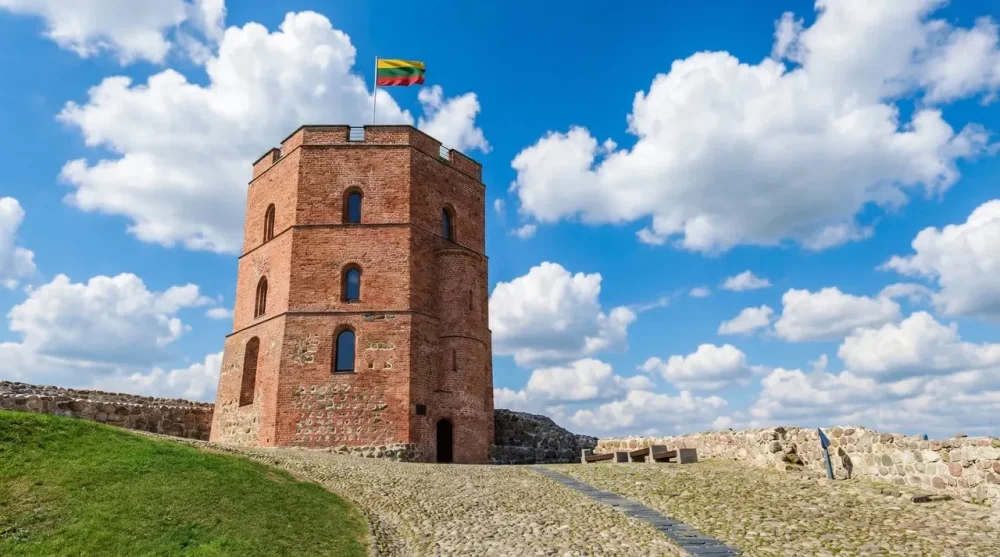
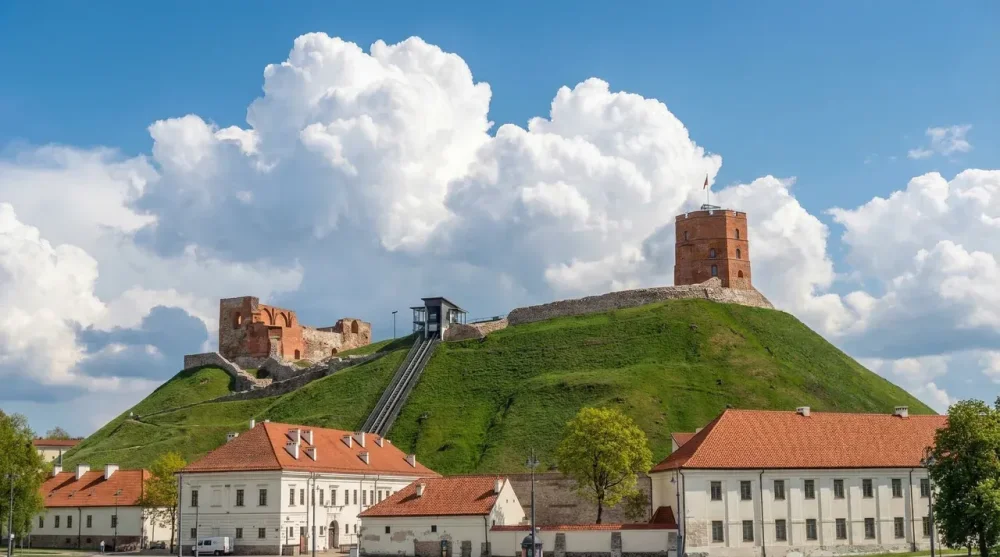
Gediminas Tower stands as the silent guardian of the city. The red roofs of the Old Town stretch out below, while the Neris River winds quietly in the distance. It is not just a viewpoint. It is the very birthplace of the Lithuanian capital. Finding accurate details about the climb, the funicular status, and the steep internal stairs saves you a lot of time and energy on your trip.
- Opening Hours: 10:00-20:00 (Oct-Mar) / 10:00-21:00 (Apr-Sep)
- Tower Access: €8 for adults.
- Funicular Ride: €2 one way.
- Best Time: Blue hour, just before sunset.
How to Get to Gediminas Castle Tower (Walk vs. Funicular)
Reaching the summit requires a bit of planning. The hill is surprisingly steep, and the terrain changes rapidly. You have two main options to conquer the ascent.
Walking the Historical Path from Vilnia River
Walking up the hill costs absolutely nothing. The path starts from the eastern side near the river and takes about 10 minutes at a moderate pace. The journey begins with uneven cobblestones and transitions into approximately 70 wooden steps.
The climb offers a great mini-workout, but the stones get incredibly slippery during rain or winter frost. Wear sturdy shoes. This route is entirely unsuitable for strollers or wheelchairs due to the steep incline and ongoing restoration works along the edges.
Taking the Funicular from the Old Arsenal Courtyard
If you want to save your breath for the views, the funicular is an alternative when it is running. The ride takes barely two minutes and costs €2 for a one-way trip or €3 for a return. You board from the enclosed courtyard of the Old Arsenal.
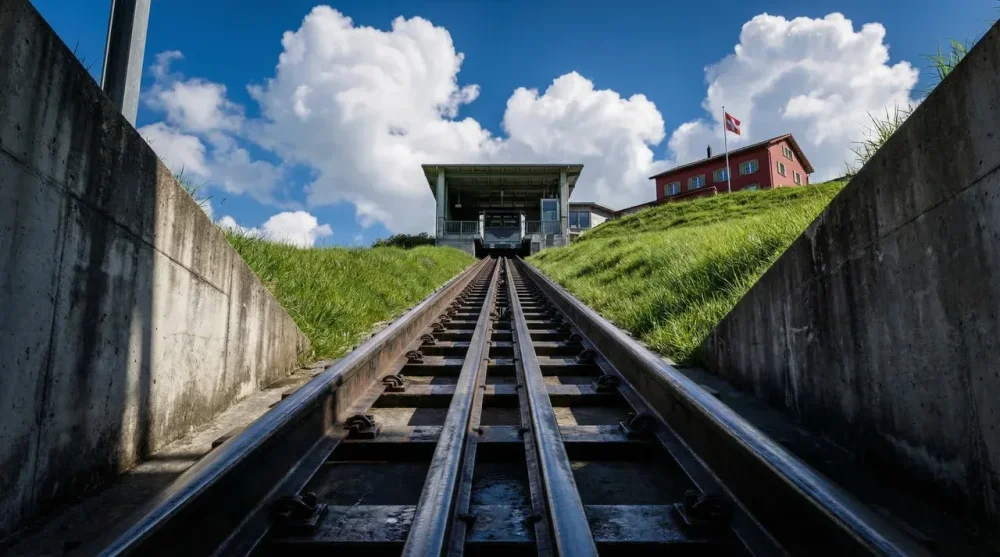
Important: the funicular has been undergoing repairs and was out of service as of mid-2025. Before visiting, confirm its status with the National Museum of Lithuania (+370 5 212 00 17) or check the official website.
The walking route remains fully open regardless. One practical note: the only public restrooms are on the ground floor of the funicular station, right after the ticket barrier.
Ticket Prices and Opening Hours 2026
The grounds around the tower are completely free to explore. You only pay if you want to enter the museum and access the rooftop observation deck.
| Ticket Type | Price |
|---|---|
| Adult | €8 |
| Student / Senior | €4 |
| Children (preschool) | Free |
| Persons with disabilities | Free (+ 1 companion) |
| Funicular (One Way) | €2 |
| Funicular (Return) | €3 |
The tower is open every day. From October through March, hours run 10:00 to 20:00. April through September, closing extends to 21:00. Holiday hours can shift, so arriving at least an hour before closing is the safer bet.
What to Expect Inside the Tower (Floor by Floor)
The museum inside is compact and highly focused. The interior features exposed old brickwork and a very narrow, steep spiral staircase. Navigating these stairs requires extreme caution when the museum gets crowded. There are no restrooms inside the tower itself.
Floor 2: The Interactive Renaissance Exhibition
The second floor pulls you back in time. You will find detailed reconstruction models of the Upper and Lower castles here. The visual timelines show exactly how Vilnius transformed from a wooden fortress into a formidable Renaissance stronghold.
Floor 3: The Baltic Way Memorial
This is perhaps the most emotionally charged section of the tower. The exhibition details the events of August 1989. Nearly two million people joined hands from Vilnius to Tallinn to protest Soviet occupation. The displays here are minimal but incredibly powerful.
Observation Deck: Best Panoramic Views of Vilnius
The rooftop is the main event. The 360-degree panorama is completely unobstructed. You see the intricate church spires, the dense forests on the horizon, and the modern financial district in a single breathtaking sweep.
The atmosphere up here is spellbinding. The air is crisp, the wind howling against the ancient bricks. It gets famously fierce and biting in the colder months. Bring an extra layer of clothing even if the city below feels warm. Photographers should aim for the blue hour to catch the city lights slowly blending with the fading sunset.
The Legend of the Iron Wolf: A Brief History
Every great city starts with a myth. Grand Duke Gediminas camped on this very hill after a long hunting trip in the early 14th century. He dreamt of a massive Iron Wolf howling with the strength of a hundred wolves.
A local pagan priest interpreted this dream as a divine sign to build a mighty city on the hill. The wooden fortress he constructed eventually became the brick citadel you explore today. Over the centuries, the tower served as a defensive post, a Russian telegraph building, and a beacon of Lithuanian independence.
Is the Vilnius Pass Worth It for This Attraction?
If you plan to visit multiple museums and use public transport, getting a Vilnius Pass is a highly logical investment for your itinerary. Showing your active pass at the entrance grants you a completely free ticket to the Gediminas Tower. You skip the standard payment queue and head straight for the spiral stairs.