Planning a trip to the Caribbean can quickly become overwhelming when you are trying to piece together confusing flight schedules, hidden layovers, and fluctuating prices. This guide cuts through the noise and looks at the most efficient ways to reach Grenada, so you can spend less time stressing in transit and more time enjoying the Spice Isle.
- Destination Airport: Maurice Bishop International Airport (GND)
- Average Flight Time: 4 hours 45 minutes from New York, 4.5 hours from Miami, 5 hours 55 minutes from Toronto, 8 to 9 hours from London
- Best Time to Book: 2 to 3 months in advance
- Cheapest Travel Months: September and October
Direct Flights to Grenada (GND)
From the United States
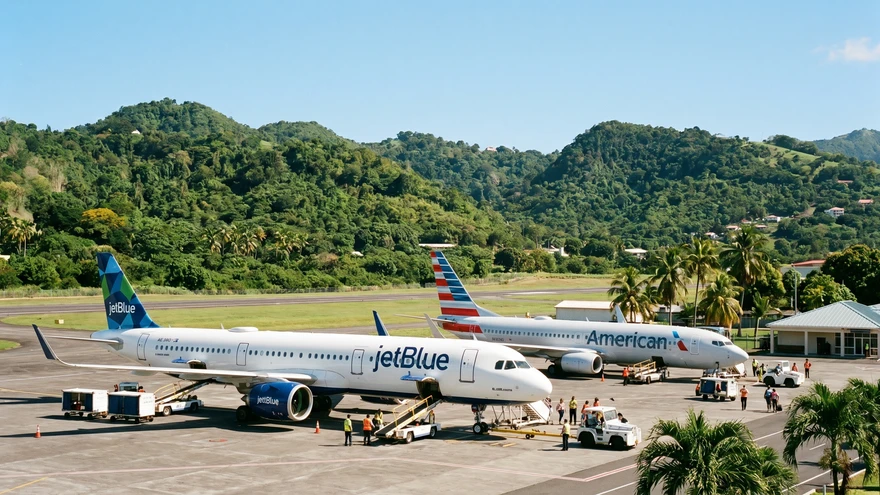
Getting to Grenada from the US is more straightforward than you might expect. JetBlue and American Airlines are the main players here.
JetBlue operates direct flights from New York (JFK) and Boston (BOS) to Maurice Bishop International Airport. American Airlines runs daily direct service from Miami (MIA) and seasonal direct flights from Charlotte (CLT). Delta has also entered the market with year-round direct service from Atlanta (ATL), making the Grenada route more competitive and giving east coast travelers a third solid mainline option.
Flight frequencies from US gateways increase between December and April to accommodate vacationers escaping the cold. If you are planning a winter break, book those seats earlier than you normally would as the planes fill up fast.
From Canada
Air Canada operates direct service from Toronto Pearson (YYZ) to Grenada, with the flight taking roughly 5 hours and 55 minutes. WestJet also covers this route seasonally. Fares from Toronto tend to be lower during shoulder season, with one-way economy tickets available from around CAD 272 for off-peak travel dates.
From the UK and Europe
For those crossing the Atlantic, London is your primary gateway. British Airways offers service from London Heathrow (LHR) and Virgin Atlantic operates from London Gatwick (LGW).
A word on what "direct" means on these UK routes: some flights include a brief scheduled stop in a neighboring island such as Antigua or Barbados to drop off and pick up passengers. You will not need to change planes, but it adds one to two hours to your total journey. Check the specific flight number carefully when booking - a one-stop itinerary and a technical stopover flight look similar on some booking platforms but are very different experiences.
Navigating Layovers: Best Connection Hubs
Connecting via Miami (MIA)
If you do not live near a city with direct service, you will need to manage a layover. Connecting through Miami International Airport is the most reliable and comfortable option for North American travelers. MIA handles daily mainline flights to Grenada on predictable schedules, and the connection itself is short - the onward leg from Miami to GND runs around 3.5 to 4 hours.
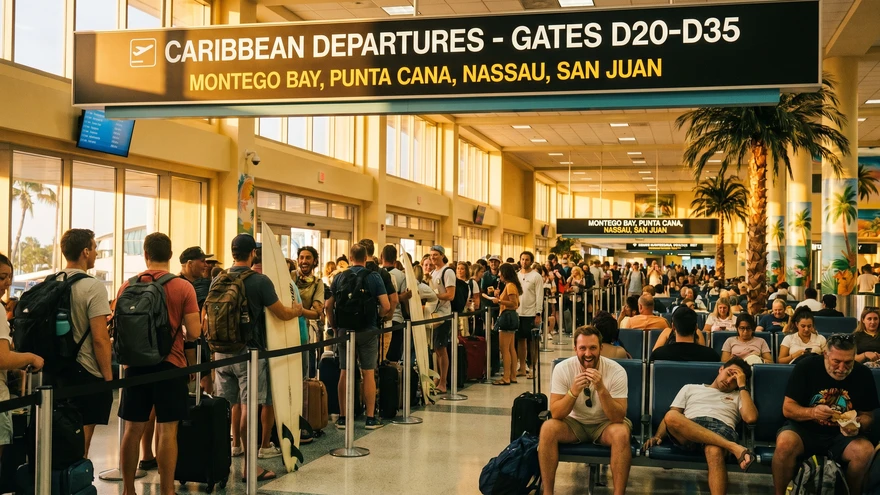
Allow at least 90 minutes to clear international transit at MIA. The airport is large and security queues can build quickly during peak morning departure banks.
Connecting via Trinidad (POS) and Barbados (BGI)
Caribbean Airlines operates a strong regional network and connects Grenada to both Port of Spain, Trinidad (POS) and Bridgetown, Barbados (BGI). These two routes account for a large share of all monthly arrivals at GND - together they make up roughly 40% of the airport's total traffic.
If budget matters more than comfort, these regional hops can unlock significantly cheaper fares. The trade-off is reliability. Inter-island Caribbean flights run on tight turnarounds and can stack delays when an aircraft falls behind schedule earlier in the day. If you connect through POS or BGI, give yourself at least three hours between flights to avoid a missed-connection nightmare.
interCaribbean Airways also serves Grenada from Barbados and Saint Vincent (SVD), which gives you additional options if the main carriers are sold out or overpriced on your preferred dates. Travelers who are already island-hopping around the Eastern Caribbean may find it worth reading through how flights work into Saint Kitts and Nevis since the regional logistics are very similar.
Seasonal Price Patterns
When to Find the Cheapest Fares
Timing your booking is everything. The absolute lowest fares land during the shoulder months of September and October, when demand drops and airlines compete harder for the seats. Average one-way prices from the US can fall to around ** to ** during this window - roughly 10 to 15% below the yearly average.
The period from April to May is a secondary sweet spot. Schools are not yet out for summer, crowds are thinner, and prices have relaxed from the peak winter surge.
Flying during the Christmas-to-New-Year window or around Spicemas, Grenada's carnival held in August, will cost you a premium. Prices spike sharply during these two periods. If you have flexibility, understanding the best time to visit Grenada in terms of weather and crowds will help you align your travel dates with both lower fares and ideal conditions.

Midweek departures (Tuesdays and Wednesdays) consistently come in cheaper than weekend flights across most routes. If your schedule allows any flexibility, shifting your departure date by a day or two can shave a meaningful amount off the ticket price.
How Far in Advance to Book
For peak season travel (December through April), book at least three months ahead, ideally more if you are traveling over a major holiday. For shoulder and low season travel, a two-month window is generally sufficient to lock in competitive fares without risking a sold-out flight.
Arriving at Maurice Bishop International Airport
Touching down at GND is a noticeably relaxed experience compared to most international hubs. The airport is a compact, single-terminal facility located in the Point Salines area, about 10 kilometers south of the capital, St. George's.
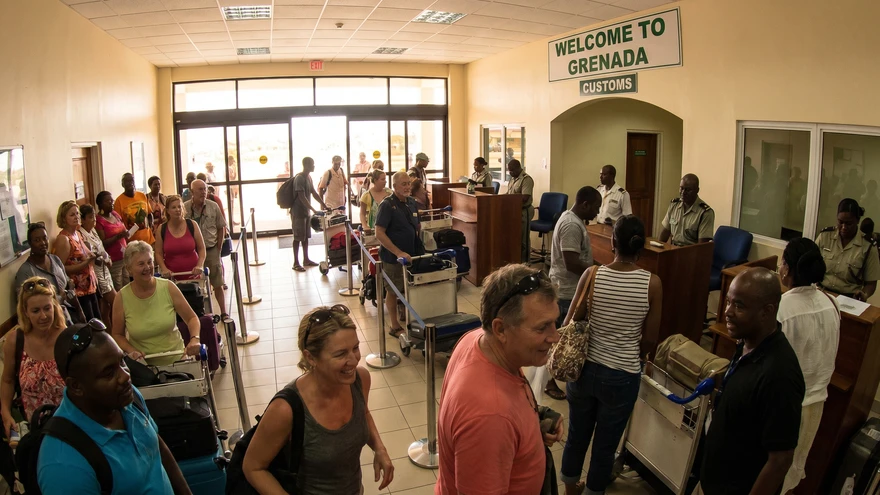
Customs and immigration move at a reasonable pace most of the time. The exception is when two or three wide-body jets land within a short window of each other - queues can temporarily spike in those moments, so keep that in mind if you are connecting onward to a hotel shuttle.
Once you clear arrivals, a government-regulated taxi stand sits right outside the terminal. Fares run on fixed zone rates rather than meters, so there is no haggling. Drivers accept both US Dollars and Eastern Caribbean Dollars (XCD). Having USD 25 to 40 in cash on hand covers most rides to the main hotel areas - if you have not yet settled on where to stay in Grenada, the southern coast around Grand Anse offers the densest concentration of options at every price point. Credit cards are not accepted at the taxi stand.
For car hire at the airport, Discover Cars lists local and international rental options with upfront pricing. A valid international driving permit is required to drive in Grenada alongside your home country license.
Travel insurance that covers delays, missed connections, and medical emergencies is worth having for any Caribbean trip. VisitorsCoverage offers plans that cover Caribbean itineraries with no long commitment.
Practical Tips Before You Fly
- No visa required for US, Canadian, UK, and EU passport holders for stays under 90 days. Bring a passport valid for at least six months from your entry date and a confirmed return ticket. For a full breakdown of entry requirements for Grenada - including what documents to carry and border procedures - check the dedicated guide.
- Mobile data: International roaming charges add up quickly. Pick up a local SIM on arrival or load a Grenada eSIM through Airalo before departure to stay connected from the moment you land.
- Airport arrival time: Arrive at GND at least three hours before international departure. The terminal is small but check-in and security can concentrate when multiple wide-body departures cluster together.
- Currency: The Eastern Caribbean Dollar (XCD) is the official currency, pegged at 2.70 XCD to 1 USD. Major hotels and restaurants accept USD and credit cards, but smaller vendors and taxis prefer cash.