Standing in the ticket line at the Cathedral of Our Lady Antwerp is a common mistake, especially when arriving before 10 AM lets you view the historic masterpieces without crowds blocking your sightline. Buying your ticket in advance and timing your visit correctly transforms a frustrating wait into a seamless artistic experience.
| Detail | Info |
|---|---|
| Adult Entrance | €12 |
| Groups (20+), Students, 60+ | €10 |
| Children under 18 / Antwerp Province Residents | Free |
| Average Visit Duration | [visit_duration] |
| Key Artist | Peter Paul Rubens |
| Location | Groenplaats, Antwerp |
Practical Information for Visitors
Ticket Prices and 2026 Updates
Many visitors express surprise at the €12 entrance fee for a church. The reality is that this space operates more like a world-class art museum, and the revenue directly funds the massive upkeep of this UNESCO World Heritage site. Groups of 20 or more, students, visitors aged 60 and above, and companions of disabled visitors pay €10. Children under 18 and residents of Antwerp Province enter free. Your ticket includes access to free guided tours available in multiple languages. You can also grab a local Kathedraalbier at the bistro on the premises to reflect on the architecture afterward.
Opening Hours and Best Time to Visit
The cathedral is open to visitors Monday through Friday from 10:00 to 17:00, Saturday from 10:00 to 15:00, and Sunday from 13:00 to 17:00. It is closed on January 1st. Since it remains an active place of worship, weekend masses or special religious observances occasionally restrict tourist access, so checking the weekly schedule on the official portal before your visit is wise. Arriving right at opening on a weekday gives you the vast nave in near silence. Late afternoon visits offer a different advantage, as the setting sun perfectly illuminates the massive stained glass windows.
Getting There
The cathedral sits right at Groenplaats, surrounded by bustling cafes, and is easily reached on foot from Antwerp Central Station in about 15 minutes. Trams 3, 5, 9, 15, and 4 as well as buses 22 and 180-183 all stop at Groenplaats. Walk down Suikerrui street toward the Scheldt river for an unobstructed, highly photogenic view of the towering spire. Before leaving the main plaza, look for the famous statue of Nello and his dog Patrasche near the main facade.
Accessibility
The main floor of the cathedral, where the Rubens paintings are located, is fully wheelchair accessible. Wheelchairs and rollators are available on-site. Two accessible restrooms are provided, and audio descriptions for artwork are accessible via QR codes. A telecoil loop in the nave assists visitors with hearing aids. The archaeological crypts in the basement are only reachable via steep stairs and are not suitable for visitors with limited mobility.
Inside the Cathedral: Masterpieces of Peter Paul Rubens
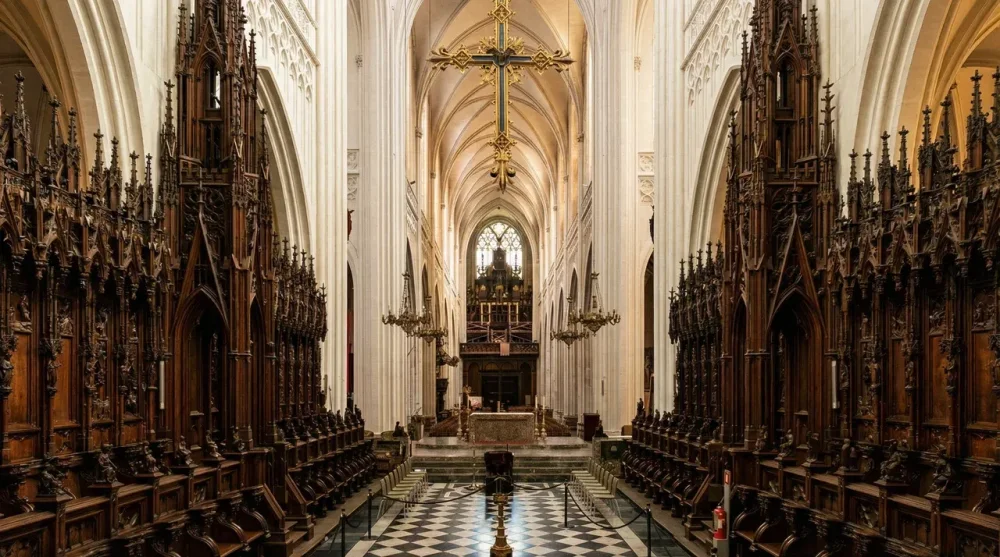
The interior is astonishingly bright, the tall arches pulling natural light directly into the center of the nave. It feels entirely different from the heavy, dark atmosphere found in typical medieval churches.
The Elevation of the Cross and The Descent from the Cross
Seeing a Baroque painting in a sterile museum simply cannot compare to viewing it in the exact architectural space it was created for. The Descent from the Cross and The Elevation of the Cross flank the main areas, their vibrant colors dominating the stone surroundings. These massive triptychs carry an incredible emotional weight. Take a moment to examine the intricate oak wood-carvings nearby, which resemble a frozen forest wrapped around the pulpit. You will also find Rubens' The Resurrection of Christ and The Assumption of the Virgin Mary within the high altar.
For fans of European Gothic architecture, the Vilnius Cathedral offers a similarly powerful experience of sacred art displayed in its original setting.
Architecture and History of the Cathedral
From 1352 to the Gothic Masterpiece
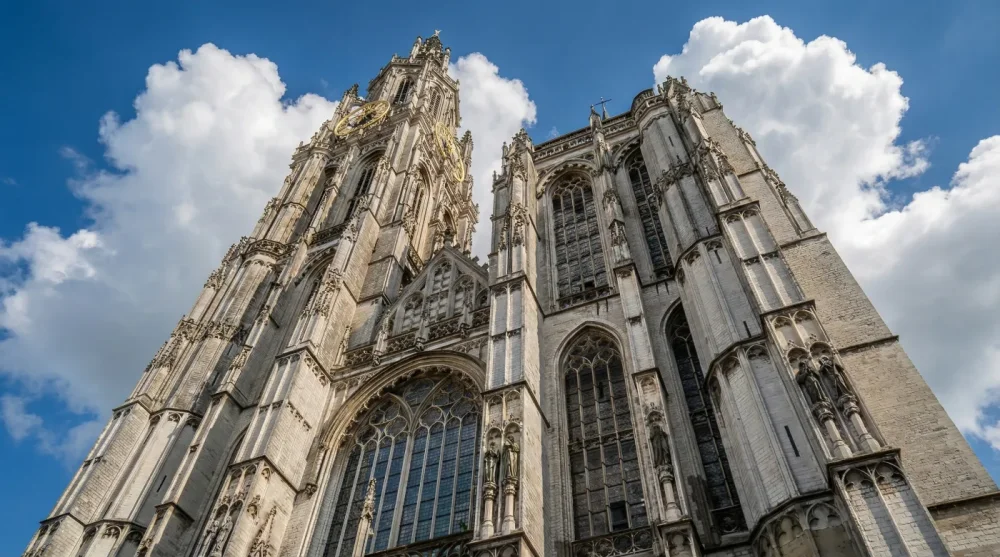
Construction began in 1352, yet the second tower famously remains unfinished. The completed north tower rises to 123 meters, making it the tallest church tower in the Low Countries. The architecture is a prime example of the Brabantine Gothic style, blending delicate stone lacework with monumental scale. Do not skip the underground crypt, though the steep stairs require careful navigation.
World War II and the Nazi Occupation Period
The sheer beauty of the architecture hides a darker modern history. In May 1940, occupying forces took control of Antwerp and hung their flag from this very spire. The building endured the constant threat of aerial bombing and stood as a silent witness to the city suffering under occupation. It survived the conflict relatively intact, remaining the resilient heart of the historic center.