Getting hit with unexpected cross-border restrictions or being denied entry at a checkpoint ruins a Balkan road trip before it even begins. Navigating this diverse region requires solid logistical planning and a clear understanding of rental contracts, not just a map of scenic beaches.
- Required Documents: Valid Passport, International Driving Permit (IDP), and Green Card Insurance.
- Toll Systems: E-vignettes (Bulgaria, Romania, Slovenia) versus physical toll booths (Serbia, Croatia, North Macedonia).
- Border Crossings: Expect mandatory passport controls and vehicle registration checks at every non-Schengen border.
- Driving Style: Assertive local driving, winding mountain roads, and frequent gravel paths off the main highways.
What to Know Before Renting a Car in the Balkans
Many international rental agencies restrict entry into specific countries like Kosovo or Bosnia and Herzegovina. You must inform your rental company about your exact route before signing the contract. They need advance notice to prepare the necessary cross-border paperwork. Failing to declare a country means you drive without insurance coverage.
Local comparison sites often aggregate smaller agents that offer better terms for crossing multiple borders. Insurance usually comes included in the base rate with these local providers. Always read the fine print regarding unpaved roads, as taking a standard rental car off-road voids most policies instantly.
The Truth About Green Cards
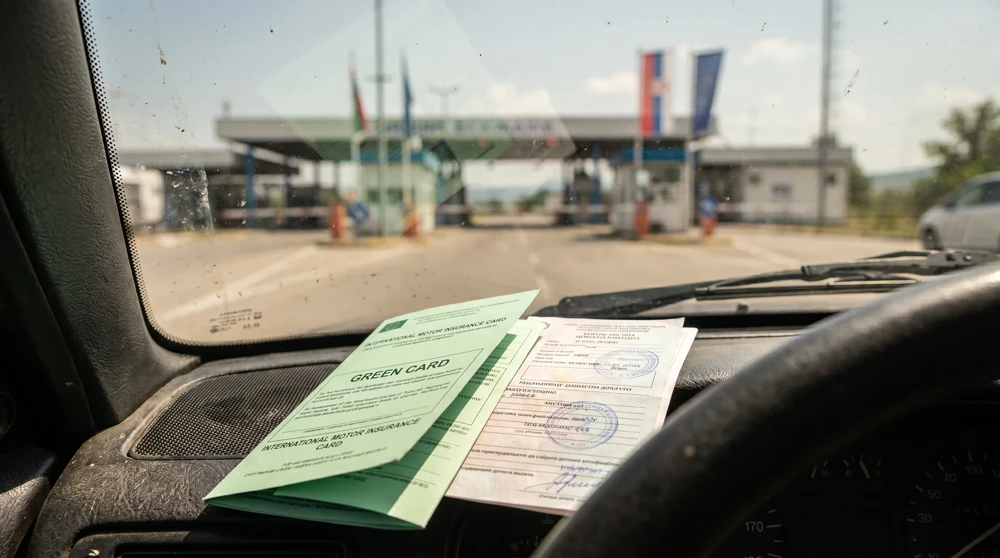
A Green Card is a document verifying your car has valid third-party liability insurance across international borders. Albania, Bosnia and Herzegovina, Montenegro, and North Macedonia require this document at passport control. Since January 2025, most border crossings accept a digital PDF version, so a printed copy is no longer strictly required. Confirm with your rental agency whether they issue it digitally or in print.
Kosovo operates outside the standard European Green Card system. Border guards will ask you to park and purchase a separate local insurance policy right at the crossing. Keep your vehicle registration and rental agreement handy in the glovebox at all times.
Tolls vs. Vignettes: Country-by-Country Breakdown
Understanding how to pay for roads saves you from hefty fines. Countries like Bulgaria, Romania, and Slovenia operate on a vignette system. This is a time-based road tax rather than a distance-based toll. Purchase an e-vignette online or at the very first gas station after crossing the border. You only need the car registration details to register online.
Serbia, Croatia, and North Macedonia use traditional toll booths. You take a ticket upon entering the highway and pay when exiting. These booths accept local currency and credit cards. Keep loose change in the center console for faster transactions. Montenegro has virtually no toll roads, except for the Sozina tunnel.
Navigation Apps and Fuel
Do not rely on a single navigation app. Google Maps routinely overestimates road quality on rural Balkan routes. Supplement it with Maps.me or Here WeGo, both of which work offline and handle unpaved mountain tracks better. Download offline maps for each country before you leave.
Fuel availability is straightforward on main corridors, but rural areas in Albania and Montenegro can have long gaps between petrol stations. Most of the region runs on both diesel and petrol, but check before renting: some older local fleet cars are diesel-only, and a few remote village stations stock only one type. Fill up whenever you see a station in mountain areas.
Is Driving in the Balkans Safe?
Highways in Croatia and Serbia are pristine and well-maintained. Move away from the main transit corridors, and the infrastructure changes rapidly. Rural roads in Montenegro and Albania often narrow down to a single lane shared with oncoming traffic and local livestock. Potholes are frequent.
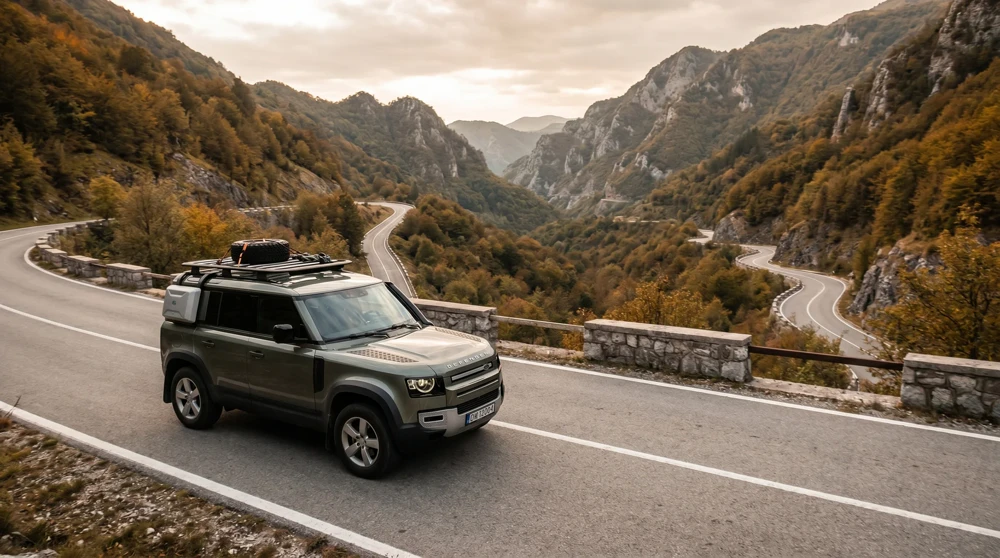
Mountain passes offer incredible views but feature tight hairpins and sheer drops without guardrails. Avoid driving at night. Unlit roads, sudden fog, and wandering animals make nighttime driving unnecessarily hazardous. During heavy rain, rockfalls occur frequently on steep canyon roads. Drive defensively and let aggressive local drivers pass you.
7-Day Balkan Tour by Car: The Adriatic Coastline
This route maximizes coastal views while keeping driving distances manageable. Start your engine in Split, Croatia. Head south along the Dalmatian coast, stopping at the medieval fortress town of Dubrovnik. The coastal highway here is smooth, the sea an impossible shade of blue.
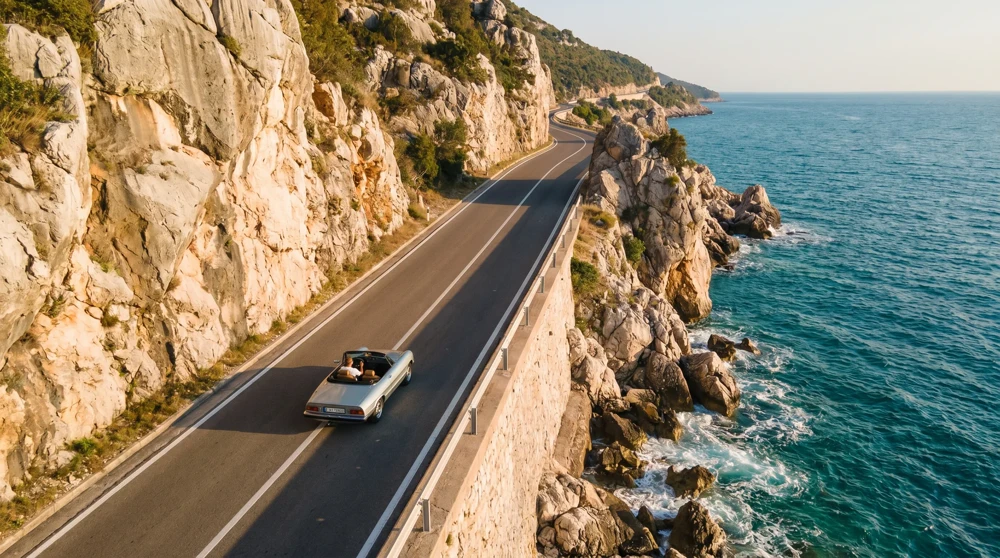
Cross the border into Montenegro and drive around the Bay of Kotor. The landscape is dramatic, steep limestone cliffs plunging directly into the dark water. Base yourself in Kotor for two days to hike the city walls and explore the nearby coastal town of Budva.
Head further south towards Albania. The Albanian Riviera offers some of the most pristine swimming spots in Europe. Roads here wind tightly along the cliffs. Stop at the hidden coves near Dhermi and Himare. Loop back to Podgorica to drop off your rental car.
14-Day Balkan Road Trip: The Ultimate Loop
For a deep dive into the region's cultural diversity, a two-week circular route works best. Begin in Zagreb, making your way east towards the sprawling concrete architecture of Belgrade. The highways are fast and flat.
Turn south into the mountains of Bosnia and Herzegovina. Stop at the Kravica Waterfalls for a swim before navigating the narrow valley roads to Sarajevo. The contrast between the Ottoman-style bazaar and the Austro-Hungarian facades is striking. If you have a spare afternoon, the Blagaj Tekija near Mostar is worth the short detour off the main road.
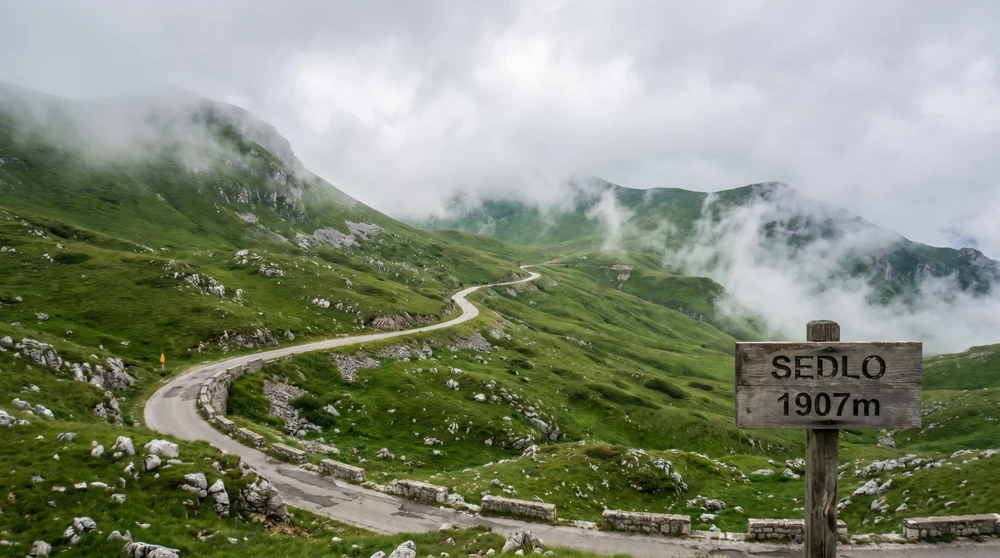
Push further south into the high altitudes of Durmitor National Park in Montenegro. The Sedlo Pass is arguably the most scenic driving route in the region. Sharp peaks on all sides, the air freezing cold.
Continue towards Lake Ohrid in North Macedonia, a massive, ancient lake shared with Albania. Finish the loop by driving north to the brutalist monuments of Skopje. Border waits easily exceed two hours during the peak summer months, so plan your crossing times for early morning.