Your chest tightens just thinking about the boarding sequence, but gripping the armrests until your knuckles turn white does not keep the plane in the air. Controlling the physiological panic response at cruising altitude requires a strategic sensory toolkit, not just raw willpower.
- Immediate panic stopper: the 5-4-3-2-1 sensory countdown method
- Physical trigger to avoid: shallow chest breathing (forces your body into fight-or-flight mode)
- Crucial pre-flight prep: zero caffeine before the flight and deep hydration
- Most effective long-term fix: Acceptance and Commitment Therapy (ACT) combined with exposure
Why Do We Experience Flight Anxiety?
Aerophobia stems largely from a perceived loss of control combined with unfamiliar physical sensations. Your brain interprets the sudden movements, strange mechanical noises, and confined space as immediate threats. This triggers a massive release of adrenaline.
Your body is doing exactly what it evolved to do when faced with danger. Acknowledging that the fear is a biological misfire, rather than an actual indicator of an impending crash, helps detach your logical mind from the physical panic. The goal is not to stop feeling anxious, but to function alongside the anxiety.
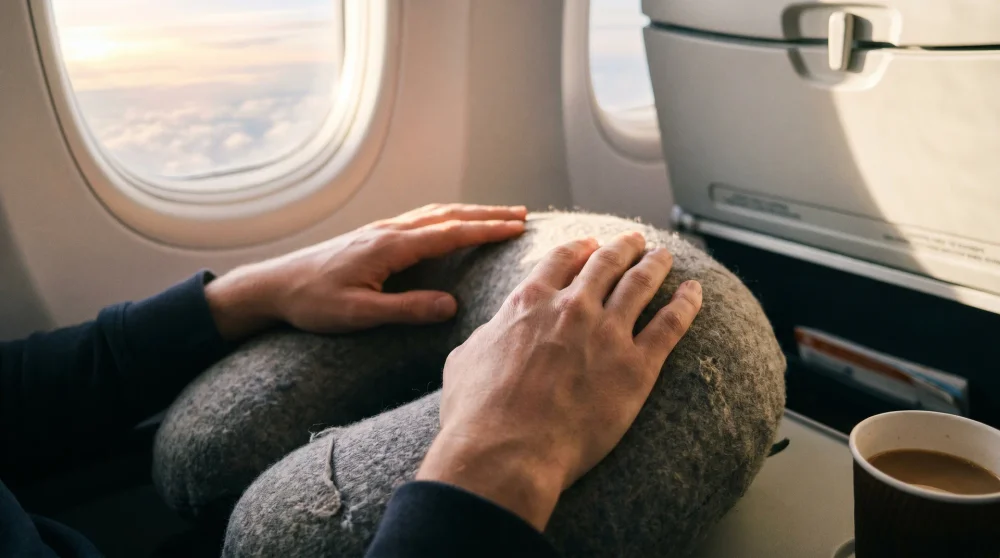
A 2025 YouGov survey found that 49% of American air travelers reported some degree of nervousness about flying. Most people with aerophobia are not actually afraid of the plane crashing. They fear the overwhelming anxiety that comes with being on the plane. Knowing that helps.
Pre-Flight Preparation: Setting Yourself Up for Success
The battle against flight anxiety often starts the night before your departure. Entering an airport with a highly sensitized nervous system guarantees a stressful flight. Your baseline stress level acts as an amplifier for every bump or chime during the journey.
Managing Baseline Stress Before the Airport
Treat your departure day like an athletic event. Arriving exhausted or over-caffeinated leaves you with zero emotional buffer. Sleep deprivation multiplies anxiety symptoms, making catastrophic thoughts feel significantly more realistic.
Drink plenty of water and eat a substantial, healthy meal before heading to the terminal. Avoid alcohol at the airport lounge. While a drink might temporarily numb the nerves, it ultimately dehydrates you and causes a rebound anxiety effect mid-flight.
Choosing Your Seat Strategically
Where you sit matters more than most nervous fliers realize. Over-wing seats, located above or just behind the wings, sit closest to the aircraft's center of gravity. This area experiences the least motion during turbulence. Avoid the tail section if you have strong sensory sensitivity, as it amplifies every bump.
On larger wide-body jets, turbulence feels noticeably less intense than on smaller regional aircraft. If your route offers both options, the bigger plane is worth prioritizing.
Packing Your Sensory Toolkit
Distractions like movies are fine, but physical grounding items are far more effective at pulling your brain out of a panic loop. Your carry-on bag should contain specific triggers for your senses to force your attention back to the present moment.
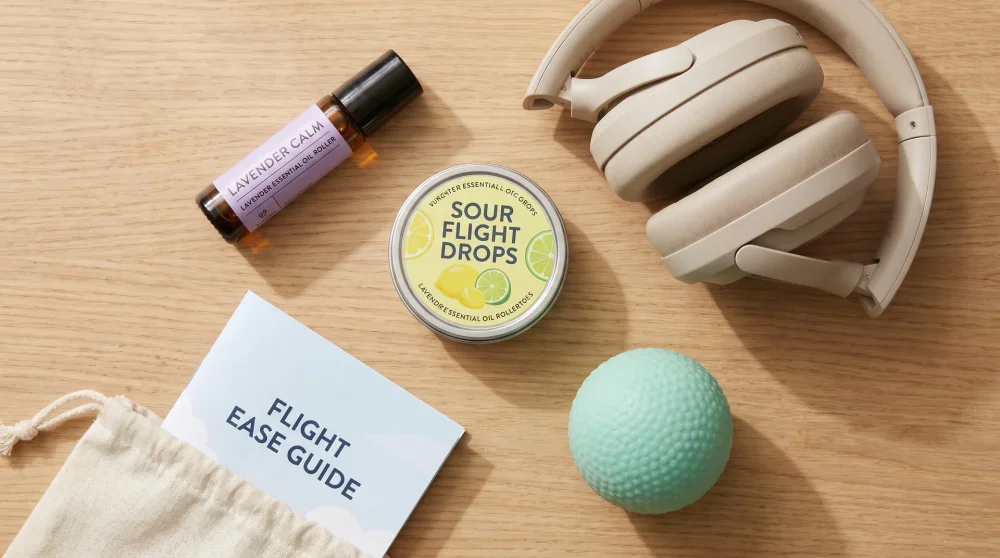
- Smell: a roll-on essential oil like lavender or a strong mint lip balm
- Taste: sour candies or intensely flavored gum to shock your tastebuds
- Touch: a deeply textured scarf, a heavy sweater, or a stress ball
- Hearing: noise-canceling headphones playing a pre-downloaded, familiar playlist
In-Flight Grounding Techniques for Panic Attacks
When the cabin doors close and the adrenaline spikes, passive distractions often fail. You need active cognitive tasks to interrupt the escalating panic cycle. A full-blown panic attack typically peaks within ten minutes, bringing symptoms like a racing heart and shortness of breath.
The 5-4-3-2-1 Sensory Method
This is the ultimate circuit breaker for your nervous system. When you feel the panic rising, stop looking at the flight map and start scanning your immediate environment. Speak the items out loud softly or list them firmly in your head.
Identify five things you can see around you, like the seatbelt sign or a flight attendant. Find four things you can physically touch, paying attention to their texture. Listen for three specific sounds over the engine hum. Locate two things you can smell. Finally, focus on one thing you can taste. This forces your brain to process complex external data instead of internal fear.
Belly Breathing vs. Chest Breathing
Anxiety makes you take rapid, shallow breaths straight from your chest. This specific breathing pattern throws off your oxygen and carbon dioxide balance, artificially creating the physical sensation of suffocating. It is a biological trap.
Place one hand on your stomach. Inhale deeply through your nose, ensuring your stomach pushes your hand outward while your chest remains perfectly still. Exhale slowly through your mouth. Regaining control of your diaphragm sends a direct biological signal to your brain that the environment is safe.
A practical counting pattern that works: inhale for four counts, hold for four, exhale for six. The extended exhale activates the parasympathetic nervous system faster than an equal inhale-exhale ratio.
The Math Trick
When you really focus on thinking, your emotional brain calms down. A simple math problem, counting backward from 300 by threes, or mentally spelling out the names of every country you have visited forces your prefrontal cortex back online. Your brain cannot run catastrophic fear scripts and calculate 297 minus three at the same time.
How to Handle Severe Turbulence Safely
Turbulence is the ultimate trigger for nervous fliers, yet it is a standard atmospheric occurrence that aircraft are heavily engineered to withstand. There have not been any commercial passenger plane accidents caused purely by turbulence in the past 50 years. In the cockpit, the altitude change during turbulence typically shows as just a small twitch on the altimeter. Passengers feel the plane plummeting when it has barely moved, because the sensation is amplified at 600 mph.
Experiencing fear when the plane drops is a completely natural human reaction. Do not scold yourself for being scared.
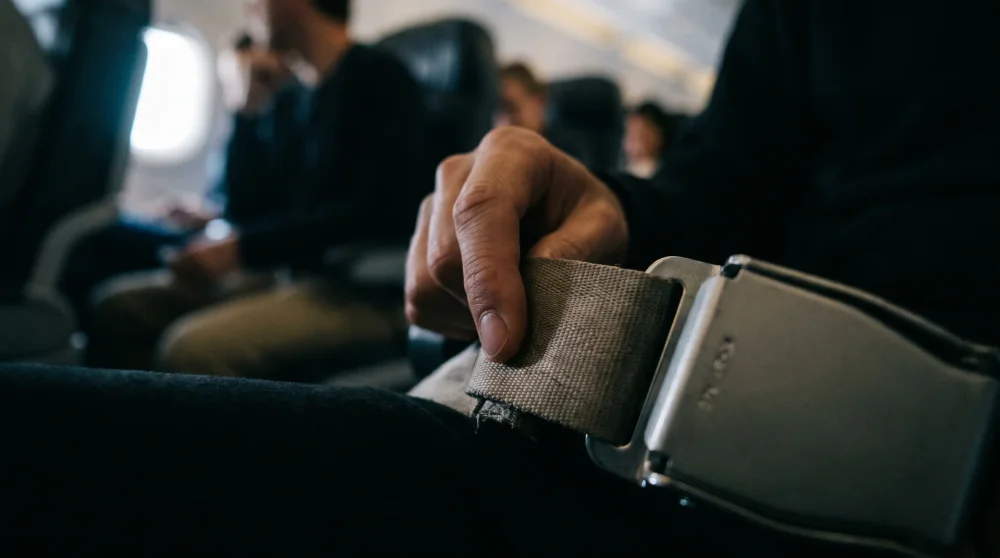
Instead of fighting the motion, lean into it. Let your body sway with the bumps rather than tensing your muscles rigidly against the seat. Remind yourself that turbulence is to an airplane what a pothole is to a car: uncomfortable, but not inherently dangerous. Keep your seatbelt securely fastened and focus entirely on your belly breathing rhythm until the air smooths out.
Medication vs. Therapy: When to Seek Professional Help
If your fear prevents you from traveling or causes severe, debilitating panic attacks, relying solely on coping mechanisms might not be enough. Cognitive Behavioral Therapy (CBT) and Acceptance and Commitment Therapy (ACT) show strong success rates for aerophobia. A specialized therapist helps you confront the fear directly rather than constantly trying to avoid it.
Exposure therapy works by gradually introducing you to flight-related experiences in a controlled environment, starting with pictures of planes, then visiting an airport, then short flights. Virtual reality tools now allow therapists to simulate full flight experiences without leaving the office, which has measurably reduced treatment timelines.
Prescription medications, typically short-acting anti-anxiety drugs or beta-blockers, can serve as a temporary bridge to help you board the plane. However, relying on them creates a dependency where you never actually learn to feel comfortable flying on your own. Build your psychological toolbox first, and use medical support as a backup plan rather than the only solution. Always consult a doctor before taking any medication for flight anxiety, as some drugs interact with altitude and cabin pressure changes in unexpected ways.