Arriving at the Blagaj Tekija parking area mid-day means navigating a frustratingly narrow, dead-end street packed with tour buses and pedestrians. Leaving your car at the lower parking lots and taking a brief walk saves both time and stress.
Built at the base of a towering limestone cliff, this serene Sufi monastery offers a profound experience, provided you know exactly where to stand for the best views and how to navigate the strict visitor rules.
- Location: 12 kilometers southeast of Mostar.
- Transport: Local Bus number 10 departs directly from the Mostar city center.
- Dress Code: Modest clothing required. Women must cover their hair, shoulders, and knees. Men must cover their knees and shoulders.
- Accessibility: The surrounding paths are manageable but involve stairs and uneven stone surfaces.
- Payment: Souvenir stalls and local fruit vendors operate strictly on cash.
How to Get to Blagaj from Mostar
Taking the Local Bus
Traveling by public transport requires catching the local bus from the station located near the United World College in Mostar. The journey takes roughly twenty minutes. Going early in the morning guarantees a seat and helps you avoid the intense afternoon crowds.
Driving and the Parking Trap
The drive from Mostar is straightforward, but the final stretch into Blagaj becomes a logistical headache. The road leading directly to the monastery is a tight dead-end. Park your vehicle at the designated public lots located a five-minute walk before the main entrance. Some locals might wave you into their private yards offering parking spots, but sticking to the official parking areas is much easier and prevents you from getting stuck in reversing traffic.
Entrance Information and Dress Code
Accessing the surrounding riverbanks and viewing areas is entirely free. Entering the actual monastery building requires an entrance ticket priced at 10 BAM (approx. 5 EUR). The collected funds go toward maintaining the historical structure. The Tekija is open daily from 8:30 to 20:30 during summer, with reduced hours (closing around 17:00) in the off-season.
Because this is an active religious site, the dress code is strictly enforced. You must remove your shoes before stepping inside. Women are required to wear a headscarf. If you arrive unprepared, the staff provides free loaner scarves and wrap-around skirts at the entrance.
Inside the Dervish House: What to Expect
The interior of the Tekija reflects simple, elegant Ottoman architecture. Wooden floors, carved ceilings, and colorful carpets create a deeply calming atmosphere. The building contains prayer rooms, a guest room, and a courtyard overlooking the rushing water.
The tomb of Sari Saltuk, a legendary Sufi saint, rests within the complex. Dervish gatherings and Zikr chanting still occur here on specific evenings. The historical depth is palpable, yet the rooms lack detailed informational plaques. Take your time to simply sit by the open wooden windows and listen to the river below. You can see all the rooms in about 30 minutes, but there is no rush.
The Buna River Spring (Vrelo Bune)
The water surging from the cave base is crystal clear and incredibly cold, staying around 8 degrees Celsius year-round. This underground karst spring ranks among the largest in Europe, with an average water flow of 43,000 gallons per second. The air temperature drops noticeably as you get closer to the cave entrance, offering a refreshing relief during hot summer days.
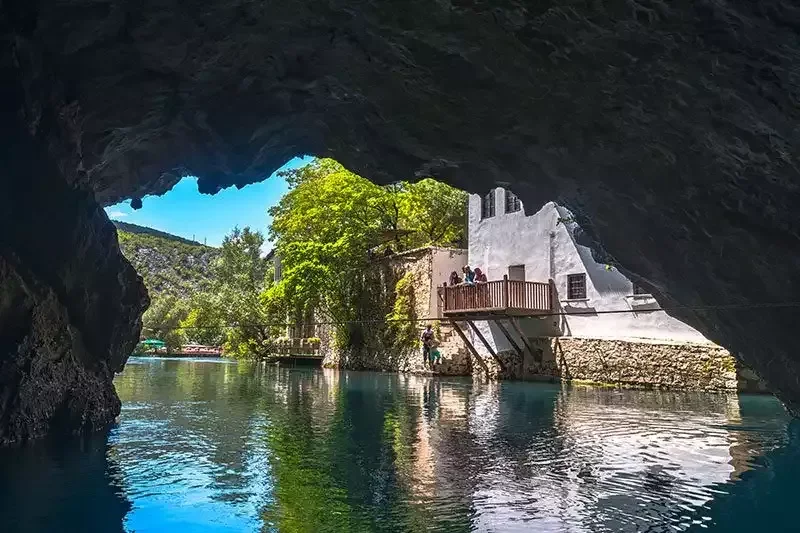
Small boats wait near the spring to take visitors inside the cave for a brief tour. The ride is short but gives a fascinating perspective of the towering rock walls stretching upward into the darkness.
Best Viewpoints for Photography
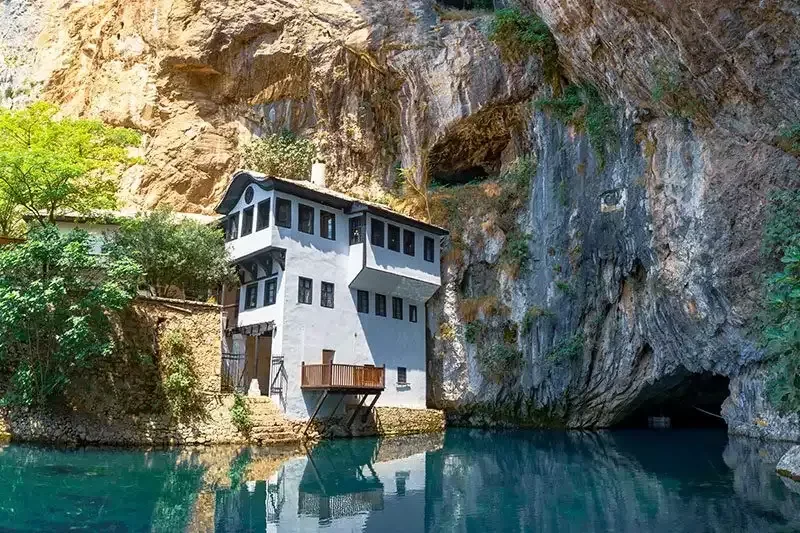
The most iconic photograph of the Dervish House cannot be taken from the building itself. You need to cross the river.
Walk past the main entrance and cross the first stone bridge on your right. Turn left, walk directly through the outdoor seating area of the riverside restaurant, and cross another small wooden bridge. Follow the rocky dirt path along the cliffside. This route leads down to a small concrete platform. Standing here puts the turquoise river directly in your foreground, perfectly framing the white monastery against the massive stone cliff.
Eating at Blagaj: Are the Riverside Restaurants Worth It?
Numerous restaurants line the banks of the Buna River. They specialize in fresh river trout, grilled meats, and traditional Bosnian coffee. The setting is spectacular. Tables sit right over the rushing water, surrounded by lush trees and steep rocks.
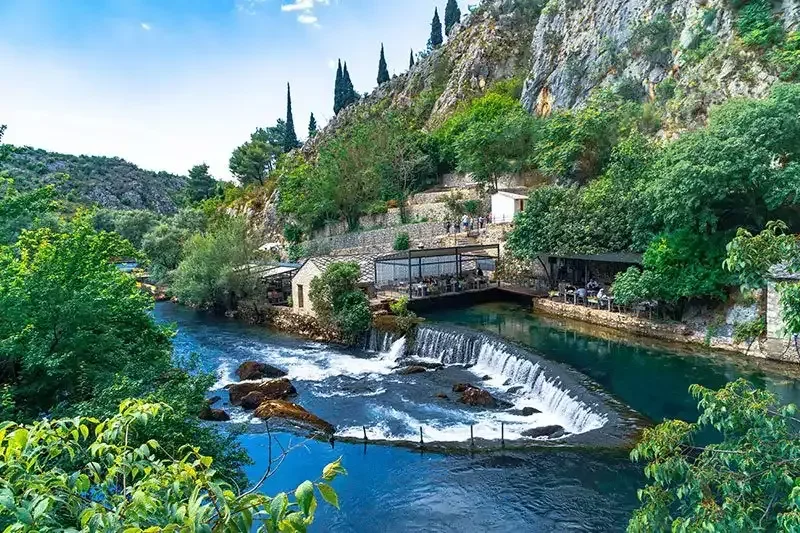
While the locations are unbeatable, expect the menus to cater heavily to tourists. Securing a table right by the water makes the experience worthwhile. Sip a strong Bosnian coffee, enjoy the cool breeze rising from the spring, and let the historical atmosphere sink in.