The Australian Age of Dinosaurs sits on a remote outback mesa 24 km south-east of Winton, Queensland. Arriving without a pre-booked tour is the fastest way to ruin a 2,500 km road trip, as walk-ins are often turned away or handed mismatched tour times. Securing your spot online weeks in advance guarantees a seamless experience across the three distinct facilities scattered across the scorching outback mesa.
| What | Details |
|---|---|
| Adult Ticket | $78 |
| Child Ticket (5-17 years) | $47 |
| Family Pass | $210 |
| Pet Policy | No pets inside the museum; free shaded kennels in the car park |
What to Expect at the Museum on The Jump-Up
The setting is rugged and the views over the Outback plain are endless. Here, the museum sits on top of a large mesa known locally as The Jump-Up. Unlike traditional indoor museums such as the Houston Museum of Natural Science, this facility integrates directly with the harsh landscape. You walk between interactive dig sites, deep canyons, and state-of-the-art preservation labs.
The Fossil Preparation Laboratory
This is the most productive fossil laboratory in the Southern Hemisphere. Inside, volunteers and technicians meticulously chip away 95-million-year-old rock from freshly excavated bones. You can actually touch a real dinosaur fossil here while listening to the staff explain their painstaking process. The sheer volume of material is staggering. Some technicians spend weeks working on a single sediment packet, making the scientific dedication highly visible.
March of the Titanosaurs and Dinosaur Canyon
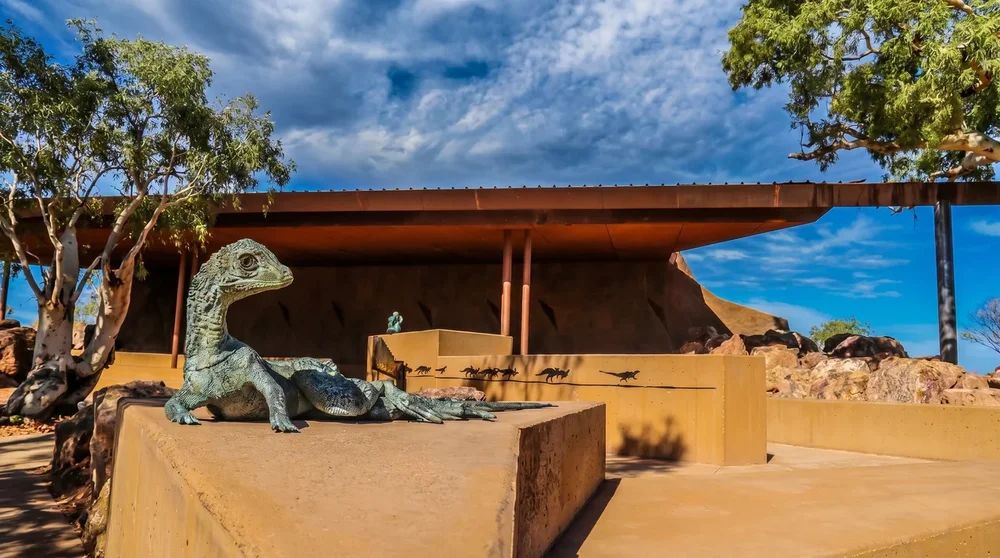
A small shuttle buggy transports you 2 km away to Dinosaur Canyon. The exhibit houses the longest dinosaur trackway in Australia - a massive 54-metre-long sequence of footprints relocated here stone by stone. The air outside is intense, and the bronze life-sized dinosaur statues are imposing against the rocky backdrop. You walk along wheelchair-accessible pathways, taking in the prehistoric scenes that overlook the valley below.
Australian Age of Dinosaurs Tour Options
You must join a guided tour to see the main exhibits. Free roaming is strictly limited to the cafe and gift shop area. Doing all three parts back-to-back takes roughly 4 hours. If you travel with young children or easily bored teenagers, call ahead and split the tour into morning and afternoon sessions to prevent fatigue.
Ultimate Dinosaur Tour vs. Winton VIP Pass
The Ultimate Dinosaur Tour covers the Laboratory, the Collection Room, and Dinosaur Canyon for $78 per adult. If you also plan to visit the Dinosaur Stampede at Lark Quarry, upgrade to the Winton Dinosaur Capital of Australia VIP Pass for $100 per adult. This combined ticket saves money and gives you a recommended two days to explore both remote sites without rushing the experience.
How to Get to the Museum from Winton
Drive north-west from Winton along the Landsborough Highway, then turn left into Dinosaur Drive. From the highway turnoff, it is a fully sealed 11 km road up to the museum. The ascent is steep but the road conditions are perfectly manageable for all vehicle types.
Driving with Caravans and Parking Rules
You can confidently tow your caravan right up The Jump-Up in low gear. The Reception Centre car park has designated bays with plenty of turning room. If your tow vehicle lacks the power for a steep incline, simply use the dedicated caravan unhitching area at the base of the mesa and drive your car up the hill alone.
Important Tips for Your Visit
The Outback environment dictates how you plan your day. Heavy rains trigger massive swarms of flies and midges, making a strong bucket hat and heavy-duty insect repellent absolute necessities for the outdoor walking sections.
Leaving dogs in hot cars is dangerous, but the museum provides free shaded pet kennels right in the car park. Bring your own water bowl and check on your dog between the different tour segments.
Many visitors miss out on the Gondwana Star Observatory because they only focus on daytime activities. The night sky out here is famously clear and the site holds International Dark Sky Sanctuary status. Secure a separate evening booking to experience the stargazing tour - a memorable way to end a day of paleontology. If you enjoy unique outdoor experiences like this, the Glass Beach at Fort Bragg is another destination that rewards visitors who plan carefully.
The Story Behind the Fossils: Banjo, Matilda, and David Elliott
The entire facility owes its existence to a giant femur discovered during a sheep muster in 1999. Local grazier David Elliott stumbled upon the bone, sparking a fossil revolution in Queensland. Today, the Collection Room houses Banjo, Australia's most complete carnivorous theropod (Australovenator wintonensis), alongside Matilda, a massive long-necked sauropod. The connection between the local community and the scientific world is palpable. The passion of the volunteers keeps the project moving toward its ultimate goal of building a massive natural history museum for the future.