Arriving at the coastal cliffs during high tide is the easiest way to miss the famous colorful pebbles entirely, leaving you staring at ordinary gray sand. Timing your arrival with the lowest daily tide exposes the hidden shoreline layers and gives you the safest access to the rocky coves.
- Location: Fort Bragg, Northern California
- Access: Short walking paths followed by steep, narrow dirt trails down to the water
- Parking: Free large parking lot with public restrooms
- Best Time to Visit: Strictly during low tide (check local tide charts before driving)
- Pet Policy: Dogs are allowed on leashes
- Strict Rule: Taking sea glass is illegal and actively ruins the ecosystem
Is There Still Glass at Glass Beach?
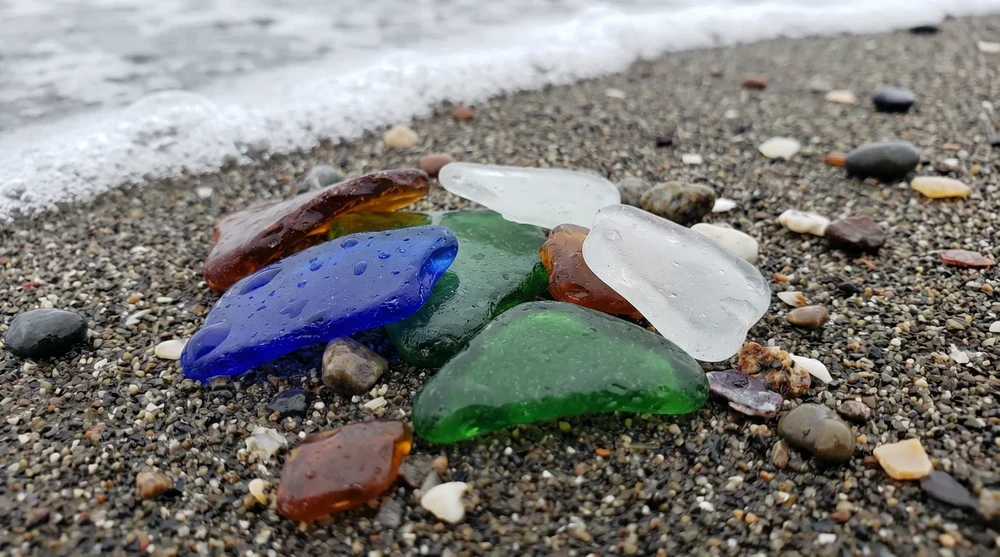
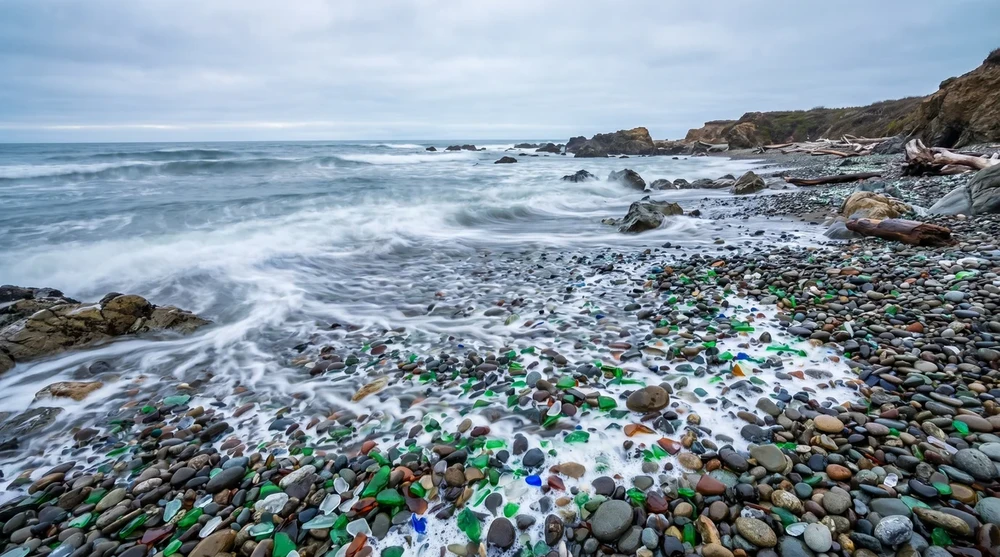
A common rumor circulates online claiming tourists have stolen every last piece of glass from the Fort Bragg shoreline. The truth requires a shift in expectations. You will not find the massive, chunky glass bottles shown in heavily edited internet photos. The beach consists of millions of pea-sized glass pebbles mixed thoroughly with natural rocks and crushed shells.
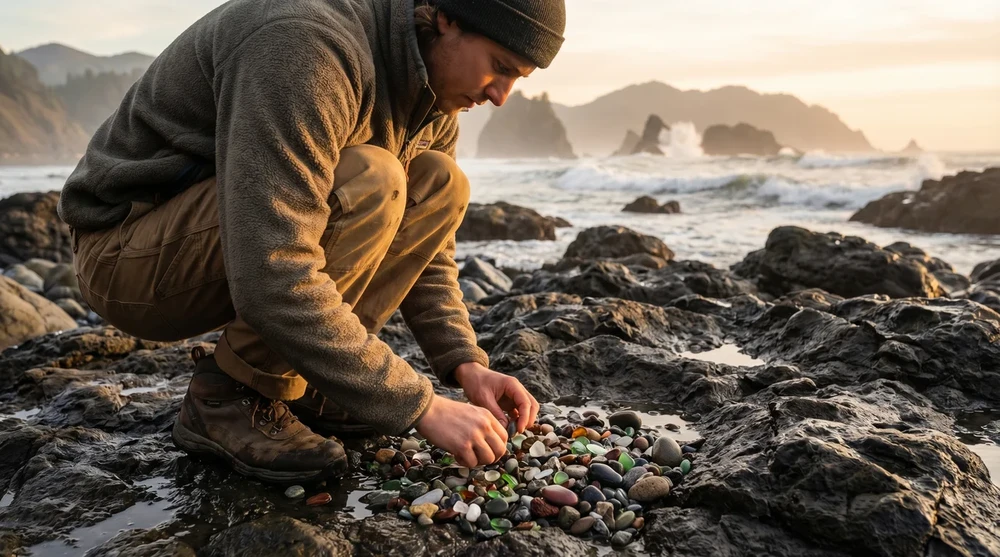
The air is usually crisp, the ocean breeze relentless. Standing upright on the sand reveals very little color. You need to crouch down and look closely where the waves meet the pebbles to spot the sparkling ruby reds, deep greens, and frosted whites. The clear and brown pieces blend perfectly with the natural environment, rewarding those who take the time to sit and sift through the layers patiently.
The 3 Different Glass Beaches (And Which One to Visit)
Most visitors do not realize that the dumping grounds from the early twentieth century created three distinct glass zones along the coastline. Knowing exactly where to step out of your car saves you hours of wandering.
Site 1: The Original Dump Site
This southern area received the earliest refuse but is mostly inaccessible today. The cliffs are highly unstable, the paths treacherous. It is best to skip this section to avoid unnecessary risks and focus your energy further north.
Site 2: The Middle Cove
Located just outside the main state park boundaries, this cove holds a respectable amount of glass. You have to navigate a tricky descent down a rocky embankment. The glass here is heavily tumbled, but the shoreline is often quieter and less congested than the main park area.
Site 3: MacKerricher State Park (The Main Attraction)
This is the primary destination with the easiest initial access. Park your vehicle in the main lot and follow the paved coastal trail. When you reach the interpretive sign at the trailhead, go right instead of left. The wooden stairs to the left washed out years ago, leaving a dead end. Following the dirt path to the right leads you to a steep but manageable sand bank dropping directly into the best glass-filled cove.
Why Low Tide is Non-Negotiable for Glass Hunting
The Pacific Ocean does not gently lap against the shore here. The water is freezing, the currents exceptionally strong. When the tide rolls in, the ocean completely swallows the glass beds, leaving absolutely nothing to see. Planning your visit around a negative tide or the lowest point of the day is crucial.
Low tide also unveils an incredible network of tide pools. The receding water exposes vibrant sea anemones, hermit crabs, and small fish trapped in the rocky depressions. Step carefully to avoid crushing these delicate marine habitats while hunting for the perfect photo opportunity.
Can You Take Glass from Glass Beach?
Stuffing your pockets with colorful sea glass feels tempting, but it is strictly forbidden within the boundaries of MacKerricher State Park. Removing these pebbles strips the beach of its unique identity and ruins the experience for future travelers.
The environment is a protected marine area. The glass pieces are now a permanent part of the local ecology, providing shelter for tiny marine life. Leave your bags in the car and rely entirely on your camera to capture the memories. If you want a physical souvenir, the local shops in town sell legally sourced sea glass jewelry.
How to Get to Glass Beach (Directions & Parking)
Reaching the area requires navigating the winding roads of the Northern California coastline. Once you arrive in Fort Bragg, the main parking lot sits conveniently close to the cliffs. The lot offers ample space, free parking, and decent restroom facilities.
Lock your doors and keep valuables out of sight, as the lot sees high turnover throughout the day. You will notice dozens of ground squirrels darting around the coastal brush near the pavement. From the parking area, a wide, flat, accessible trail runs parallel to the ocean, offering spectacular elevated views of the crashing waves before you even begin your descent to the coves.
Things to Do Near Fort Bragg After Your Visit
Spending an entire day staring at the ground will eventually hurt your neck. The surrounding area offers plenty of coastal charm to fill the rest of your afternoon. Walk the paved Noyo Headlands Trail for elevated views of the rugged coastline. It is a fantastic spot to watch harbor seals playing in the surf below.
For a deeper dive into the local history, head just south of town to the Sea Glass Museum. It houses rare colors, historical artifacts, and detailed explanations of the tumbling process. If you are continuing your journey along the coast, mapping out your California coastal highway stops ensures you do not miss the towering redwoods just a short drive inland.