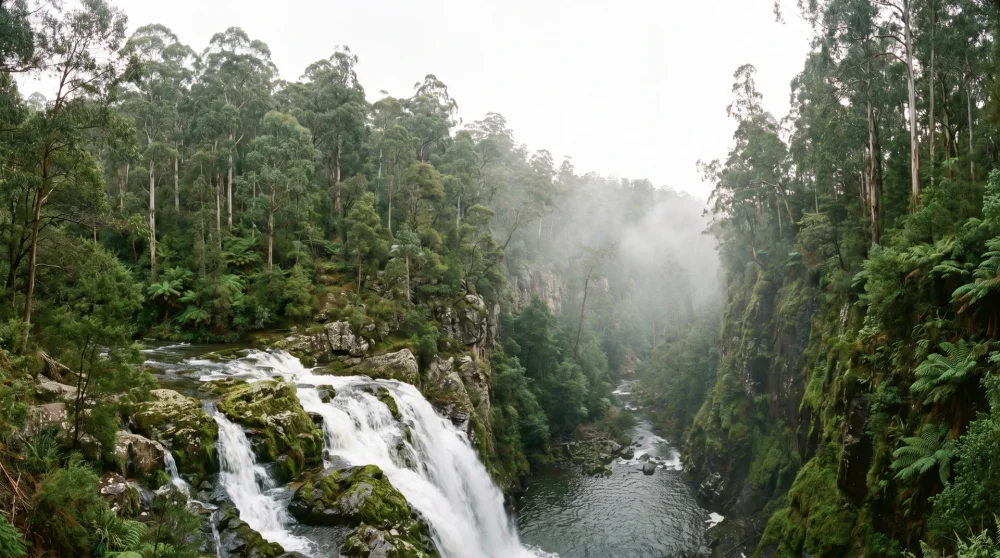
Agnes Falls sits deep in the Strzelecki Ranges of South Gippsland, Victoria, about 160 km southeast of Melbourne. The Agnes River drops 59 meters in a single unbroken plunge, making it the highest single-span waterfall in Victoria. The reserve is free to enter, easy to reach, and requires less than an hour on the ground, but a few practical details will save you a wasted trip.
What Makes Agnes Falls Special?
The Agnes River carves its way through a deep gorge before dropping 59 meters in a single span. That measurement earns it the title of the highest single-span waterfall in Victoria. The gorge is steep, the surrounding forest dense and deeply green. Water flows all year round because the river serves as a vital water supply for the surrounding towns of Toora and Welshpool, ensuring the falls never completely dry up. Flow is at its most dramatic after heavy rain in winter or early spring.
The 200 m Walking Track and Viewing Area
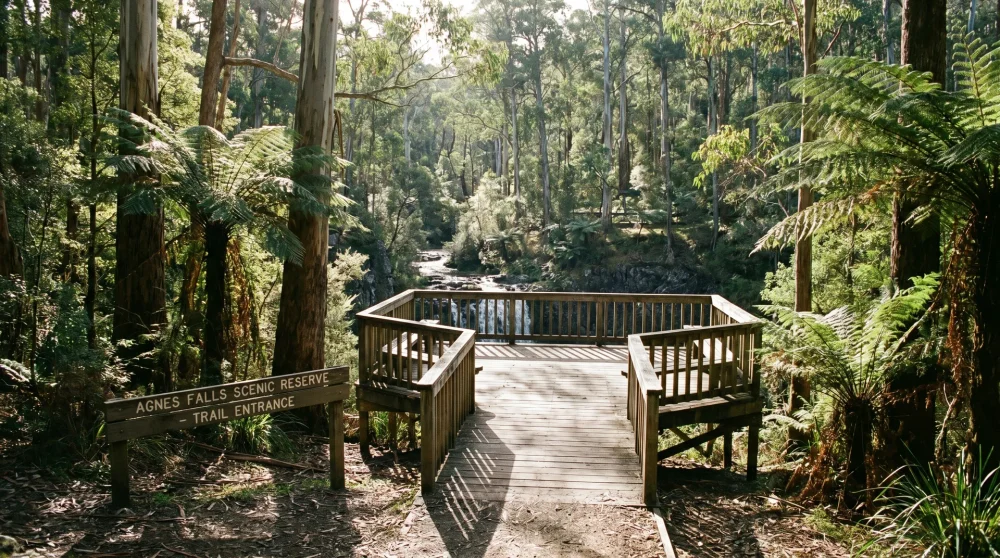
The trail from the car park to the lookout is remarkably short. You have two options. Take the direct 200-meter path, or follow the slightly longer 300-meter loop along the riverbank. The riverbank route offers a better atmosphere and more varied perspectives of the gorge.
The main path is wide and mostly flat. It is surprisingly pram-friendly for the first section. Things change as you approach the viewing platforms. You encounter a slight slope and steep steps down to the actual lookout. Wheelchair access is not possible here. Elderly visitors need to tread carefully on the uneven ground.
Do not expect a completely unobstructed view of the entire waterfall. Tall trees and thick foliage obscure parts of the drop from both platforms.
Can You Swim at Agnes Falls?
Leave your swimwear in the car. Swimming and fishing are strictly prohibited because the Agnes River forms part of the Toora Water Supply Catchment. There is no safe public access to the base of the falls. The cliff edges are treacherous, the terrain completely overgrown, and the mud on the steep banks is dangerously slippery. The viewing platforms are positioned high up on the gorge rim to keep visitors safe. Scrambling down damages the protected flora and puts you in serious danger.
Picnic Facilities and Wildlife in the Reserve
The grassy area near the car park works well for a lunch break. You will find sturdy picnic tables, both sheltered and unsheltered, and a covered rotunda. Pack all your own food and drinking water. There are no drinking water taps on site. The drop toilets use non-potable water. Always bring extra toilet paper and hand sanitizer. There are no bins anywhere in the reserve, so take all rubbish with you.
Wildlife thrives in this quiet pocket of South Gippsland. Keep your eyes peeled for koalas resting in the towering Blue Gums. Echidnas frequently forage for ants right next to the walking trails. Birdlife is varied: Grey Fantails, Crimson Rosellas, Currawongs, and Kookaburras are common. Summer adds a less welcome element. Flies and mosquitoes are relentless during the warmer months. Pack insect repellent.
Driving to Agnes Falls: Road Conditions and Parking
The road is sealed all the way to the car park. Google Maps occasionally suggests detours through unsealed farm tracks. Ignore these and stick to the signposted routes from Toora via Silcocks Hill Road and Hazel Park Road, or from Welshpool via Slade Hill Road and Hazel Park Road. Both approach roads offer scenic views of Corner Inlet Marine Park and Wilsons Promontory in the distance.
The car park is small and holds a maximum of 10 to 15 vehicles. Do not bring large caravans or motorhomes. There is barely enough room to turn a standard car around when the lot is full. Heavy vehicles are forced to attempt a difficult reverse maneuver at the bottom of the hill. Hazel Park Road occasionally closes for maintenance. Check Parks Victoria alerts before you go and be ready to take the Silcocks Hill Road detour if needed.
The reserve address is Silcocks Hill Road, Hazel Park, Victoria 3962.
Best Time to Visit for Maximum Flow
Winter and early spring deliver the most dramatic views. Heavy rains transform the gentle cascade into a powerful display. Summer visits are still worthwhile because the constant water supply keeps the falls running, but flow is noticeably reduced from December through February.
For photography, arrive before 10 AM on a sunny day. The morning sun cuts through the tall eucalypt canopy and illuminates the mist rising from the gorge. Early arrival also guarantees you a parking spot before the weekend crowds arrive.
A typical visit takes between 30 and 50 minutes including the walk and picnic time.
Nearby Stops in South Gippsland
Combine your waterfall trip with a broader coastal drive. Wilsons Promontory is approximately an hour away and makes an excellent half-day extension. Stop at the Toora Wind Farm on your way back to the South Gippsland Highway. Seeing those turbines up close contrasts sharply with the untouched nature of the gorge. Port Welshpool, roughly 10 km away, is worth a quick detour for views over Corner Inlet.
If you enjoy finding natural landmarks off the tourist trail, the Glass Beach in Fort Bragg offers a similarly compact but rewarding nature stop on the opposite side of the Pacific.