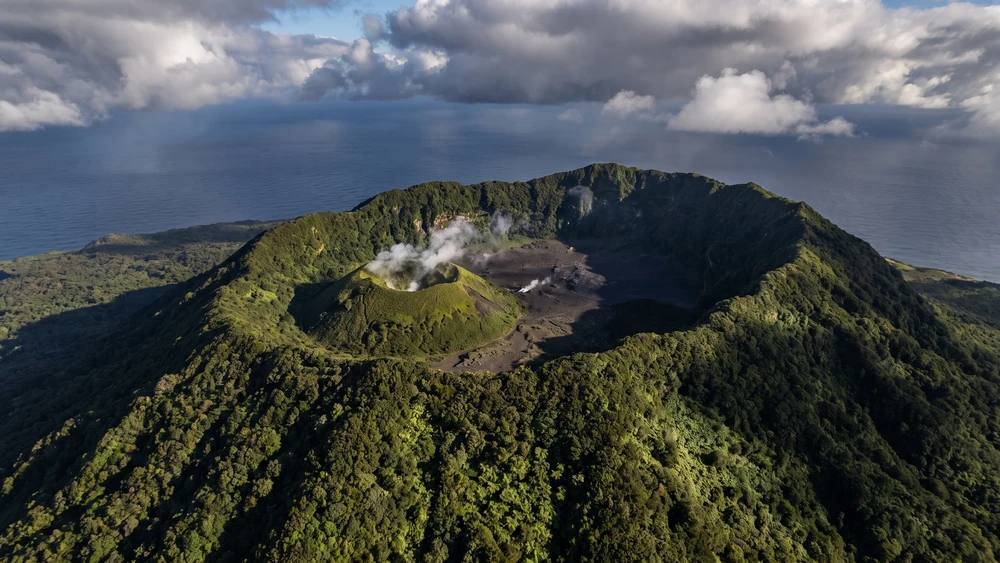
Aogashima rises from the Philippine Sea as Japan's most remote inhabited island, a sheer volcanic rim wrapped around a second, smaller cone called Maruyama. Only about 160 people live inside the outer crater full time, farming sweet potatoes and distilling shochu on some of the most dramatic land in the country. It's one of a handful of Japanese communities that essentially cannot be reached without weather cooperation, a challenge shared by outposts like Kodakarajima, another remote Japanese island reachable only by unreliable ferry. Visiting Aogashima takes patience, but travelers who make it in are rewarded with a landscape found nowhere else in the country.
- Location: Philippine Sea, reached via Hachijojima Island.
- Getting there: Helicopter or ferry from Hachijojima, both limited and weather-dependent, build slack into your schedule.
- Food & drink: Zero restaurants, one basic shop, one izakaya. Accommodations must provide your daily meals.
- Payment: Cash only. Credit cards do not work here.
- Language: Almost zero English spoken. A translation app or basic Japanese is mandatory.
Aogashima's Double Caldera: Why the Island Looks Like Nowhere Else
Aogashima is a Class-C active volcano rising directly out of the Philippine Sea. The geography features a sheer, fortress-like outer rim enclosing a second, smaller cone named Maruyama, giving the island its distinctive double-caldera shape. There are no natural bays or calm beaches to shelter incoming boats.
The island is completely exposed to harsh ocean winds and aggressive Pacific swells. The humid jungle inside the crater frequently generates thick fog, severely reducing visibility. These extreme environmental factors mean that getting stranded on the island, or being unable to reach it at all, is a normal part of the journey. The 160 local residents rely heavily on the helicopter for emergencies, leaving minimal room for casual tourism.
Getting to Aogashima (Brief)
There are no direct routes from Tokyo. You travel first to Hachijojima, then take either a helicopter or a ferry into Aogashima. Both options are seasonal and frequently disrupted by weather. We cover the exact booking windows, cancellation rates, and step-by-step ticket advice in a dedicated guide to reaching Aogashima.
Where to Stay in Aogashima (Booking Realities)
Island safety regulations dictate that you cannot visit Aogashima, let alone rent a car, without a confirmed accommodation booking. Finding a bed is harder than it sounds.
Minshuku and the Construction Worker Issue
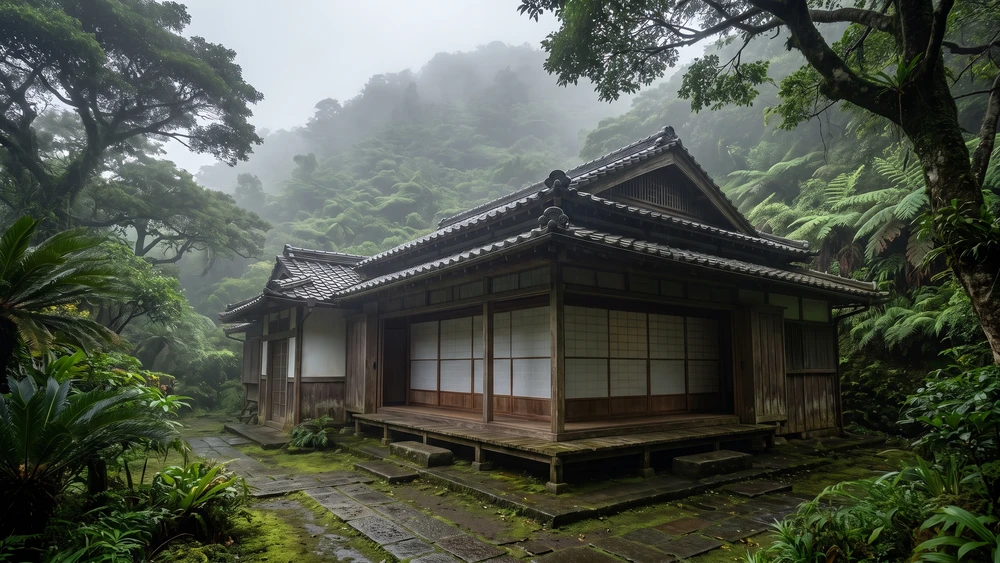
Aogashima has no hotels, only about six basic Japanese-style inns (minshuku). These guesthouses are frequently booked solid for months. The island requires constant structural repair against collapsing cliff walls, meaning infrastructure workers and telecommunications crews often occupy most of the available rooms.
You must book over the phone, and Japanese is heavily preferred. Minshuku Aogashimaya is a common choice, but expect a highly communal atmosphere. Your booking will typically include three meals a day, which is crucial given the lack of food infrastructure.
Camping Inside the Volcano Crater
If the guesthouses are full, the free campsite at the Ikenosawa caldera is your backup. Setting up a tent inside an active volcano is a rare experience, surrounded by lush ferns and towering crater walls. You must register at the village office. Camping means you are entirely responsible for your own food, which requires bringing provisions from Hachijojima.
Things to Do in Aogashima
The island is tiny, and its attractions are purely nature-based. Renting a car is recommended given the steep inclines, but requires an International Driving Permit.
Hiking the Maruyama Inner Cone
The inner crater, Maruyama, looks like a giant, moss-covered mound rising out of the outer rim. A hiking trail circles it and takes about 45 minutes to complete. Volcanic activity here is constant, with white steam venting from the lush green slopes, a contrast between tropical plant life and steaming earth that feels genuinely otherworldly.
Cooking with Geothermal Steam at Fureai Sauna
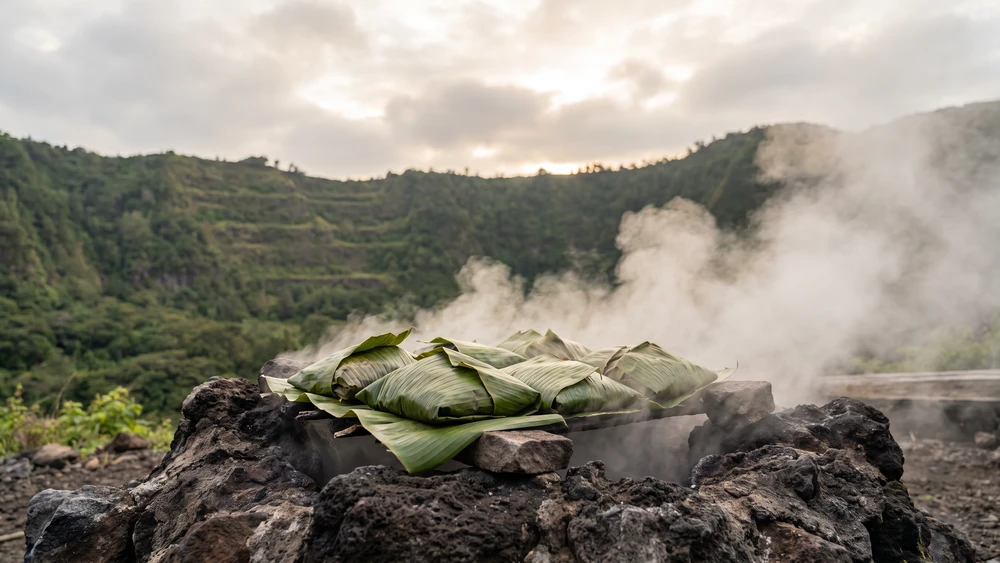
Right next to the Maruyama cone sits the Fureai Sauna, a public bathhouse powered entirely by volcanic heat. Outside the facility, you can access a geothermal kettle known as Hingya.
You can bring raw eggs or potatoes, usually provided by your minshuku if you ask for a packed lunch, and steam them over the active volcanic vents. Eggs take about 20 minutes, potatoes need 40 minutes. Afterward, head inside the sauna to sweat it out. The sauna is closed on the first, third, and fifth Wednesdays of the month.
Otonbu Viewpoint and Stargazing
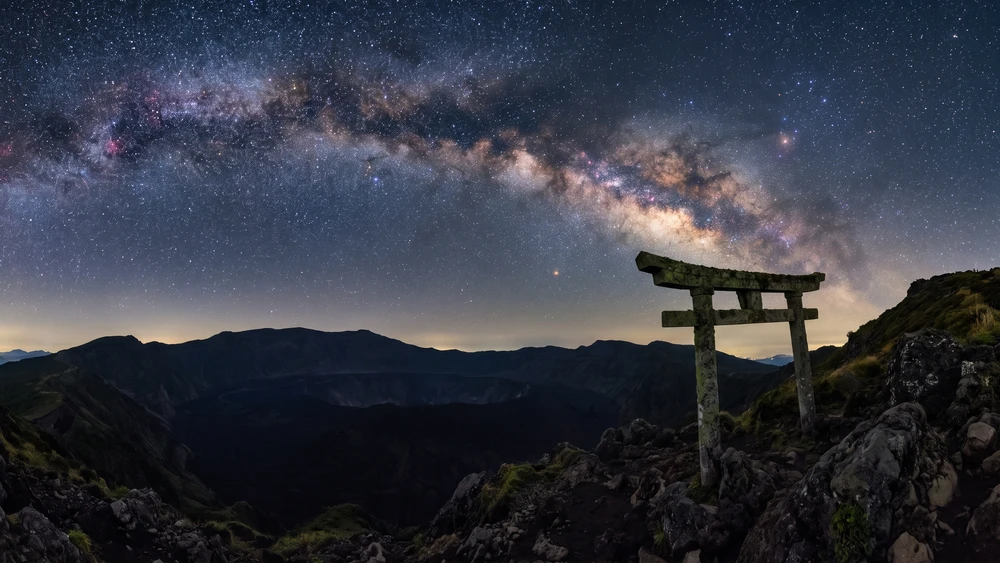
Otonbu is the highest vantage point on the island and the best spot to grasp the scale of the double caldera. The viewpoint features a collapsed Torii gate from the Todaisho Shrine, adding a stark atmosphere to the hike up.
After dark, head to the Oyama Observatory Park. Aogashima has practically zero light pollution, and on a clear night the Milky Way stretches across the sky. You may even spot Canopus low on the horizon.
Food, Cash, and Daily Logistics
Survival on Aogashima requires strict self-reliance. There are no convenience stores. A single, basic shop sells limited snacks and souvenirs, including the prized Hingya sea salt, distilled over a month using volcanic steam.
The island has one izakaya named Monji. Prices are noticeably higher than on the mainland, and smoking is permitted inside. The local specialty to try is Aochu, a sweet potato shochu unique to the island, and Shima Zushi, a marinated raw fish sushi served with mustard instead of wasabi. Always carry enough yen to cover your entire stay, plus emergency cash for unexpected delays.
Suggested 1-2 Day Itinerary
Keep your schedule flexible. If the helicopter flies or the ferry sails, drop everything and get on it.
Day 1:
- Arrive at the Aogashima heliport or port.
- Pick up your rental car (return it with a full tank).
- Drive down into the Ikenosawa caldera.
- Hike the 45-minute Maruyama inner cone loop.
- Cook lunch using the geothermal vents and relax at the Fureai Sauna.
- Check into your minshuku for dinner.
- Drive to Oyama Observatory Park for night stargazing.
Day 2:
- Hike up the stone steps to Otonbu Park for the iconic caldera view.
- Stop by Jowman Ranch on the northern tip to see the free-roaming Wagyu cattle.
- Visit the lone shop to buy Hingya salt or Aochu liquor.
- Head to the heliport or harbor for departure, weather permitting.