Arriving on Kodakarajima without a week's supply of food and water is a critical mistake that will leave you stranded on a 1 km² island with zero supermarkets or restaurants. Surviving this remote outpost in the Tokara chain requires treating your trip like an expedition, not a casual beach holiday.
- Population & Size: ~49 residents, 1 km² area (a 4 km circumference you can walk in 30 minutes).
- Infrastructure: 0 shops, 0 restaurants, 1 vending machine.
- Ferry Toshima: 12+ hours from Kagoshima Honko Port South Pier. Departs twice a week.
- Hazards: Tokara Habu (venomous snake), biting midges (nukaka), severe typhoon cancellations.
- Accommodation: 3 small guesthouses (advance booking mandatory) and 1 designated campsite.
The Reality of Reaching Kodakarajima
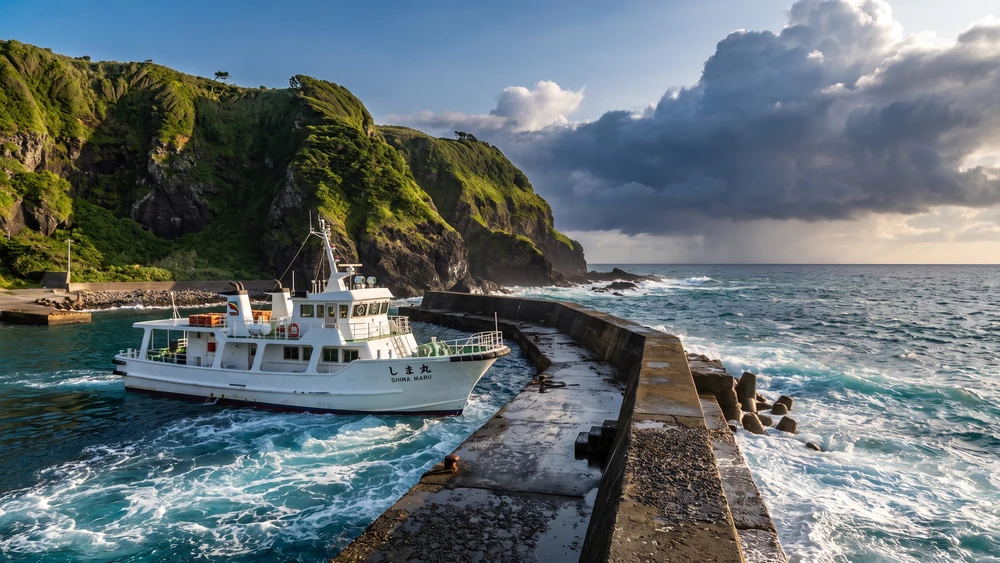
Getting to this speck in the East China Sea relies entirely on the village-operated Ferry Toshima. The journey takes around 12 hours from Kagoshima, navigating through open, often turbulent Pacific waters.
Booking Your Ferry Tickets in Kagoshima
You cannot simply book a digital ticket on a modern app and walk aboard. Tickets must be purchased in person at the Kagoshima Honko Port South Pier Passenger Terminal. You need to fill out a boarding form with your basic details and hand it to the counter staff before departure.
The ship usually departs late at night, around 23:00, putting you at the Kodakarajima port early the next morning.
Weather Cancellations and Docking Realities
The schedule looks reliable on paper, but the ocean dictates the actual departure times. Typhoons and high winds frequently cause cancellations, leaving passengers stranded in Kagoshima or trapped on the island for days beyond their intended stay.
The Yudomari harbor on Kodakarajima is particularly susceptible to wind and wave action. Even if the ferry reaches the island, rough waters often prevent the crew from lowering the vehicle ramp. Passengers might manage to disembark via a narrow gangway, but bicycles or motorcycles usually require a crane lift, risking damage to your gear.
Yudomari Onsen: The Free 24-Hour Oceanfront Hot Spring
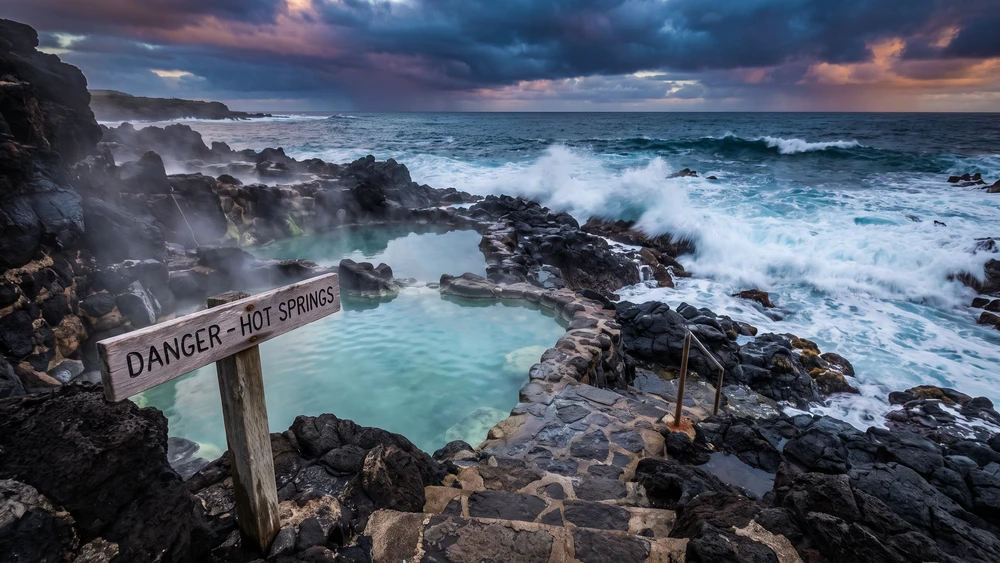
A 15-minute walk from the port brings you to the island's primary draw, Yudomari Onsen. This open-air, sulfur-chloride hot spring sits directly on the rocky coastline, offering unobstructed views of the ocean and the night sky.
Navigating the Mixed-Bathing Rules
The facility consists of concrete pools built into the rocks, blending piping-hot spring water with cold seawater to reach a bearable temperature. Because this is a single, mixed-gender bathing area, the community uses a simple wooden sign system at the entrance to manage privacy.
Before walking up the stone steps, check the sign. It features four distinct sides to flip:
- Inai (いない): Empty / No one is bathing.
- Otoko (おとこ): Men currently bathing.
- Onna (おんな): Women currently bathing.
- Kazoku (かぞく): Family currently bathing.
Always update the sign to reflect your presence, and flip it back to Inai when you leave.
Cooking with Natural Steam Vents
Right next to the bathing pools, geothermal steam erupts straight from the volcanic ground. These natural vents serve as an outdoor kitchen.
You can utilize this heat to steam sticky rice or vegetables, provided you bring the ingredients from the mainland. Wrapping your food in large fan palm leaves helps trap the sulfur-tinged steam, cooking a dense, flavorful meal without needing a camp stove.
What You Must Know Before Camping on Kodakarajima
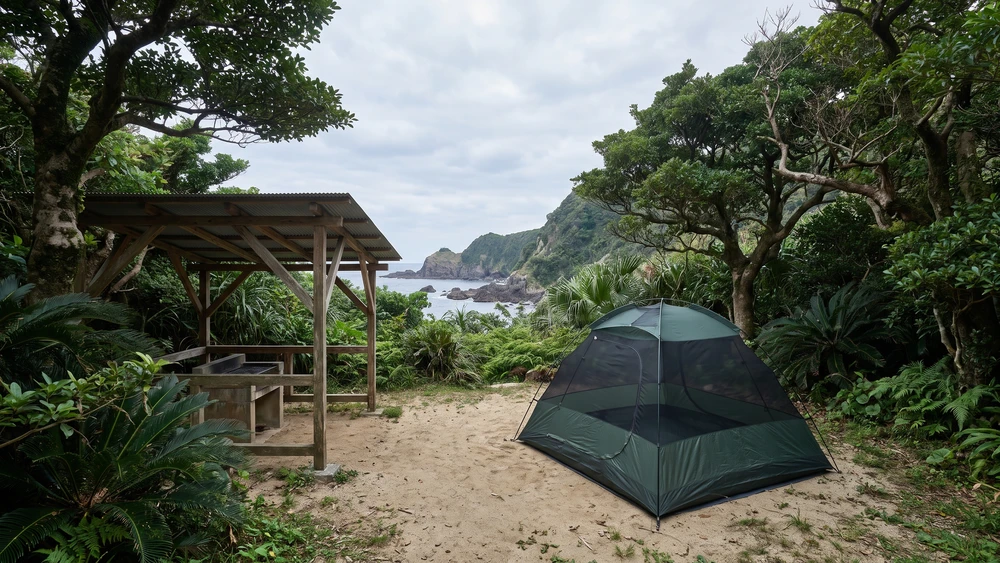
Wild camping is strictly prohibited anywhere on the island. You must use the designated Yudomari campsite, which costs around ¥300 per night and offers a small cooking area, cold showers, and toilets.
The Zero-Infrastructure Rule
Money holds very little value once you step off the ferry. The island operates without a single convenience store, grocery shop, or independent restaurant.
You must pack every calorie you intend to consume. Bring all your alcohol, cooking fuel, rice, canned goods, and snacks from Kagoshima. There is exactly one vending machine on the island, and relying on it for your daily hydration is a massive gamble, as restocks only happen when the ferry arrives.
Wildlife Hazards: Tokara Habu Snakes and Biting Midges
Kodakarajima sits exactly on the Watase Line (the Tokara Gap), a major biogeographical boundary. This means the island is home to the Tokara Habu, an endemic venomous pit viper. Staying strictly on paved paths and avoiding thick brush is mandatory for your safety.
An equally fierce, though non-lethal, threat comes from the local biting midges (nukaka). These microscopic insects bypass standard tent mesh and leave intensely itchy red welts that last for weeks. Standard mosquito coils do absolutely nothing to stop them. If you plan to camp, your tent must feature an ultra-fine midge mesh inner layer, and you need heavy-duty insect repellent applied constantly.
Exploring the 1 km² Island
Because no rental cars or bicycles exist, exploring the island means walking. The completely flat terrain rises to a maximum elevation of just 103 meters at Mount Doro.
Akatachigami and Unegami Rock Formations
The coastline is dominated by dramatic, uplifted coral limestone formations known as tachigami-iwa (standing god rocks). A walk along the perimeter reveals jagged remnants of tectonic shifts from thousands of years ago.
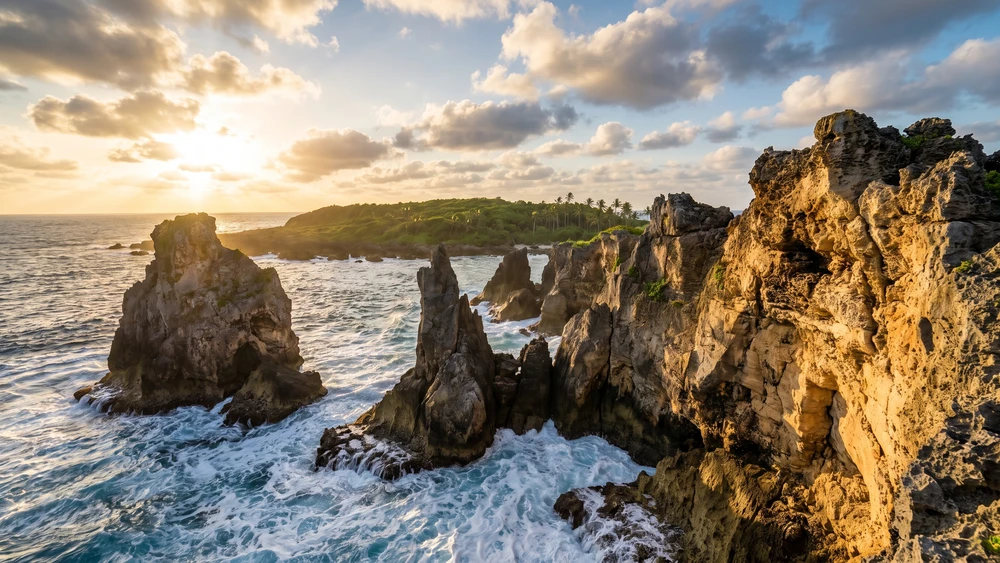
The most prominent of these is Akatachigami. Its dark base and reddish upper surface closely resemble a traditional oil lamp with a burning flame. A short distance away, the towering Unegami rock formation stands battered by the Kuroshio Current, offering a raw look at the volcanic forces that shaped the entire Tokara archipelago.