Visitors often default to generic hotel buffets or standard Caribbean fare, completely missing the indigenous Arawak and African roots that define St. Vincent's true culinary identity. To actually taste this island, you need to step away from the resort menus and dig into the hyper-local ingredients, like volcanic-grown arrowroot and salt-cured catches, that shape the authentic Vincentian kitchen.
- The National Dish: Roasted Breadfruit and Fried Jackfish
- Signature Local Beer: Hairoun (translates to "Land of the Blessed")
- Must-Visit Food Hub: Kingstown Weekend Market (Peak days are Fridays and Saturdays)
- Dietary Note: Seek out Madongo Dumplings; they are made from native arrowroot and are naturally gluten-free
The National Dish: Roasted Breadfruit and Fried Jackfish
You cannot understand St. Vincent's food culture without understanding breadfruit. Brought to the islands to feed enslaved people due to its high caloric value, this starchy fruit is now a celebrated symbol of freedom and endurance. Over 25 different varieties grow across the island, providing a versatile base for the local diet.
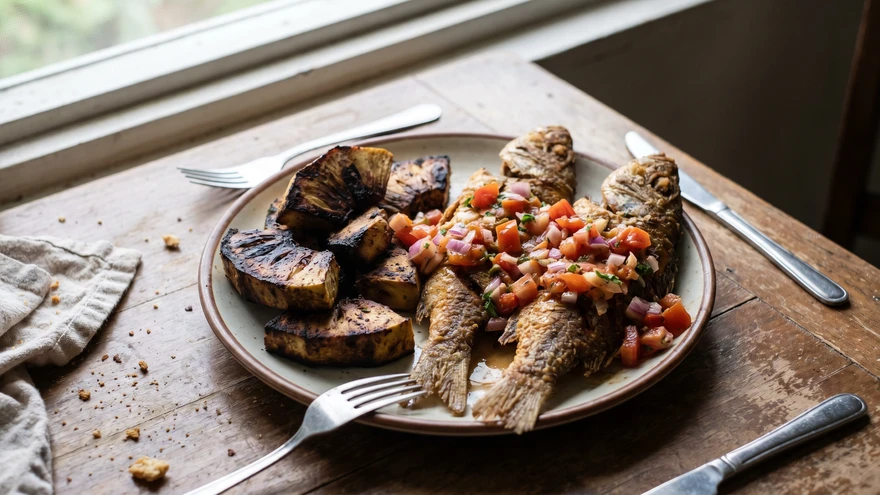
The preparation of the national dish is deeply traditional. The whole breadfruit goes directly over an open fire until the skin chars black, leaving the dense inside tender and slightly smoky. It tastes remarkably like a rich, earthy potato.
The jackfish gets a sharp citrus marinade, a light dusting of flour, and a quick fry until the edges are completely crisp. A savory, acidic sauce made of tomatoes, onions, garlic, and fresh thyme cuts through the heaviness of the starch, pulling the entire plate together.
Traditional St. Vincent Foods You Must Try
Callaloo Soup
Forget thin, watery broths; Vincentian callaloo is a thick, nutrient-dense powerhouse. It acts as the ultimate comfort food, deeply rooted in West African culinary traditions.
The base relies heavily on dasheen (taro) leaves, which break down during cooking to create a rich, dark green stew. Cooks build the flavor profile using fresh coconut milk, okra, garlic, and local ground provisions like yams or cassava. While you can find vegan versions, traditional pots often include salted meat or fresh crab to give the soup a deep, briny complexity. It is hearty enough to be the main event at lunch.
Madongo Dumplings (The Arrowroot Secret)
This is a dish you will rarely find outside of St. Vincent. The island remains one of the few places in the world that commercially cultivates arrowroot, a starchy tuber that thrives in the volcanic soil.
Locals mix the native arrowroot flour with fresh grated coconut and nutmeg to form these dense, flavorful Madongo dumplings. Because arrowroot contains no gluten, they are a naturally safe option for those with wheat sensitivities. You won't easily spot them on fine-dining menus. Your best bet is tracking them down at local street food stalls, family-owned eateries, or community gatherings.
Salt Fish Buljol
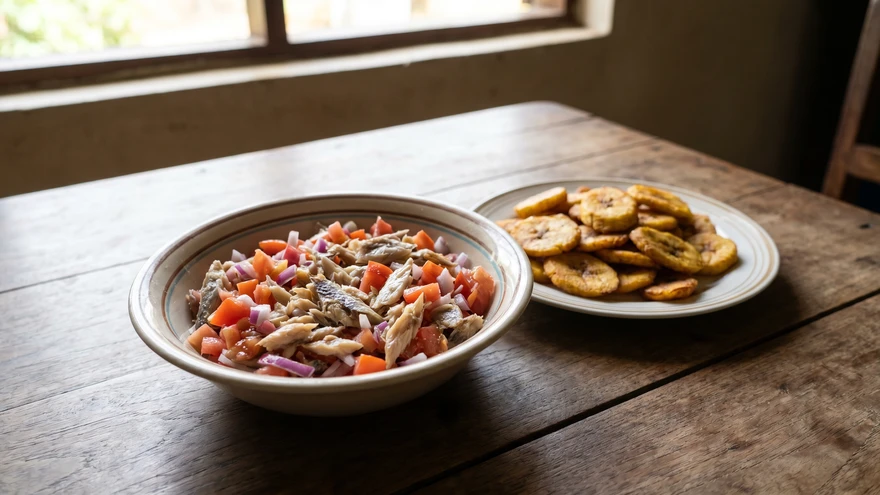
When the Caribbean heat peaks, a hot, heavy breakfast isn't always appealing. Buljol solves this problem brilliantly. It is a refreshing, savory salad served cold or at room temperature, originally born out of the necessity to preserve fish before modern refrigeration.
The process starts by soaking salted cod to remove the harsh brine. The fish is then shredded and tossed raw with olive oil, diced tomatoes, sharp onions, and sweet peppers. A generous squeeze of fresh lime juice brightens the entire mixture. Grab a piece of hard dough bread or a few fried plantains to scoop it up.
Local Desserts and Sweet Treats
Ducana
Ducana plays a clever trick on the palate, sitting right on the line between a savory side dish and a sweet dessert. It is essentially a boiled pudding wrapped tightly in banana leaves.
The mixture features grated sweet potatoes, coconut, brown sugar, and a heavy pinch of warming spices like cinnamon and nutmeg. Boiling it inside the banana leaf traps the moisture, resulting in a dense, chewy texture. Locals often serve it cold as a standalone snack, though it frequently appears warm alongside heavily salted stews to provide a sharp flavor contrast.
Banana Fritters
St. Vincent produces an abundance of bananas, and no ripe fruit ever goes to waste. Banana fritters are the ultimate quick-fix comfort food, requiring nothing more than overripe bananas, a handful of flour, a bit of sugar, and hot oil.
The batter drops straight into the pan, frying up with a caramelized, golden-brown crust while the inside stays soft and molten. You will smell the sweet, frying sugar as you walk past almost any local beach bar or street corner early in the morning.
What to Drink in St. Vincent
Hairoun Beer
You cannot leave the island without holding a cold, sweating bottle of Hairoun on a hot afternoon. The Hairoun Brewery, sitting just northeast of Kingstown, has been producing this iconic pale gold lager since the mid-1980s.
The name itself carries weight; "Hairoun" is the indigenous Garifuna word for St. Vincent, meaning "Land of the Blessed." The beer pours with a light head and delivers distinct, crisp citrus notes that cut through the humidity perfectly. It is cheap, ubiquitous, and pairs flawlessly with heavy, spicy seafood.
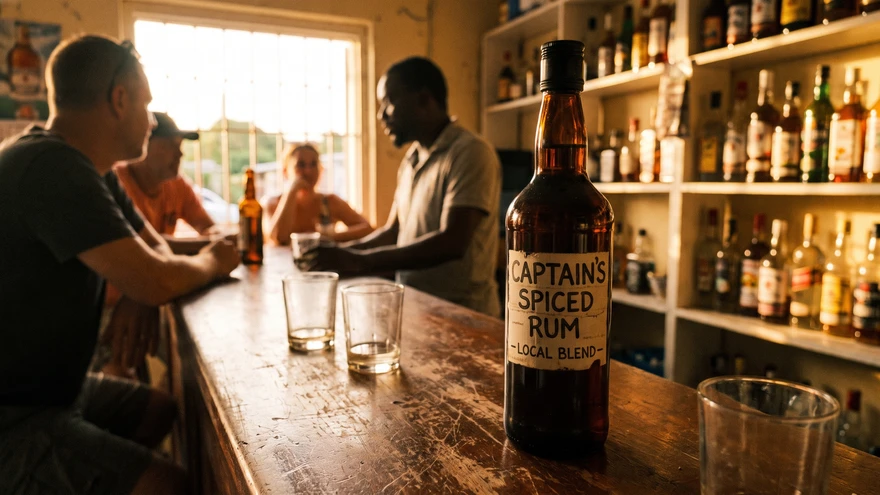
Sunset Rum
Sugar plantations fueled the early rum trade here, and while bananas later took over the agricultural spotlight, the local dedication to rum never faded. St. Vincent Distillers in Georgetown anchors the island's spirit production.
Sunset Rum is the undisputed local champion. The brand produces a heavily spiced, highly recommended rum punch that resorts love to hand out upon arrival. However, if you order the famous Sunset Very Strong Rum at a local rum shop, approach it with serious caution. For a smoother, sipping experience, look for a pour of the award-winning Captain Bligh XO.
Food Festivals and Market Days
The Breadfruit Festival (August)
August in St. Vincent means Emancipation Month, and the celebrations intertwine directly with the island's agricultural survival. The Breadfruit Festival runs every weekend throughout the month, spanning different communities across the island.
Admission is completely free. The goal is to force you to rethink how this fruit can be used.
Local chefs and farmers set up stalls showcasing breadfruit cheese pies, breadfruit pizza crusts, quiches, and even sweet breadfruit candies. It is the best time of year to see the sheer creativity of Vincentian cooks. If your dates line up with Vincy Mas instead, expect an equally creative wave of street food vendors setting up across Kingstown for the parade season.
Kingstown Weekend Market
If you want to understand exactly what goes into the food you are eating, grab a sturdy bag and head down to the Kingstown Market on a Friday or Saturday morning. Combine the visit with a stop at Fort Charlotte and the Botanical Gardens to turn market morning into a full Kingstown day.
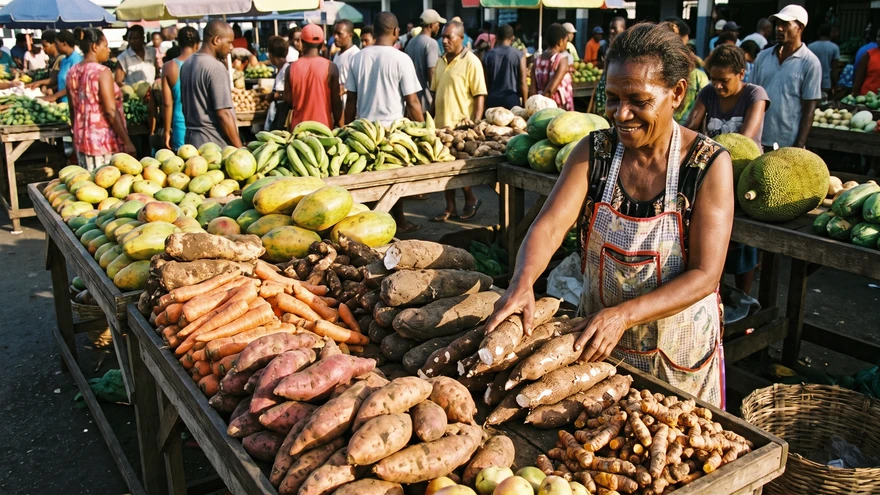
The energy is loud, chaotic, and incredibly authentic. This is where the island's farmers and fishermen drop their freshest hauls. You will navigate through massive piles of root vegetables, fresh catches of red snapper and pilot whale, and heavy clouds of local spices. Skip the tourist-trap cafes near the cruise terminal; buy a hot snack directly from a vendor here and eat it while you walk.