Booking a yacht in the Grenadines is easy, but underestimating the 20-knot Atlantic trade winds and the steep drop-off in provisioning options south of St. Vincent is a common first-timer mistake. This island chain demands actual sailing logistics, from securing a mooring ball in the Tobago Cays before 10:00 AM to calculating exact marine park fees.
- Prime Season Wind: 15-25 knots ENE/ESE (December to May)
- Swell Conditions: 1-3 meter ocean swells between islands
- Average Catamaran Rate: $4,000-$8,000 USD per week (bareboat, high season)
- Tobago Cays Fees: $11 USD (EC $30) per person, per day
- Currency: Eastern Caribbean Dollar (XCD), though USD is widely accepted
Bareboat vs. Crewed Charters in the Grenadines
The Grenadines are not the British Virgin Islands. The water between these islands features genuine ocean swells, not a protected, lake-like environment.
If you lack offshore experience, a crewed charter or hiring a local skipper ($150-$200/day) is the smart move. Bareboating here requires confident anchoring skills and the ability to reef sails quickly when trade wind squalls roll through. Catamarans dominate these waters because their wide stance absorbs the Atlantic swell and their shallow draft allows you to tuck closely behind protective reefs.
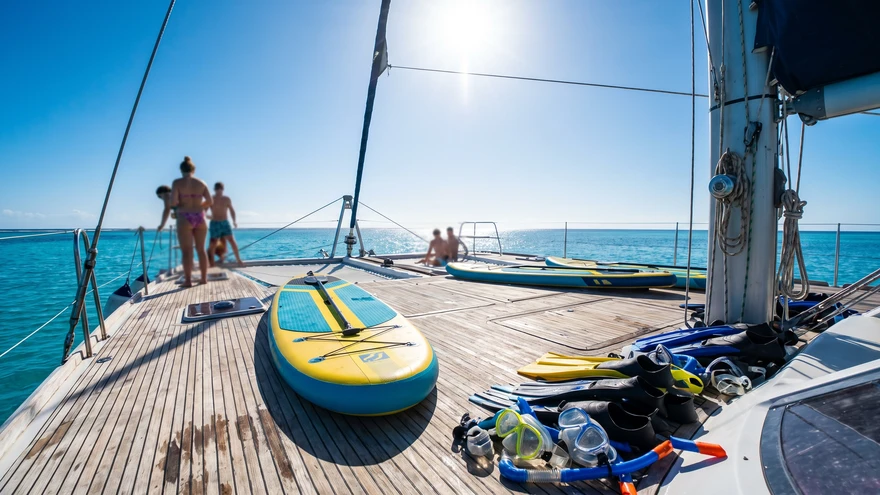
Catamarans also offer massive deck space for water toys. If you are securing an inflatable SUP to the lifelines, ensure the charter company provides a high-capacity electric 12V pump; manually hand-pumping a board to 15 PSI under the midday Caribbean sun is an exhausting way to start your morning.
SVG Customs Clearance and Marine Park Permits
St. Vincent and the Grenadines (SVG) is a single nation, so you clear customs once upon arrival, keeping the paperwork streamlined for the bulk of the trip.
Kingstown or Blue Lagoon Marina in St. Vincent are the standard entry ports for southbound departures. If you are sailing a one-way route south to drop the boat in Grenada, checkout happens at Clifton Harbour on Union Island. Expect nominal clearance fees for checking in and out, usually totaling $30-$50 USD.
Tobago Cays Park Rangers collect the $11 USD (EC $30) per-person daily fee directly on the water. Keep cash ready early in the morning to avoid delays.
Top Mooring Fields and Anchorages (What to Expect)
Choosing where to drop the hook dictates how well you sleep.
Admiralty Bay, Bequia (The Safe Haven)
Admiralty Bay is the most reliable first stop after crossing the choppy Bequia Channel, and the harbor sits close enough to town to explore what else Bequia has to offer once the anchor is set. The southern end near Princess Margaret Beach offers excellent holding in sand at 5 to 10 meters depth.
Local "mooring boys" in small wooden boats approach incoming yachts to offer privately laid balls. Always inspect the pennant and shackle condition yourself before tying off and handing over the nightly fee.
Tobago Cays Marine Park (The Crown Jewel)
Anchoring directly on the coral reef is strictly prohibited. Moorings here are tightly regulated to protect the turtle grass beds and the reef ecosystem.
Arrive before 10:00 AM during the high season. By noon, the best spots inside the Horseshoe Reef fill up with day-trippers who arrive by water taxi for the same turtle snorkeling that makes this anchorage famous. The holding outside the designated mooring zones is notoriously poor, and park rangers actively patrol to enforce the boundaries.
Wallilabou Bay (The Hollywood Stop)
Wallilabou Bay, known as the Port Royal film set, is logistically tricky for overnight stays. The seabed drops off incredibly fast, remaining deep right up to the shoreline.
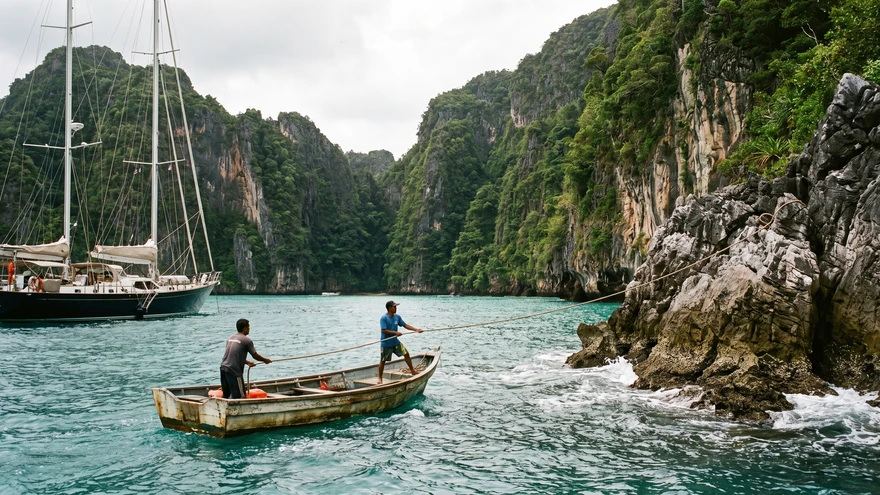
Boats must drop a bow anchor in deep water and immediately run a stern line to a tree or concrete block on shore. Local boatmen hover in the bay specifically to help take your stern line to land; their local knowledge is worth the small tip.
Provisioning Strategies: St. Vincent vs. Union Island
Food prices skyrocket the further south the boat sails.
Stock the heavy items, drinking water, beer, canned goods, and primary proteins, at the major supermarkets near your charter base in St. Vincent. Blue Lagoon Marina offers easy access to fully stocked grocery stores before you untie the dock lines.
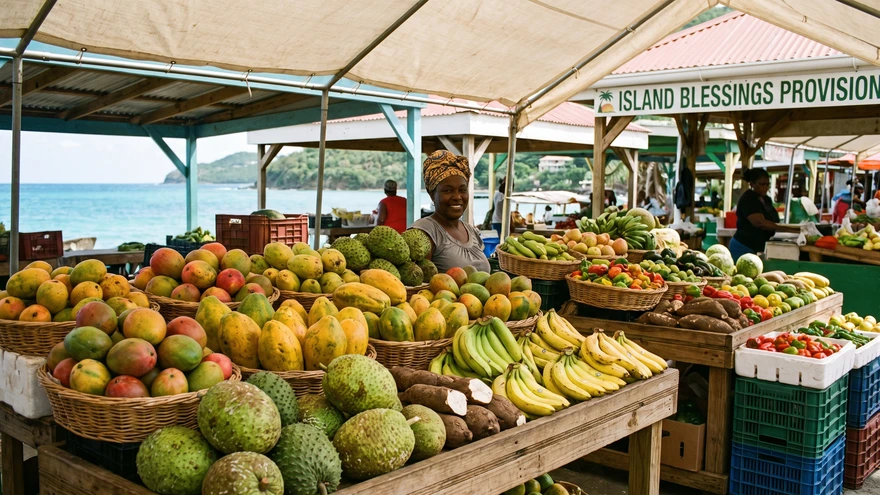
Union Island has decent fresh markets, but imported goods cost significantly more due to transport logistics. For the best value, buy fresh lobster and fish directly from local vendors in the Tobago Cays for beach BBQs. It bypasses supermarket markups entirely and guarantees the freshest catch.
A Realistic 7-Day Beginner Sailing Route
Sailing south with the trade winds on a beam reach is fast and comfortable. Beating back north against the Atlantic swell is a punishing slog that burns fuel and exhausts the crew. Book a one-way charter dropping off in Grenada or Union Island if the budget allows.
- Day 1: St. Vincent to Bequia (9 NM): A rough but short shake-down sail across the channel. Pick up a mooring in Admiralty Bay.
- Day 2: Bequia Exploration: Stay put. Provision up, explore the boatbuilding heritage, and adjust to the island pace.
- Day 3: Bequia to Mustique (8 NM): A fast beam reach. Pick up a Mustique Company mooring in Britannia Bay and check in ashore, then read up on how to visit Mustique if there's time to explore beyond the anchorage.
- Day 4: Mustique to Mayreau (16 NM): A longer, highly rewarding downwind sail. Anchor in Saline Bay and walk the steep hill to the village.
- Day 5: Mayreau to Tobago Cays (3 NM): A tiny hop. Leave at dawn to grab a premium mooring inside the Horseshoe Reef.
- Day 6: Tobago Cays to Union Island: A quick sail to Clifton Harbour to restock ice, grab fuel, and manage your outbound customs clearance.
- Day 7: Union Island to Carriacou/Grenada: Cross the Kick 'Em Jenny Bank into Grenadian waters for the final leg of the charter.