Buying a caravan that exceeds your vehicle's towing limit is the most dangerous and costly mistake a beginner makes. Understanding exact payload capacities and aerodynamic drag profiles before falling in love with a spacious layout prevents severe highway swaying.
- Teardrop trailers: Ideal for hatchbacks, zero aerodynamic drag, excellent highway stability
- Single-axle: Best for mid-size SUVs, moderate drag, highly maneuverable in tight spaces
- Twin-axle: Requires heavy SUVs or 4x4s, high drag, maximum stability against crosswinds
- Pop-tops: Great for crossovers, low towing profile, fits standard garage storage
Towable Caravans (The Classics)
Towable models offer the ultimate flexibility of leaving your living quarters at the campsite while exploring the surrounding area with your daily car.
Conventional Single-Axle Caravans
These are the standard white boxes dominating most campsites globally. A single pair of wheels sits right in the middle of the chassis. This design makes them highly agile. You can unhitch them and push them onto a pitch entirely by hand.
The interior layouts are incredibly diverse. They often feature a fixed bed, a compact washroom, and a dining area that converts into an extra sleeping space. Single-axle models demand careful weight distribution. Loading too much heavy gear at the rear creates a pendulum effect at high speeds. Keeping the nose weight optimal is vital for a safe drive.
Family vans typically sit between 1,100 kg and 1,700 kg MTPLM, which puts them within range of most mid-size SUVs and estate cars. Always verify your car's towing limit on the VIN plate before visiting a dealership.
Twin-Axle Caravans (Heavy Duty)
Larger families or full-time travelers gravitate towards twin-axle models. Four wheels distribute the weight much better and provide immense stability on highways. The risk of a tire blowout causing a catastrophic sway is significantly lower.
Inside, the space is massive. Full-sized shower cubicles, larger fridges, and dedicated lounging areas are standard features. Modern luxury twin-axle models stretch to eight feet wide, adding roughly six inches of interior space per side compared to standard tourers. The downside is maneuverability. Turning them by hand is almost impossible. You absolutely need a motorized motor mover installed on the wheels to park them precisely.
Teardrop & Mini Caravans (Lightweight Options)
Minimalism is the core philosophy here. Teardrop trailers are compact, aerodynamic pods that look exactly like their namesake. They have zero standing room. The interior is entirely dedicated to a comfortable double bed.
The kitchen facilities are cleverly hidden under a rear hatch that opens upwards. You cook standing outside in the fresh air. Teardrop models are incredibly light, meaning almost any standard passenger car can tow them without stressing the engine. Their low profile completely eliminates crosswind anxiety on open bridges.
Storage is dramatically simpler too. A teardrop fits in a standard residential garage, costs less to store on a commercial site, and suffers far less weathering damage because its sealed composite shell has minimal seams.
Pop-Top & Folding Caravans
Storage height is a massive headache for many owners. Pop-top caravans solve this by featuring a lifting roof section. While towing or storing in a standard garage, the roof stays down, reducing wind drag and fuel consumption drastically. Once parked, releasing a few latches expands the headroom to a comfortable standing height.
Folding caravans take this a step further. They collapse down into a low trailer profile. Setting them up requires erecting the solid walls manually at the campsite. It takes a bit of muscle and time before you can relax. If you regularly tour alone, factor in setup fatigue on arrival after a long drive.
Motorized & Specialized Caravans
Sometimes hitching and unhitching a trailer is too much hassle. Motorized units integrate the driving cabin and the living quarters into one cohesive shell.
Campervans vs. Motorhomes
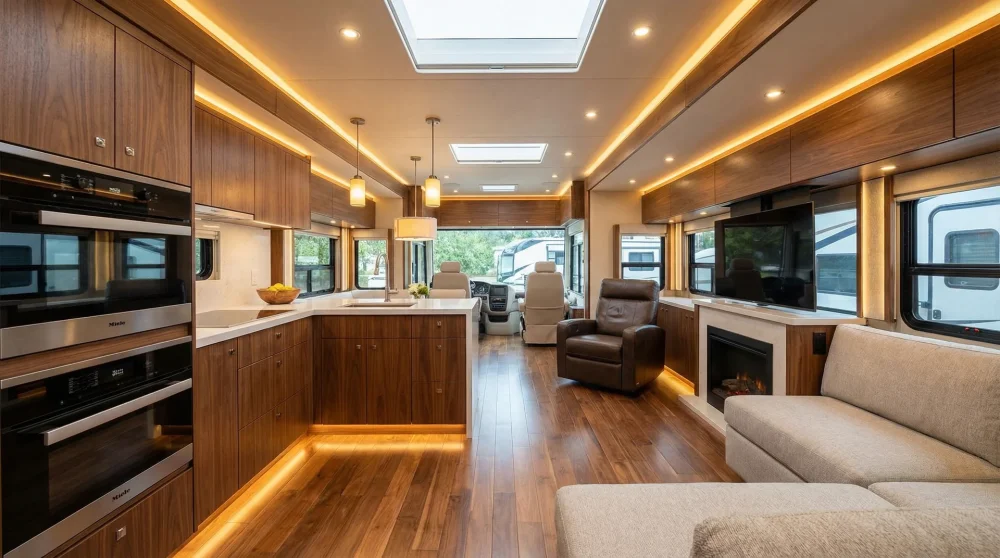
Campervans are standard commercial panel vans converted into living spaces. They fit into normal parking spots and navigate narrow city streets with ease. Space is at a premium. Wet baths and convertible bench beds are the norm here.
Motorhomes are built on a commercial truck chassis with a custom, wider living box attached. They offer cavernous interiors, over-cab beds, and massive storage garages at the rear. Finding a spot for them in crowded towns is challenging, which means most trips revolve around dedicated campsite hookups rather than spontaneous overnight stops.
Off-Road Caravans
Standard caravans fall apart on corrugated dirt tracks. Off-road models feature reinforced galvanized chassis, independent coil suspension, and heavy-duty shock absorbers. The ground clearance is massively raised.
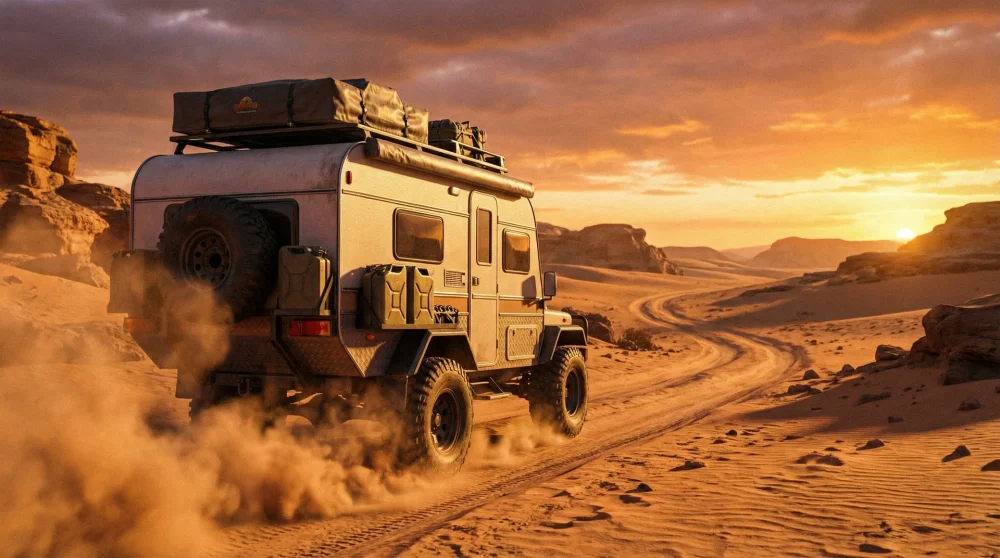
They come equipped with dust suppression systems that pressurize the cabin. This prevents red dirt from covering your bed. Articulating hitches allow the tow vehicle and the caravan to twist independently over deep ruts. Worth noting: water and food storage tanks are substantially larger on off-road builds because remote destinations rarely offer facilities.
Fifth Wheelers
These giants dominate the luxury tier. Instead of attaching to a standard rear tow ball, they lock into a specialized hitch mounted directly inside the bed of a pickup truck. This pinbox mechanism places the weight directly over the rear axle of the towing vehicle.
The stability is unmatched. You eliminate the rear pivot point that causes dangerous swaying. Inside, slide-out walls expand the living room at the push of a button. They offer residential-sized kitchens and king-size beds. Fifth wheelers are primarily an American and Australian format, far less common at European campsites.
How to Choose the Right Caravan Type?
Visual appeal means nothing if your vehicle struggles on a slight incline.
Towing Capacity & License Requirements
Check the VIN plate on your car door pillar. The Gross Train Weight minus the Gross Vehicle Weight gives your maximum towing limit. Never exceed this number. In the UK and most EU countries, a standard Category B driving license covers combinations up to 3,500 kg total train weight. Moving up to heavier twin-axles or fifth wheelers often pushes you into B+E territory, which requires a separate towing test.
A common rule: your caravan's MTPLM should not exceed 85% of your car's kerb weight. Staying under this threshold keeps handling predictable and ensures your insurance remains valid after an incident.
Storage & Maintenance
A caravan spends most of its life parked. Leaving a composite panel caravan exposed to the elements degrades the exterior seals quickly. Water ingress is the silent killer of all recreational vehicles. If you lack a covered driveway, factor in the recurring costs of a secure storage facility. Annual damp checks, habitation servicing, and gas safety certificates add to the cost of ownership regardless of which type you choose.
The right caravan is ultimately the one that matches your tow car today, not the one you plan to buy eventually.