Walking into most Florida auto shows usually means staring at the exact same row of restored American muscle cars until they all blur together. The Tampa Bay Automobile Museum shatters that repetitive cycle by ditching the mainstream entirely. This private collection, built by the Cerf family in Pinellas Park, curates the rarest and most revolutionary engineering anomalies from global automotive history, dropping visitors right into the minds of the engineers who built them.
Located at 3301 Gateway Centre Blvd, Pinellas Park, FL 33782 - positioned centrally between Tampa, Clearwater, and Downtown St. Petersburg - the museum is open Monday and Wednesday through Saturday from 10 AM to 4:30 PM, and on Sundays from 12 PM to 4:30 PM. It is closed on Tuesdays.
Why This Isn't Your Average Classic Car Collection
Forget velvet ropes and strict distance rules. The Cerf family designed this 19,000-square-foot space for genuine gearheads and curious minds who want to inspect intricate dashboards and custom upholstery up close. Out of roughly 85 vehicles on the floor, at least 15 are the only surviving models of their kind in the entire world.
Every machine sitting on this floor is fully operational. They all carry current Florida license plates and maintain active insurance policies. The on-site mechanical team keeps these engines running, and the family regularly takes these historical artifacts out for weekend drives on local roads.
Must-See Exhibits and Pioneering Vehicles
The curation heavily favors French and Eastern European innovation, focusing on the birth of front-wheel drive, aerodynamic packaging, and early rear-engine layouts. The massive 18th-century French steam-powered fardier replica stands as a beast originally invented to haul heavy military artillery.
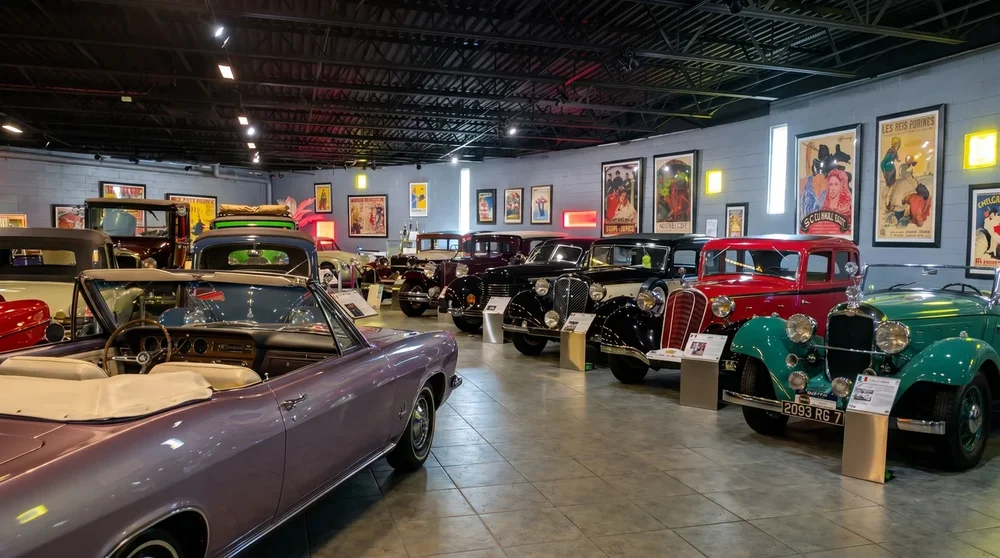
American engineering also gets a highly specialized spotlight here. The 1965 All-Wheel Drive Mustang prototype dominates the floor, standing as a total unicorn in the automotive world. Other standout pieces include aerodynamic Tatra cars with rear engines, rear-engine Mercedes-Benz models, Citroen innovations, and the only existing car designed by French engineer Emile Claveau - the Claveau 56.
The meticulous restoration standards here rival the careful preservation found at top-tier institutions. Visitors who enjoy this kind of hands-on historical depth often find the Houston Museum of Natural Science a worthy companion destination for a broader science and history experience.
Tickets and Admission Prices 2026
Entering this private collection costs $16 for adults (ages 18-64). A tiered pricing structure covers all visitor types:
| Visitor Type | Price |
|---|---|
| Adults (18-64) | $16 |
| Seniors (65+) | $14 |
| Youth (6-17) | $10 |
| Military / Veterans | $12 |
| Children under 5 | Free |
Considering the sheer volume of prototypes and one-off builds on display - without any crowds - the entry fee offers exceptional value for both hardcore mechanics and casual visitors.
Opening Hours and Best Time to Visit
The facility is heavily air-conditioned, making it the perfect midday escape from brutal Florida heat. Arrive right at opening time to have the floor mostly to yourself.
| Day | Hours |
|---|---|
| Monday | 10 AM - 4:30 PM |
| Tuesday | Closed |
| Wednesday - Saturday | 10 AM - 4:30 PM |
| Sunday | 12 PM - 4:30 PM |
The docents on the floor operate like walking encyclopedias. They actively share untold backstories of how specific cars were acquired, with some origin stories involving abandoned vehicles and unpaid hotel bills in the 1950s.
How Long Does It Take to Walk Through?
Allocate at least two full hours for a complete visit. While the physical footprint allows for a rapid 45-minute walkthrough, absorbing the technical plaques and engineering diagrams at each station requires time. There is an on-site bar setup and a dedicated library section where visitors can sit and process the mechanical history at a relaxed pace.
Parking is completely free in the museum's private on-site lot, and the entire facility is wheelchair accessible with flat surfaces and wide paths between vehicles. For visitors planning a broader Florida road trip, the Glass Beach at Fort Bragg offers a completely different kind of natural wonder worth adding to the itinerary.