The Museum of Communism in Prague does not soften the past. It puts you face-to-face with the harsh realities of the Cold War era in Czechoslovakia through authentic artifacts, reconstructed spaces, and dense historical documentation. If you want honest history rather than a polished tourist spectacle, this is one of the most worthwhile stops in the city.
What to Expect Inside the Museum of Communism
This is not a traditional space filled with shiny artifacts or interactive touchscreens. The exhibition relies on extensive reading materials, authentic photographs, and immersive recreations. You move through a meticulously detailed chronological timeline of Czechoslovakia structured around three very distinct emotional acts.
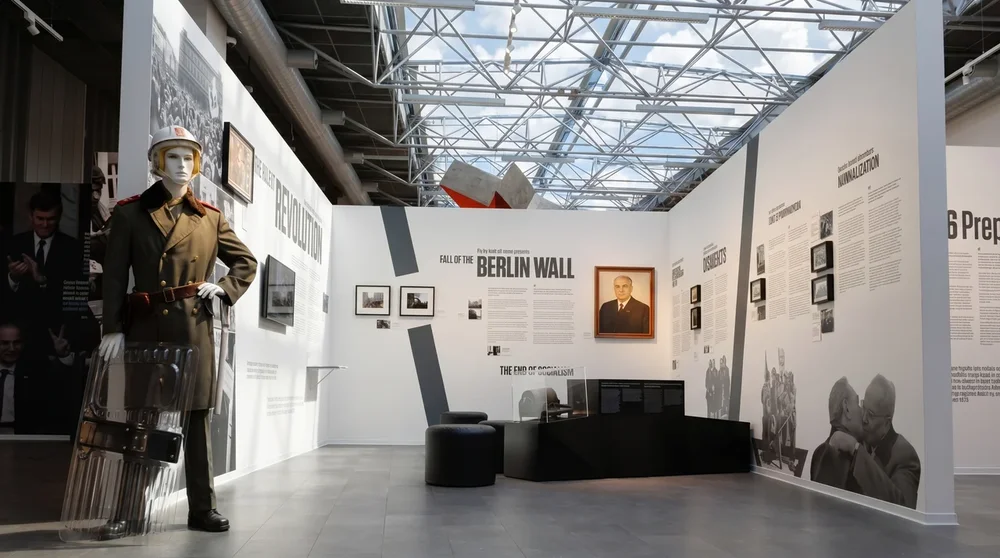
Act I: The Dream (Rise of the Regime)
The journey starts right after World War II. The walls are bright, the propaganda posters colorful. You see the idealistic promises of a utopian society and learn exactly how the regime initially gained support through elections rather than pure force. The mood is almost uncomfortably optimistic.
Act II: Reality (Daily Life and Censorship)
The narrative takes a sharp turn. You walk past a recreated shock worker workshop and a painfully bare grocery store with empty shelves and dim lighting. Everyday consumer goods sit next to stark explanations of censorship and restricted education. This section captures the mundane struggle of the average citizen with quiet precision.
Act III: The Nightmare (Secret Police and Interrogations)
This final section is dark and oppressive. You face a reconstructed secret police interrogation room and a daunting border fence. The displays detail political prisons, labor camps, and the intense paranoia of the secret police state. The exhibition concludes with powerful video footage of the Velvet Revolution shown in a small cinema room.
How Long Does the Visit Take?
Rushing through the visual displays takes about 45 minutes. Reading every panel and watching the 12-minute documentary easily extends the visit to over two hours. Plan for at least 90 minutes to absorb the atmosphere without feeling rushed. The exhibition demands mental energy to process the dense historical text, so avoid scheduling anything immediately after.
2026 Ticket Prices and How to Buy
You can buy tickets directly at the door upon arrival. The standard adult entry costs 390 CZK, while students with a valid ID pay 310 CZK. The ticket office closes exactly 30 minutes before the museum shuts down, so arrive no later than 7:30 PM. While some visitors find the price slightly steep for the physical size of the gallery, the volume of information justifies the cost for anyone interested in modern European history.
The museum accepts both cash and card. You rarely need to book in advance, as queues move quickly even on busier days.
How to Get There (Near Wenceslas Square)
The location is extremely central. The museum sits on the second floor of a building very close to the Powder Gate, just a short walk from Old Town Square. If you are already exploring the historic center, fitting in a visit requires almost no detour.
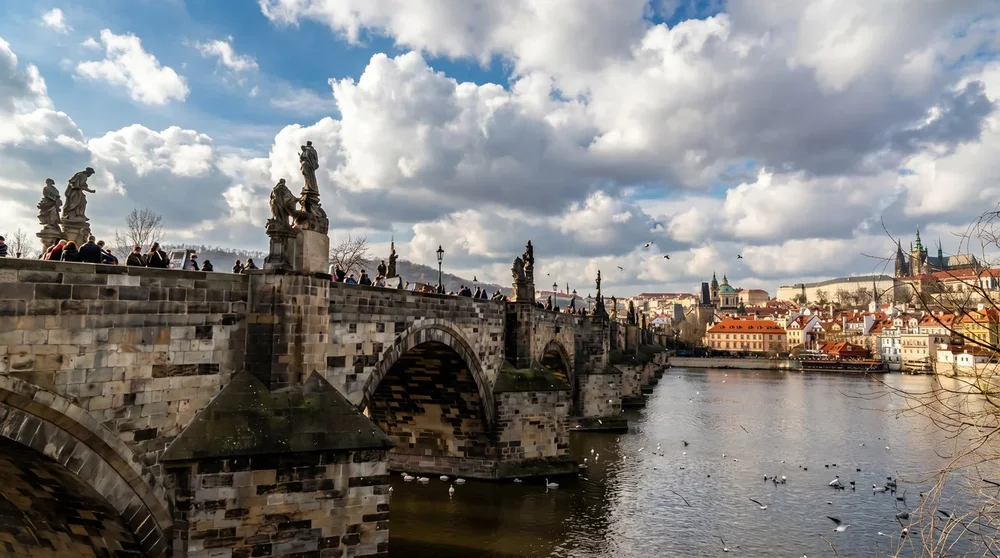
If the Cold War history of Czechoslovakia sparks your curiosity about the broader Soviet experience across Eastern Europe, the Charles Bridge in Prague: Best Time to Visit & Statues to See guide covers more of Prague's layered history. For Baltic context, the National Museum of Lithuania covers how neighboring nations lived through their own versions of occupation and resistance.
Is the Museum of Communism Worth Visiting?
If you want a lighthearted afternoon, look elsewhere. If you want an unapologetic, deeply detailed look into Czechoslovakian history, this is the right place. The narrative is explicitly anti-communist and focuses entirely on the repressive nature of the regime. Text panels are dense, and the presentation is deliberately opinionated. It serves as a powerful educational tool for anyone unfamiliar with life behind the Iron Curtain.
Things to Know Before You Go
The subject matter is heavy. Interrogation rooms and descriptions of political persecution make this unsuitable for young children. Teenagers studying modern history, however, will find it genuinely engaging. The lobby area has limited seating, and coin-operated lockers are available for bags. An elevator serves the second floor, but there are two small steps at the main street entrance that may require assistance for wheelchair users. Inside, the galleries are spacious and flat.