Arriving at the Lennon Wall with a spray can in hand is the fastest way to get a hefty fine from the Prague police. The local authorities changed the rules drastically during the recent years' restorations, transforming this iconic monument into a closely monitored zone rather than a chaotic graffiti free-for-all.
| Quick Visit Info | Details |
|---|---|
| Entrance Fee | free |
| Opening Hours | 24/7 access |
| Location | Velkopřevorské náměstí, Mala Strana |
| Nearest Tram Stop | Hellichova (Trams 12, 15, 20, 22) |
Can You Still Write on the John Lennon Wall? (Current Rules)
The short answer is yes, but the methods have changed entirely. The wall is no longer a free space for large murals or spray paint tags. It has evolved into a curated art space where only minor, respectful additions are tolerated by the property owners, the Sovereign Military Order of Malta.
Banned Items (Spray Paint and Aggressive Slogans)
Spray paint is strictly prohibited. Security cameras and police patrols actively monitor the square to prevent vandalism and protect the surrounding historical architecture of the French Embassy. Large political manifestations or aggressive slogans are painted over almost immediately.
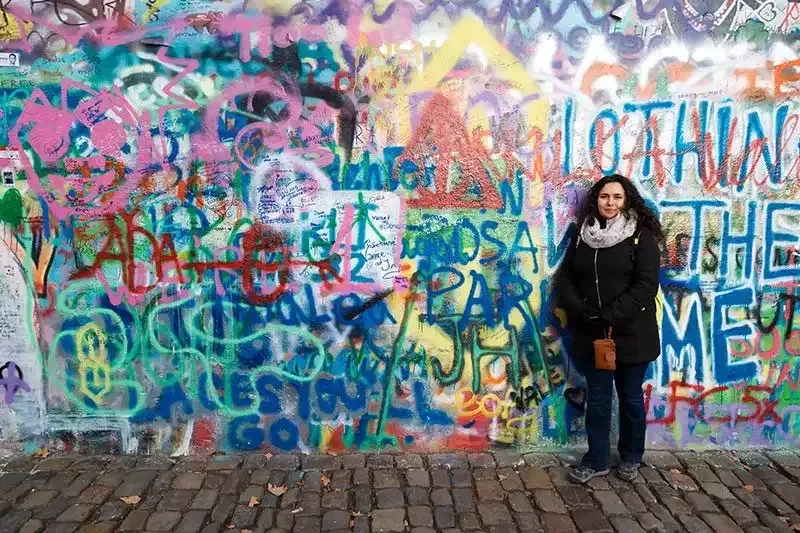
Allowed Items (Chalk and Markers)
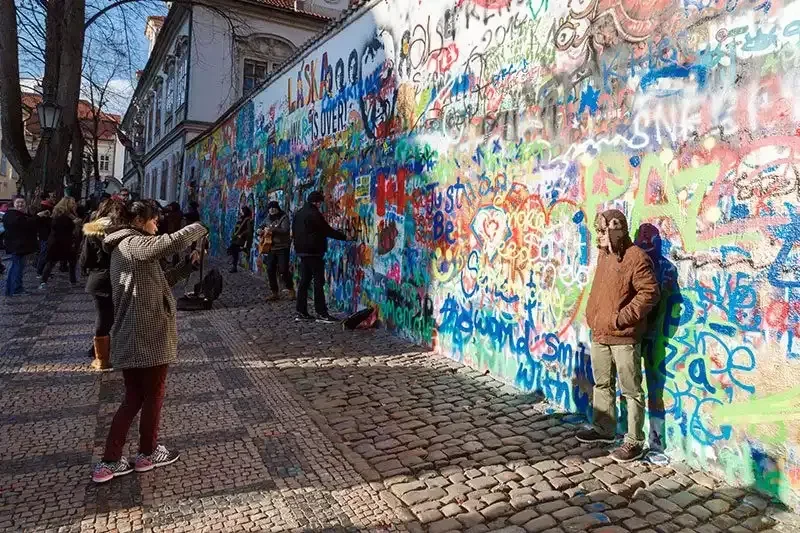
You can still leave a personal mark using a simple pen, small marker, or piece of chalk. Finding a blank spot takes patience. Layers of stickers, overlapping messages, and tourist signatures cover almost every inch of the original artwork. The actual portrait of John Lennon is often completely obscured by these layers. Adjust your expectations accordingly. You are looking at a living, breathing canvas of global messages rather than a pristine museum piece.
How to Get to the Lennon Wall
The wall sits tucked away in a quiet residential square in the Mala Strana district, making it easy to reach on foot if you are already exploring the Old Town area.
Walking from Charles Bridge
This is the most scenic route. Cross the Charles Bridge toward the Lesser Town. Just before reaching the towers at the end of the bridge, take the stone stairs down to Kampa Island. Turn left and follow the narrow cobbled paths for about three minutes. The colorful stretch of stone will appear suddenly on your right.
Taking the Tram to Mala Strana
If you are coming from further away, public transport is highly efficient. Board tram 12, 15, 20, or 22 and get off at the Hellichova stop. From there, it is a flat, five-minute walk through charming side streets directly to the square.
Best Time to Visit for Photography
Go before 9:00 AM. Midday brings massive crowds from school trips, guided tours, and enthusiastic tourists, making it virtually impossible to capture a clear photo of the wall.
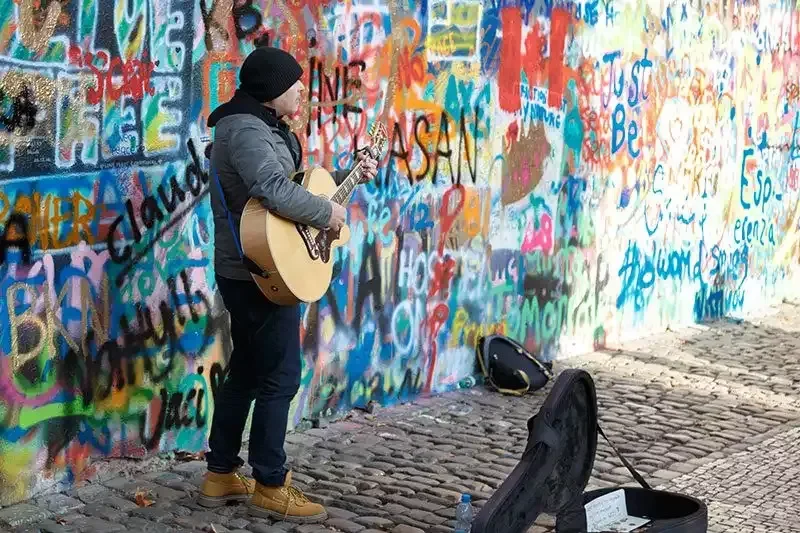
Early morning visits offer a completely different experience. The light is soft, the square quiet. You have the time and space to actually read the tiny, handwritten notes from travelers all over the world without being bumped by selfie sticks. If you cannot make it in the morning, late evening also provides a moody, peaceful atmosphere, often accompanied by local street musicians playing acoustic Beatles covers.
Nearby Attractions to Combine Your Visit
Spending time at the wall usually takes no more than 15 to 30 minutes. Planning your next steps keeps your itinerary flowing smoothly.
Kampa Island and Devil's Canal
Just steps away from the wall lies Kampa Island. Look for the small bridge adorned with love locks spanning the Devil's Canal. A massive, historic wooden water wheel still turns slowly in the canal below. The area feels like a serene sanctuary right in the middle of a very busy touristic zone.
The John Lennon Pub
Located just down the road on Hroznová street, this quirky pub leans heavily into British rock aesthetics. It features an interior garden and serves classic English pub food alongside local beers. It is the perfect spot to grab a cold Pilsner and rest your feet after navigating the cobblestones.
A Brief History: Why is There a Lennon Wall in Prague?
John Lennon never actually visited Prague. However, following his tragic death in 1980, local youth began painting his portrait and Beatles lyrics on this remote stone wall.
During the strict communist regime of Czechoslovakia, Western music and symbols of freedom were heavily suppressed. This wall became the site of a silent, non-violent rebellion known as Lennonism. Students risked their safety to scrawl messages of peace under the cover of darkness. The authorities would whitewash the stone entirely, only to find new poems and colorful defiance painted back on the very next morning. The wall stands today not just as a tribute to a musician, but as a structural monument to the resilience of free speech.