Arriving at the Golden Lane only to realize you cannot buy a standalone ticket for it is the most common mistake that ruins a Prague Castle visit. Navigating this tiny medieval alley requires knowing exactly which circuit pass to get and how to dodge the overwhelming midday crowds.
- Entry Requirement: Prague Castle Circuit Ticket is mandatory for daytime access.
- Free Access: After 17:00 (April-Oct) or 16:00 (Nov-Mar), but all interiors close at the same time.
- Location: Tucked away at the northeastern wall of the castle complex.
- Best Time: Right at opening (09:00) or after 15:30 as crowds thin out.
Is the Golden Lane Free?
Many visitors walk all the way to the northeastern wall expecting a simple entry gate. Standalone entry does not exist here. You must hold a valid Prague Castle Circuit ticket to pass through the turnstiles. The guards check these rigorously, and realizing you need a ticket at the gate means a long walk back to the main cathedral office.
Prague Castle Circuit Tickets Explained
The castle operates on combined passes that group several monuments together. Golden Lane is included in all circuits, but the two most practical options are Circuit B (250 CZK), covering the Old Royal Palace, St. George's Basilica, and Golden Lane, and Circuit A (350 CZK), which adds St. Vitus Cathedral and additional permanent exhibitions.
Buying your pass online in advance saves both money and significant queue time at the ticket offices in the 2nd or 3rd courtyard. You simply scan your barcode at the turnstiles and walk straight into the alley. Tickets remain valid for two consecutive days, with one entry permitted per monument.
How to Visit for Free
The late afternoon free entry is the most misunderstood secret of the castle. The turnstiles open for everyone without a ticket after 17:00 between April and October, and after 16:00 from November through March. Dimly lit corners, a quiet atmosphere, and a genuinely romantic stroll through the pastel facades.
However, there is a massive catch. All the historic room recreations, armories, and medieval exhibits lock their doors at exactly that same hour. Only the heavily commercialized souvenir shops remain open. If you actually want to see how people lived inside these tiny houses, you absolutely need the daytime paid ticket.
Best Time to Visit Golden Lane
Midday in peak season turns this already narrow alley into a shuffling mass of tour groups. Personal space effectively disappears between 11:00 and 15:00 in summer, and it becomes physically difficult to stop and look inside the tiny houses when the crowd pushes from both ends simultaneously.
Arriving right at 09:00 when the castle opens is the single most effective strategy. The difference in crowd density between 09:00 and 10:30 is dramatic. Alternatively, visiting after 15:30 gives you a reasonable window before the exhibits close, with noticeably fewer visitors than midday. Allow around 45 minutes to explore at a relaxed pace, including a stop at the Daliborka Tower at the end.
One physical hazard that almost nobody warns you about: the door frames of the historic tiny houses are extremely low. Walk through carefully, especially on the way out when you are distracted by what you just saw inside.
How to Get to the Golden Lane Inside Prague Castle
Finding this hidden alleyway can be confusing amid the sprawling courtyards. Walk past St. Vitus Cathedral and follow the signs behind St. George's Basilica. The entrance sits quietly at the easternmost edge of the complex.
Another highly scenic route involves walking up the stairs from the Malostranska metro station. A steep uphill climb, a rewarding city view, and a direct path straight to the eastern gate of the castle.
What to See Inside: The Most Famous Houses
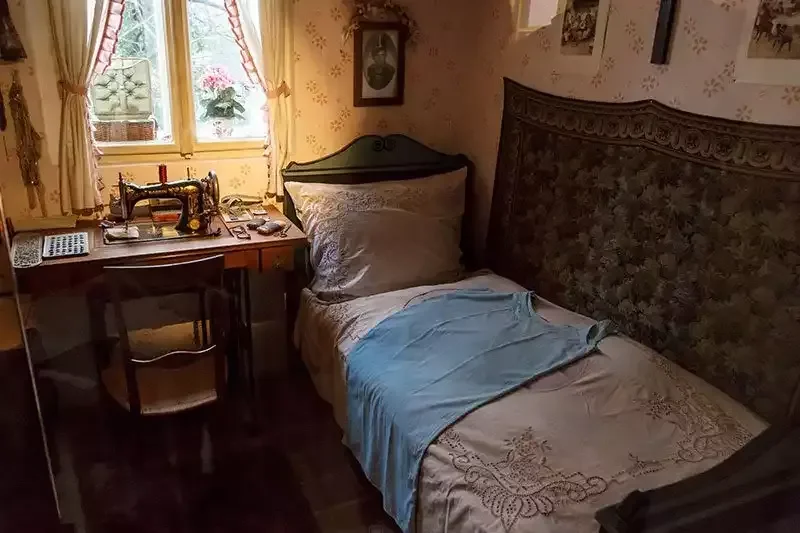
These tiny dwellings built directly into the fortification arches originally housed castle guards and later local craftsmen. Today, they serve as miniature museums showing different eras of Prague life, from a 16th-century soldier's apartment to a seamstress's workshop and a herbologist's quarters.
House No. 22: Franz Kafka's Residence
This pale blue house draws the biggest crowds in the entire alley. Franz Kafka never actually owned it, but he used his sister's quiet retreat here from 1916 to 1917 to write in peace, reportedly completing A Country Doctor during this period.
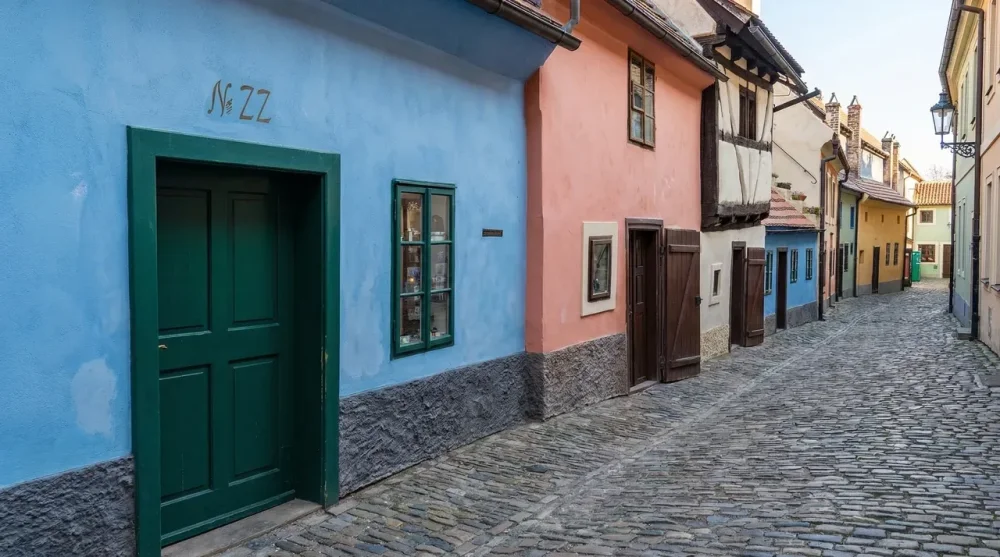
The interior is incredibly cramped. Low ceilings, minimal natural light, and a palpable sense of isolation. It perfectly explains why a deeply introverted writer found this tiny space so appealing. Today the house operates as a small bookshop and memorial to his time at the castle.
House No. 15: The Alchemist's Workshop
Legends claim alchemists tried to turn lead into gold here for Emperor Rudolf II. The historical truth is more grounded: the lane takes its name from the goldsmiths who actually lived here in the 16th century. In Czech, Zlatá ulička simply means Goldsmiths' Lane. The alchemist connection is a romantic myth invented centuries later.
This house recreates a mystical laboratory anyway, with bubbling glass vials, dried herbs hanging from the ceiling, and an undeniably mysterious atmosphere. Walk all the way to the back to find it, as many fast-moving visitors miss this section entirely.
Daliborka Tower
At the far end of the lane lies the medieval prison, included in your circuit ticket. The stone staircases leading down are treacherous and extremely narrow, so watch your step when it gets crowded.
The heavy iron cages and archaic torture devices offer a grim, chilling contrast to the cheerful pastel houses outside. The tower takes its name from Dalibor of Kozojedy, a knight imprisoned here in 1498 whose legend later inspired Bedrich Smetana's opera. Most visitors rush past it on the way back, which means you can often have it nearly to yourself.
Is the Golden Lane Worth Visiting?
If you time your visit right, absolutely. Skip the overpriced pocket watches and generic souvenirs sold in the middle section. Instead, focus on the architecture and the fascinating transition from royal guard barracks to a craftsmen's quarter to the neglected slum it became in the early 20th century before its restoration.
The lane is compact enough that even a 30-minute visit covers the highlights comfortably. Build it into a morning at Prague Castle and you will not regret the detour through the castle's most atmospheric corner.