Hum sits on top of a hill in central Istria, and you can walk from one end of it to the other in under two minutes. This tiny stone settlement holds the Guinness World Record for the smallest town on the planet, yet it still elects a mayor every June, rings its church bells, and locks its single copper gate at night, one of the small rituals that keep it functioning as an official town rather than a museum piece. Here is what actually happens when you drive up that winding road to see it for yourself.
How to Get to Hum
Hum sits on a hilltop above the Roč valley in central Istria, about 14 km from Buzet, the closest town of any real size. There is no train or bus service that reaches it, so renting a car is the only realistic option.
From the coast, the drive takes 60 to 75 minutes from either Pula or Rovinj, taking a stretch of the A8 highway along with narrow inland roads through the Mirna river valley. The final approach into Hum is a single-lane road, so drive slowly and be ready to pull over if another car appears from the opposite direction. Set your GPS to "Hum" directly, since the town shares its name with a mountain in Bosnia and a few other places in the region, and double-check that Istria comes up as the region before you commit to the route.
Inside Hum's Walls
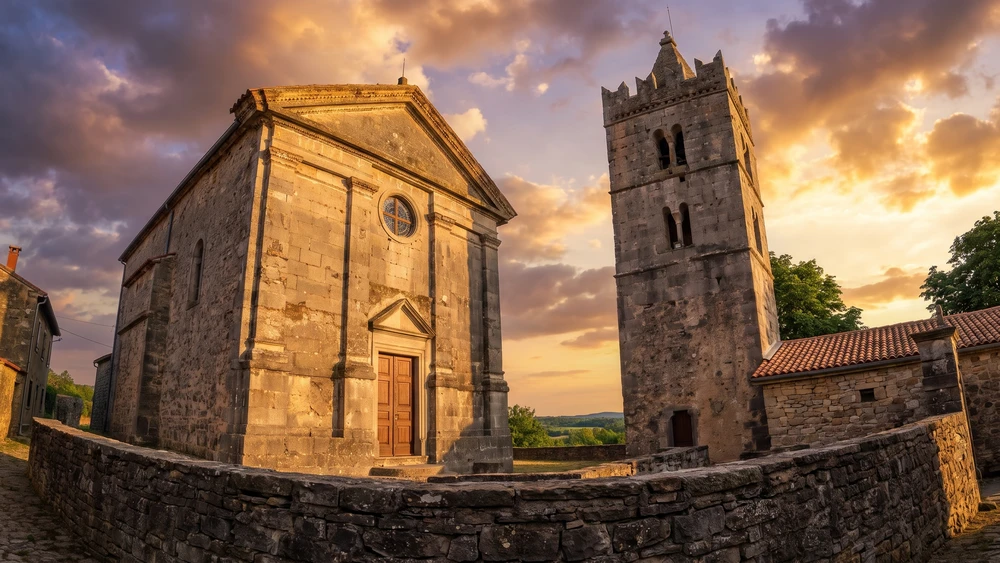
Hum's entire footprint fits inside a single ring of medieval stone walls first mentioned in written records in 1102. Two short streets, a handful of stone houses, a cemetery, and two churches make up the whole settlement, and you can walk the full loop in well under 15 minutes.
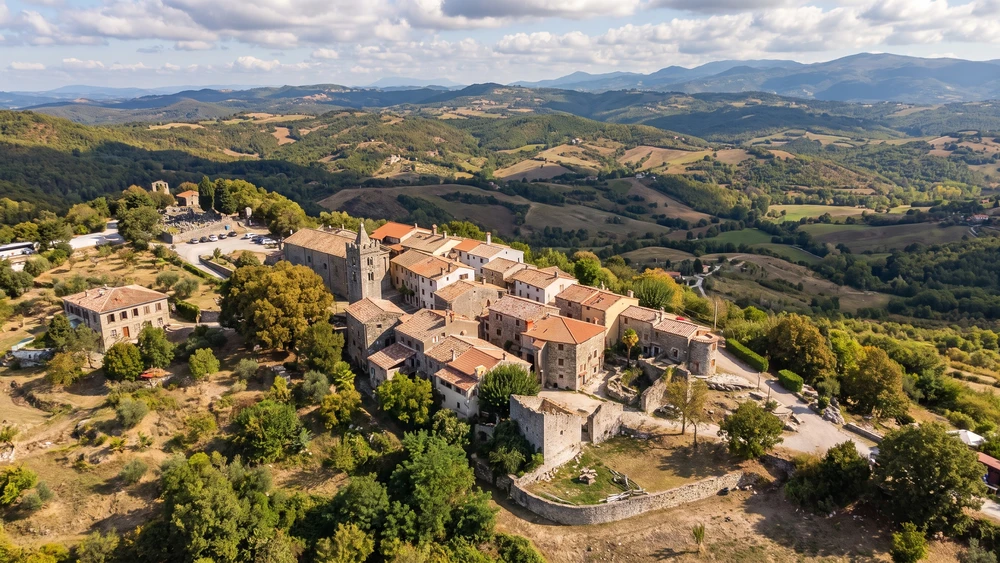
The Church of the Assumption anchors the town center, a Classicist structure built in 1802, standing beside a defensive bell tower raised back in 1552. Just outside the walls stands a small Romanesque chapel decorated with frescoes, one of the oldest surviving structures in the area. At the main entrance, the copper town gate carries carved Glagolitic script on its door knockers, the final monument of the Glagolitic Alley and a direct link to the alphabet Hum has spent decades helping to preserve.
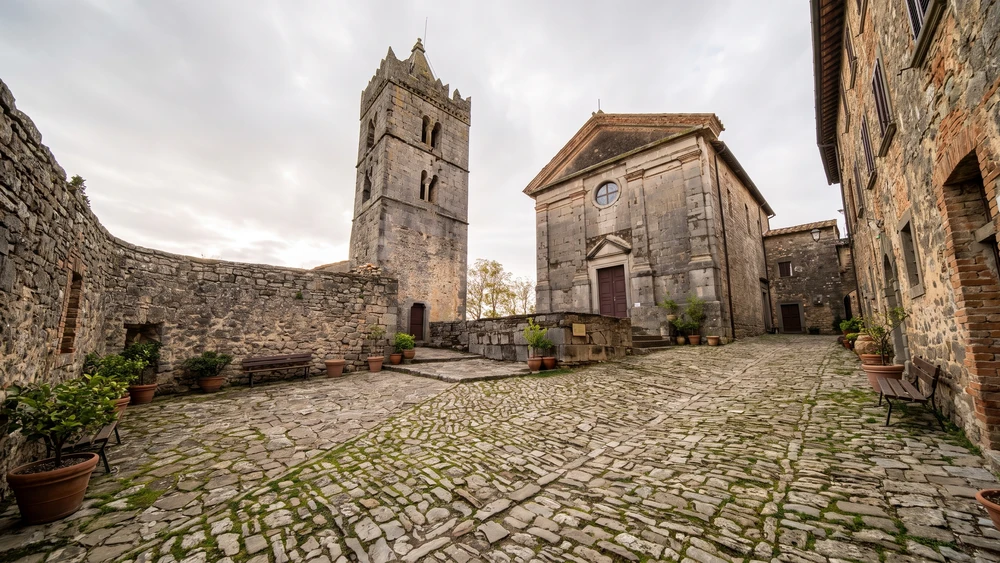
What makes Hum a genuine town rather than a preserved museum piece is its population and governance. Around 20 to 30 permanent residents live inside and around the walls, and since a custom revived in 1977, the community has elected a mayor "for a year" every June at a stone table in the town square. Slow down here rather than rushing through. Give yourself 30 to 45 minutes to read the gate inscriptions, peek into the church, and let the town's scale actually register.
Biska Brandy and Where to Try It
Hum is the birthplace of Biska, a mistletoe-infused brandy made from an old Istrian recipe with Celtic roots. Producers start with homemade pomace brandy, add white mistletoe and a mix of medicinal herbs, then macerate the blend for several months until it turns a deep amber color with a strong, herbal flavor.
Humska Konoba, the town's only restaurant, is where you can sample and buy the real thing rather than a mass-market imitation. If you happen to visit in late October, the timing lines up with the annual Istrian grappa competition hosted in Hum, where local producers enter their brandies for judging and the town fills with visitors well beyond its usual handful of residents.
The Glagolitic Alley Drive
The road connecting Roč and Hum is not just a way to get from one village to the other. It is the Glagolitic Alley, a 7-kilometer open-air memorial lined with 11 monuments, ten carved from stone and one built as a copper gate, erected between 1977 and 1985 by sculptor Želimir Janeš.
Each monument marks a milestone in the history of the Glagolitic alphabet, the script Slavic monks developed in the 9th century, which Istrian scribes kept alive for centuries after it fell out of use elsewhere. Driving the alley slowly, rather than treating it as a straight shot to Hum, turns a 10-minute transit into a short open-air history lesson that most day-trippers skip entirely.
Parking, Fees, and Practical Tips
Parking in Hum costs a flat €3 for the day at the unpaved lot just outside the main town gate, and there is no street parking allowed anywhere near the walls. Bring physical cash, since the attendant collecting the fee generally does not take cards.
Outside the peak summer months, the same lot often sits empty with no one collecting payment at all, so the fee mostly applies from late spring through early fall when tour buses start showing up. There are no public restrooms inside the walls, so plan around a stop in Buzet or Roč if you need one before or after your visit.
Best Time to Visit Hum
May through June and September through October give you the most comfortable version of Hum: mild temperatures, fewer coach tours, and enough breathing room to actually enjoy standing in an empty stone alley rather than shuffling behind a tour group. Midsummer brings the heaviest bus traffic, and Hum's narrow streets fill up fast when even one large group arrives at once.
Late October adds a specific reason to time your trip around it, since the town's grappa festival draws locals from across the region and gives the tiny main square a genuine sense of occasion it lacks the rest of the year.
Nearby Villages to Combine With Hum
Hum works best as one stop on a longer loop through inland Istria rather than a standalone destination, given how quickly you can see it. Motovun, Grožnjan, and Buzet all sit within a short drive and each brings a different flavor: Motovun for hilltop views and truffle country, Grožnjan for its concentration of art galleries, and Buzet for a larger town base with more dining options.
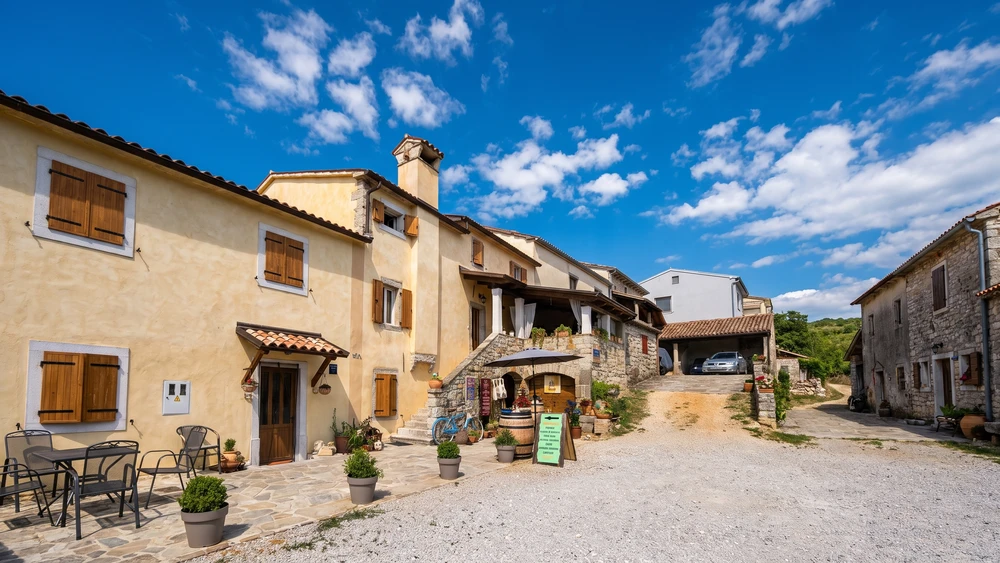
Kotli, a small riverside village built around old watermills, is also just a short detour away and pairs well with the drive back toward the coast. If collecting title-holders like Hum has become a habit, the same scale of oddity shows up elsewhere: Castelmoron-d'Albret holds the record for France's smallest village, while Monowi, Nebraska pushes the concept even further with a population of exactly one. Hum is small enough to see in an afternoon, but it earns its record through governance and history rather than sheer emptiness, and that distinction is worth keeping in mind as you plan the rest of your Istria itinerary around it.