Day trips around Bordeaux usually mean crowded tasting rooms in Saint-Emilion or a long hunt for parking along the Arcachon bay. Castelmoron-d'Albret runs on a completely different rhythm: no traffic, no tour buses, and a village footprint so small you can walk across its entire administrative territory in under two minutes.
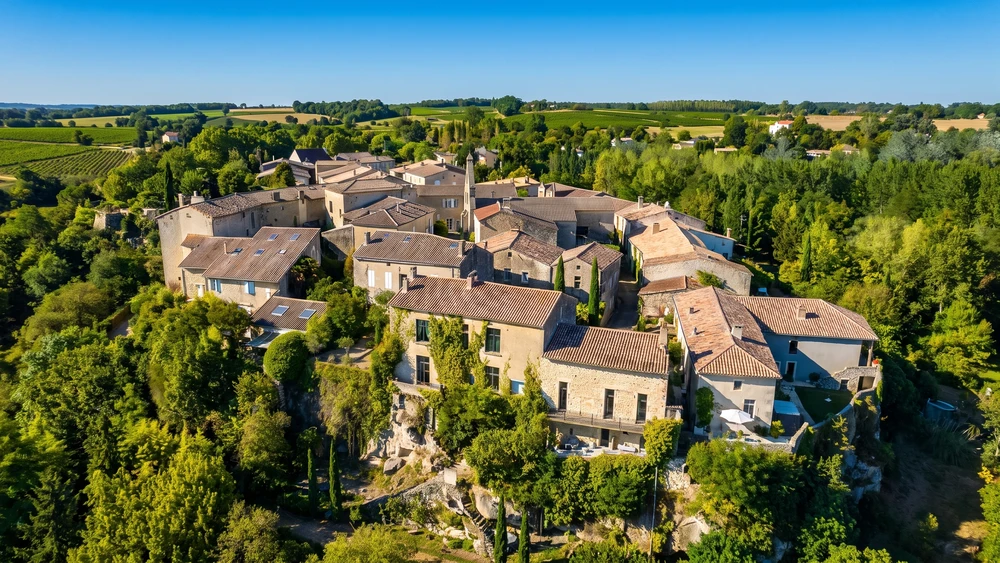
This tiny medieval outpost holds the official title of France's smallest commune by land area. Covering just 3.54 hectares (8.7 acres), roughly the size of the Place Charles de Gaulle in Paris, it is home to around 50 permanent residents. Perched on a rocky limestone promontory in the heart of the Entre-deux-Mers wine region, Castelmoron-d'Albret packs centuries of defensive history, preserved stone architecture, and active artisan workshops into four narrow, cobblestone streets. Unlike some depopulated hilltop villages elsewhere in France, every house inside the ramparts is still lived in.
| Key Travel Metric | Practical Detail |
|---|---|
| Location | Gironde department, Entre-deux-Mers region (about 55 km southeast of Bordeaux) |
| Recommended duration | 1 to 1.5 hours (or half a day combined with neighboring sites) |
| Optimal arrival time | Mid-morning (10 AM) or early evening for golden-hour light across the valley |
| Vehicle access | Pedestrian-only interior; free parking directly outside the main gate |
| Mobility notes | Uneven cobblestones, narrow passages, and steep inclines near the ramparts |
| Core amenities | Public restrooms near the village entrance; extremely limited food options |
Why a 3.5-Hectare Village Exists in Modern France
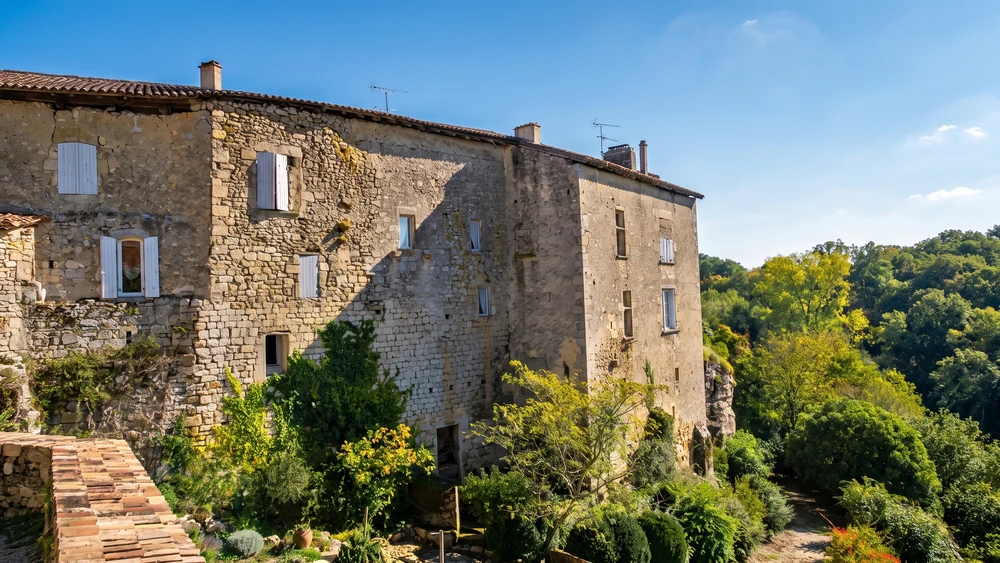
The unusual size of Castelmoron-d'Albret comes directly from feudal administrative borders that were frozen during the French Revolution. In the 12th century, the site was developed as a fortified stronghold on a natural limestone outcrop, chosen specifically to command the surrounding valley during territorial disputes between English and French forces.
When the National Assembly established the modern commune system in 1789, administrative boundaries were drawn around existing parish limits. Because Castelmoron was strictly a fortified hilltop cluster, surrounded immediately by agricultural land owned by neighboring parishes, its territorial borders were locked into the precise outline of its medieval ramparts. While neighboring agricultural villages expanded their boundaries to include surrounding fields and vineyards, Castelmoron remained confined to its defensive rock.
The village's strategic importance peaked under the House of Albret, the powerful ruling family that also produced King Henry IV of France. Despite its miniature footprint, the town served as the seat of a sénéchaussée (a royal court of justice) under the Ancien Régime, giving it administrative weight far out of proportion to its physical size.
How to Get There and Where to Park
Reaching Castelmoron-d'Albret requires a personal vehicle or a hired driver. Public transit in this stretch of the Entre-deux-Mers rural interior does not run a reliable direct service.
Driving Routes from Major Hubs
- From central Bordeaux: Take the D936 east toward Branne, then switch to the D670 toward Sauveterre-de-Guyenne. The drive covers about 55 kilometers and takes 50 to 60 minutes, depending on weekday traffic leaving the city center.
- From Saint-Emilion: Head south along the D670 across the Dordogne River through Rauzan. The distance is roughly 25 kilometers, a clean 30-minute drive that fits naturally into a broader right-bank wine itinerary.
Parking Logistics
Motorized vehicles are strictly prohibited inside the historical perimeter. The narrow passageways cannot accommodate modern cars, and the entire interior functions as a quiet pedestrian zone.
Drive directly toward the main entrance along the D134. Free open-air parking lines the approach road near the former village hall and the outer entrance gate, the Porte du Moulin. Because tourist volume stays low compared to major regional hubs, finding a spot is straightforward even on peak summer weekends.
Leave the car in these marked areas and walk into the village through the main medieval archway. If you're relying on GPS to find the unmarked D134 turnoff, a reliable eSIM for France is worth setting up beforehand, since data coverage gets patchy in this rural stretch of the Gironde.
Architectural Highlights to Spot on Foot
Exploring Castelmoron-d'Albret needs no map. The layout consists of four primary lanes connected by tiny, covered alleys, the carreyrous. The real interest lies in the details carved into the stone over six centuries.
Wrought-Iron Work by Blaise Charlut
Walking along the Rue Grande, look closely at the residential door grilles and balcony railings. Several homes feature intricate 18th-century wrought-iron craftsmanship by Blaise Charlut, a master ironsmith known throughout Aquitaine for his work on aristocratic townhouses in Bordeaux. Watch for subtle scrollwork, geometric leaf patterns, and custom family emblems forged into the transoms above the heavy wooden doors.
The Fortified Gate and Medieval Rampart Remains
The northern and eastern edges of the village retain significant sections of the original 13th-century stone ramparts. These walls drop straight down into the valley floor below, showing why the site was so difficult to besiege during the Hundred Years' War. The fortified entrance gate marks the transition from the exterior road into the medieval grid, with preserved stone grooves where a defensive portcullis once operated.
Notre-Dame Church and the Former Grain Market
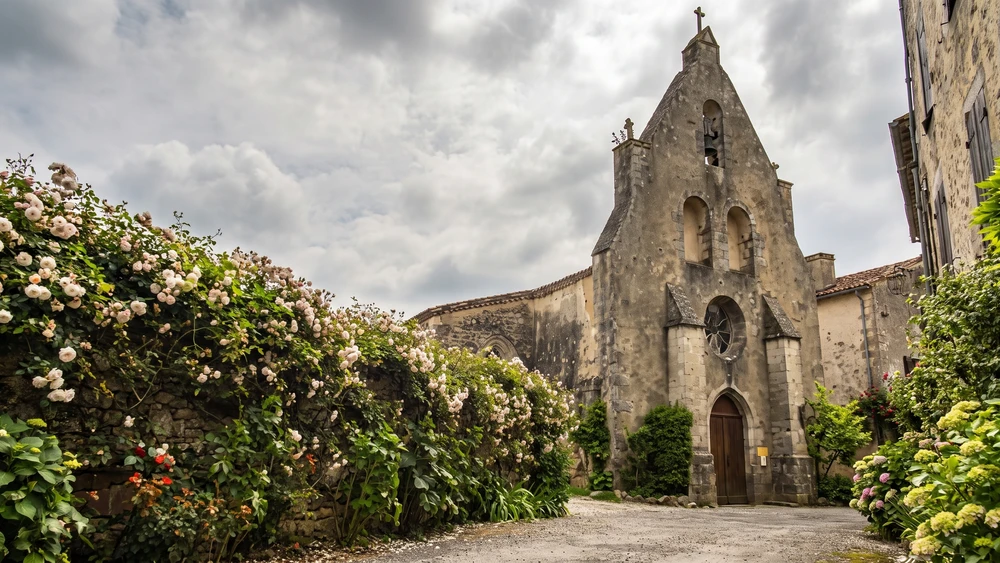
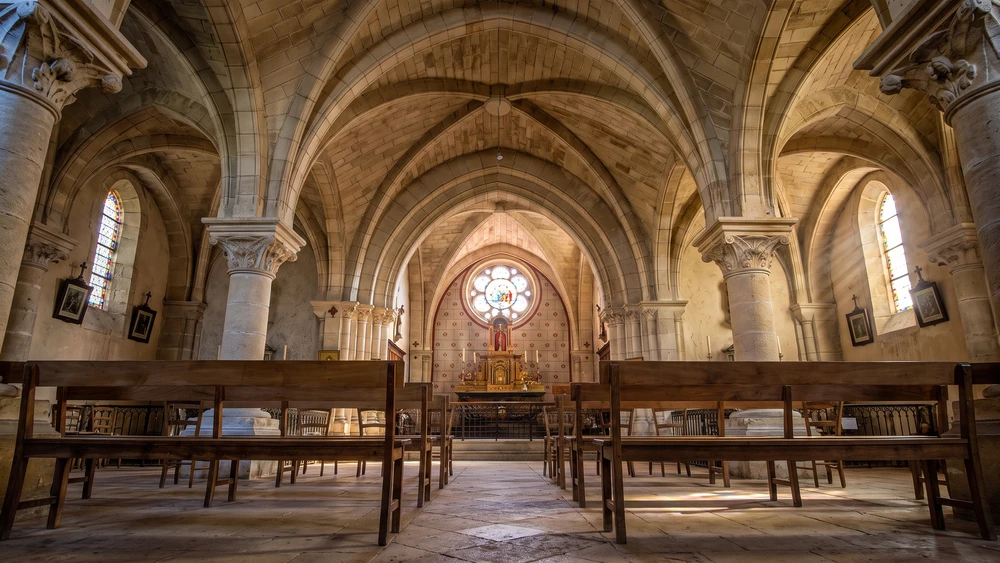
At the heart of the village sits the Church of Notre-Dame. Built on medieval foundations, the structure went through significant restoration in the 19th century. Inside, the nave stays simple, austere, and pleasantly cool during hot summer days.
Directly next to the church stands the old covered grain market, the halle à grains, where local farmers once traded crops under heavy timber beams. From the small open square beside the halle, step up to the stone balustrade for an unobstructed view over the rolling hills, acacia woods, and vine rows of the Entre-deux-Mers countryside.
The Historic Washhouse
Before the final incline into the village center, look left near the base of the rock for the historic public lavoir. Fed by a natural spring flowing out of the limestone cliff, this stone basin served as the communal laundry point for generations of residents. A short stairway near the exit square drops down to the wash house, and the view from below takes in the wooden balconies of the houses perched above.
Artisan Workshops and Essential Amenities
Castelmoron-d'Albret is a residential village, not an open-air museum. Commercial activity here is intentionally sparse, which adds to its quiet authenticity.
- Pottery workshop: Ceramic artists Cecile and Christophe run an active workshop and boutique inside the village, producing hand-thrown stoneware and utility pieces. During the Christmas season, their workshop becomes the focal point of the village's well-known nativity scene exhibition, where handcrafted figures fill windows and doorways across the commune.
- Artisanal metalwork: A local silversmith and restoration workshop operates near the village edge, continuing the town's long association with fine metalworking.
- Terra Aventura trail: A short, family-friendly treasure-hunt trail starts near the village, a good way to keep kids engaged during the walk.
Do not arrive expecting a wide range of sit-down restaurants, bakeries, or grocery stores. A small local bar-brocante operates intermittently near the entrance, offering basic cold drinks and coffee, but hours vary by season. Pack water, or plan lunch in a neighboring bastide town.
The Best Time of Year to Plan Your Visit
Spring (May to June) offers the most striking conditions for photographing Castelmoron-d'Albret. Residents take real pride in floral decoration, lining the narrow stone lanes with terracotta pots of climbing roses, wisteria, and colorful geraniums. The contrast between bright blooms and weathered grey limestone makes this the best season for visual exploration.
Autumn (September to October) brings the grape harvest across the surrounding vineyards. The air in the valley turns crisp, and vineyard leaves shift to amber and deep red, giving excellent light for panoramic views from the ramparts.
December brings a distinctive regional draw: the village turns into a living gallery of nativity scenes. Dozens of handmade nativities are lit up in windows, doorways, and public niches throughout the commune, making it one of the more unusual small-town Christmas stops in the Gironde.
Building a Full-Day Entre-deux-Mers Itinerary
A thorough walk through Castelmoron-d'Albret takes roughly 60 to 90 minutes, so pair the stop with these nearby historical and culinary destinations for a full day trip from Bordeaux.
Sauveterre-de-Guyenne (7 minutes away)
Just 6 kilometers northeast, Sauveterre is a classic 13th-century English bastide, a grid-plan fortified town. Enter through one of its four massive stone gate towers to reach the central arcaded square. It's the ideal stop for a traditional bistro lunch, a fresh baguette from a local boulangerie, or stocking up on travel supplies.
La Réole (15 minutes away)
Drive 14 kilometers south toward the banks of the Garonne River to reach La Réole, designated a French Ville d'Art et d'Histoire. The town features steep medieval staircases, the oldest municipal hall in France, built in the 12th century under Richard the Lionheart, and a large Saturday morning market along the riverbanks.
Abbaye de La Sauve-Majeure (25 minutes away)
On the return toward Bordeaux along the D936, stop at the ruins of this 11th-century Benedictine abbey. Recognized as a UNESCO World Heritage Site along the pilgrimage route to Santiago de Compostela, the site features remarkably preserved Romanesque sculpted capitals and a bell tower you can climb for panoramic views across the Gironde landscape.