Driving from Kona to see the lava without checking the USGS updates or arriving at the main visitor center only to find it closed for 2026 renovations is the fastest way to derail your Big Island itinerary.
Check the current eruption status on the NPS app before you leave your hotel, and navigate directly to the temporary Welcome Center to save precious daylight.
- Entrance Fee: $30 per vehicle (valid for 7 consecutive days).
- Park Hours: Open 24 hours daily.
- Visitor Center: Temporarily relocated to Kīlauea Military Camp due to construction.
- Drive Times: About 45 minutes from Hilo, and 2.5 hours from Kona or Waikoloa.
Current Volcanic Activity: Where to See the Lava
Catching Madame Pele putting on a show requires a mix of good timing and extreme patience. Volcanic activity at Kīlauea is highly episodic, meaning eruptions can last for months or abruptly pause within hours.
As of early 2026, Kīlauea remains at Alert Level WATCH (Color Code: ORANGE), with episodic eruptions continuing from two vents in Halemaʻumaʻu crater. Always verify the current status on the USGS Kīlauea volcano updates page before making the drive.
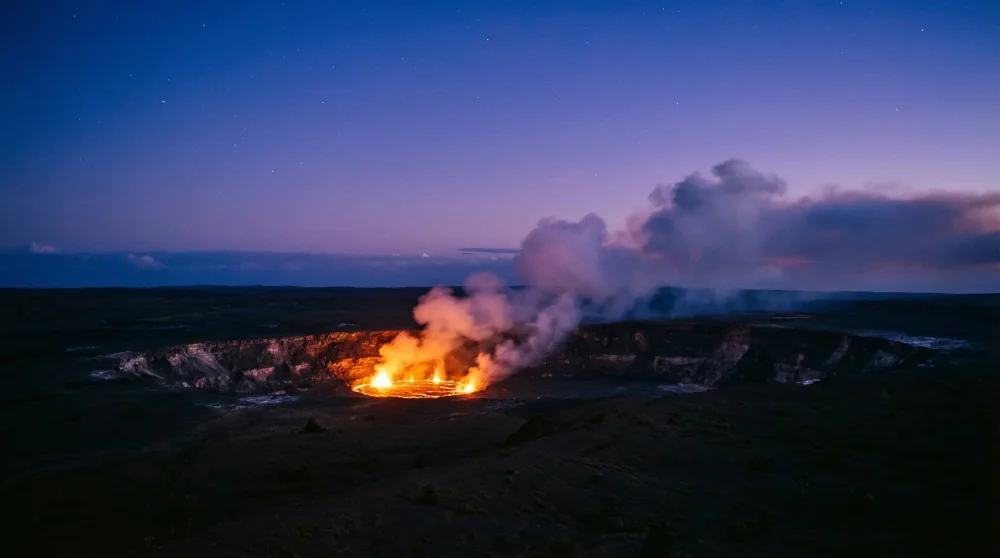
Head straight to Kīlauea Overlook or Uēkahuna via Crater Rim Drive West for the best vantage points of the Halemaʻumaʻu crater. If there is an active eruption, arriving before dawn or late at night is your best strategy.
The contrast of the glowing orange lava against the pitch-black sky is absolutely mesmerizing, the crowds are visibly thinner, and the parking situation is far less chaotic. Bring a heavy sweater or a light rain jacket. The summit elevation means the night air is surprisingly chilly, the wind relentless.
Hiking the Kīlauea Iki Trail
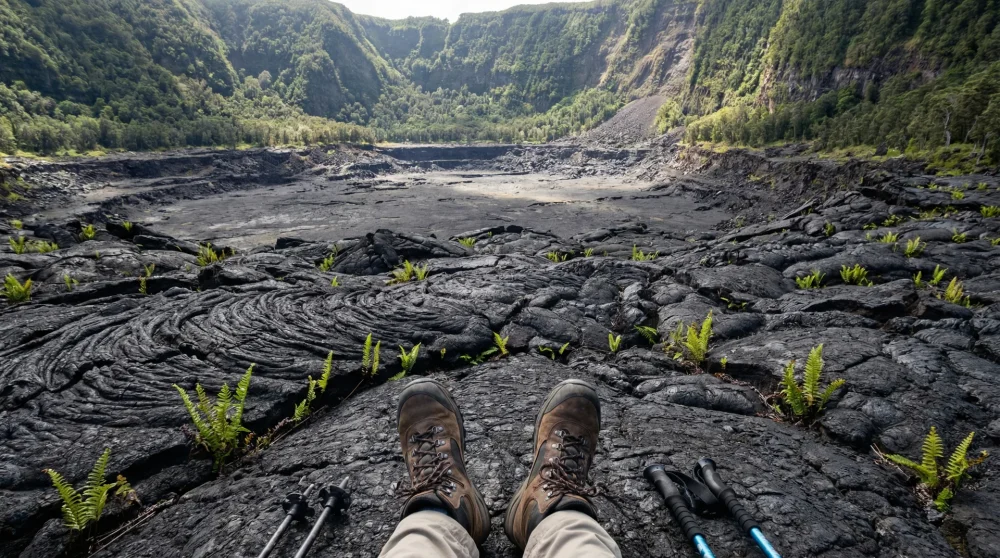
This 4-mile loop is the undisputed crown jewel of the park. Start your hike early in the morning and hike the trail clockwise, beginning near the lava tube parking area. This specific route takes you down into the crater first and saves you from a punishing 0.6-mile constant incline on the way back.
The transition between environments is immediate and jarring. One moment, a lush fern rainforest; the next, a vast, barren expanse of solidified lava. Walking across the crater floor feels like stepping onto a different planet. The sound of your boots crunching on the volcanic rock is completely unique, the scale of the crater walls towering above you.
Navigating Crater Rim Drive: Essential Stops
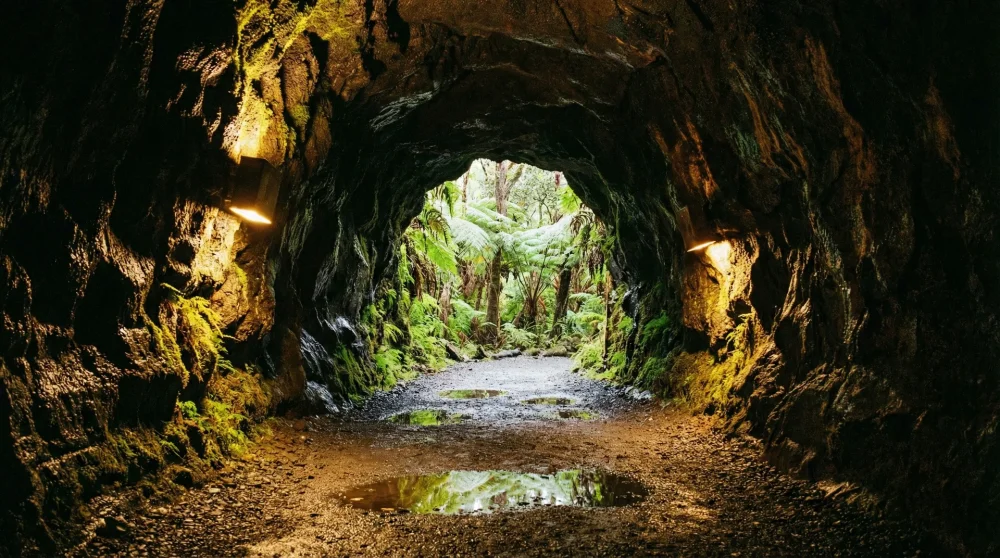
The Thurston Lava Tube (Nāhuku) is a 500-year-old subterranean marvel that you simply cannot skip. The trail is lit from 8:00 AM to 8:00 PM, but you should bring a strong flashlight to fully appreciate the ceiling details and navigate the uneven ground safely. Arrive before 9:00 AM or after 4:00 PM. Parking here is extremely limited and fills up rapidly during peak hours.
Just a short drive away, you will find the Steam Vents and Sulphur Banks. Groundwater seeps down to the hot volcanic rocks and returns to the surface as thick plumes of steam. The smell of sulfur is incredibly potent here, the earth practically breathing beneath your feet.
Driving the Chain of Craters Road
If you have more than a half-day, point your car south down the 19-mile Chain of Craters Road. This scenic route drops thousands of feet in elevation, guiding you past old lava flows that eventually meet the Pacific Ocean.
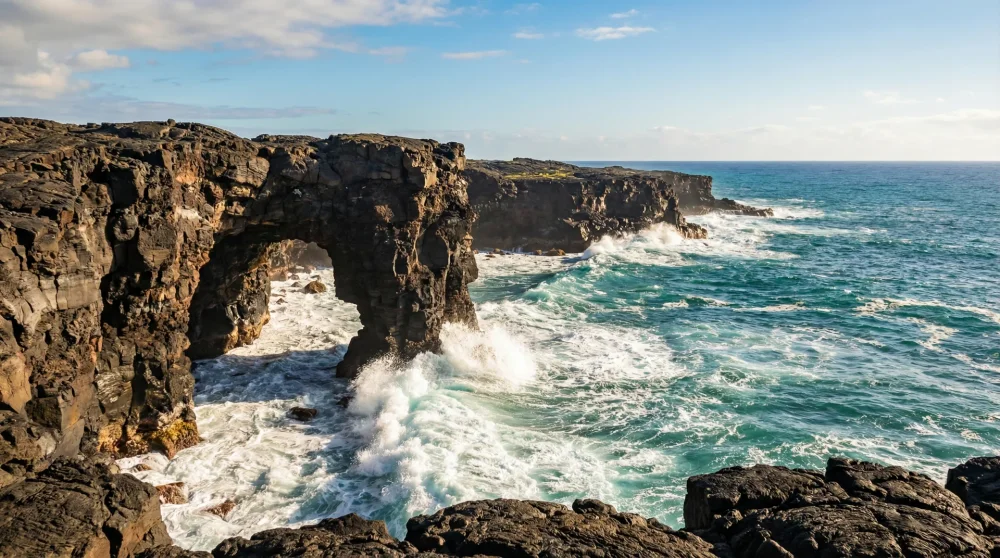
Stop at the Pu'u Loa Petroglyphs for a short hike to see ancient Hawaiian rock carvings. At the end of the road, the Holei Sea Arch stands as a testament to the ocean's erosive power against the hardened lava cliffs. Allow at least two hours for this round trip, and carry plenty of water. The lower elevations are brutally hot, shade practically nonexistent.
Practical Information for Your Visit
Treat the volcanic landscape with the utmost respect. This is an active environment where conditions change rapidly. Always pay attention to the park rangers and warning signs regarding volcanic gases.
If you are driving back to the Kona or Waikoloa side after sunset, be mentally prepared for a grueling drive. The volcanic smog, known as VOG, can roll in thick and fast across the saddle road or southern highway. Visibility often drops to near zero, the drive demanding absolute focus.
Leaving the park a bit earlier in the afternoon can help you avoid crossing the island during the worst of the evening VOG. Alternatively, booking a hotel in Hilo for a night eliminates this massive commute entirely, giving you more time to explore the trails safely.