Grenada's food scene rewards the traveler who wanders off the resort strip. The island's history as a spice producer, its Trinidadian cultural ties, and its deep fishing tradition have produced a genuinely distinctive local menu - one that has almost nothing to do with the buffet line at your hotel.
Oil Down takes hours to cook and disappears by early afternoon. Gouyave Fish Friday happens once a week, rain or shine. The roti shops near St. George's market run out before 2 PM.
Showing up at the right time and the right place is the only strategy that works.
- Best street food window: Friday evenings at Gouyave Fish Friday (6:00 PM start)
- Daily food budget: $30-$65 USD (street food + one sit-down meal)
- Cash rule: Eastern Caribbean Dollars (EC$) for street vendors; USD accepted at restaurants
- Tap water: Safe in St. George's and Grand Anse; bottled preferred in rural areas
- National dish: Oil Down - a slow-cooked breadfruit, callaloo, and coconut milk stew
The National Obsession: Finding the Best Oil Down
Oil Down is not a quick lunch option you order on a whim. This heavy, incredibly flavorful one-pot stew requires hours of slow cooking over an open fire, absorbing immense amounts of coconut milk and turmeric. The base consists of breadfruit, callaloo leaves, and dumplings, usually topped with salted fish or chicken. The name itself describes what happens in the pot: all liquid cooks away until only the oil from the coconut milk remains, sitting at the bottom.
Do not expect to find authentic Oil Down on a glossy resort menu. The most genuine versions sit in massive aluminum pots at local rum shops or community canteens, primarily on weekends. Ask the staff at your guesthouse which neighborhood spot is cooking it on any given Saturday - they always know the exact schedule. A generous plate from a roadside vendor costs roughly $7 to $11 USD.
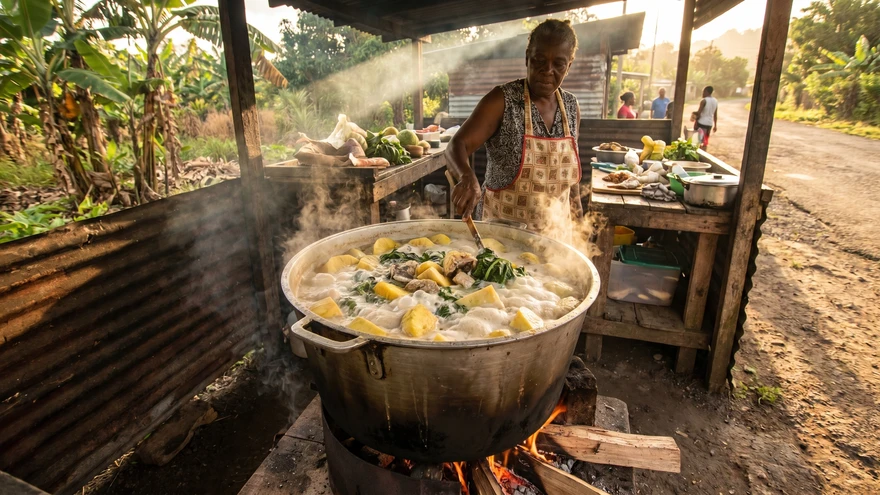
Oil Down is also a social event. Grenadians cook it for family gatherings, community celebrations, and Independence Day festivities. If you encounter a large outdoor pot bubbling on a wood fire with a crowd around it, you have found the real version.
Must-Try Grenadian Foods (And Where to Find Them)
You miss out on Grenada's culinary identity if you stick only to standard grilled fish and fries. The island's history of spice cultivation and Caribbean trade routes created a highly specific local menu.
Lambi (Conch) and Fresh Seafood
Lambi, known elsewhere as conch, has a firm, chewy texture that turns incredibly tender when prepared correctly. Grenadians usually tenderize the meat, marinate it heavily in local spices, and serve it curried or in a rich brown stew. It is a dense, savory dish that demands a side of rice and peas to soak up the sauce.
Fresh catch also shows up as grilled snapper, fried marlin, and garlic lobster, particularly at beachside spots and during Gouyave Fish Friday.
Roti and Doubles: The Street Food Staples
Trinidad's influence gave Grenada two of its most efficient and filling street food options. Doubles are the ultimate breakfast: two pieces of fried flatbread (bara) sandwiching a spicy chickpea curry, usually costing just $2 to $4 USD.
Rotis serve as the standard working lunch across the island. These thin, pliable flatbreads come wrapped around heavy portions of curried chicken, goat, or potato.
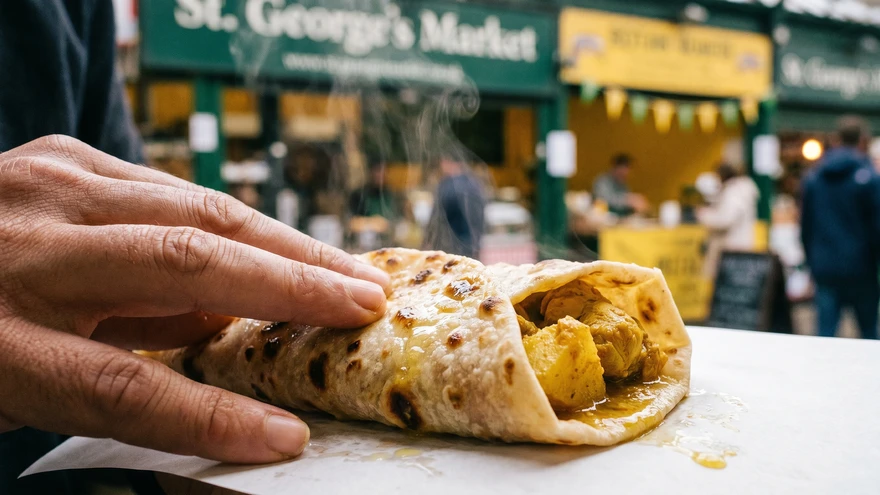
The best rotis operate out of small, unpretentious storefronts near the market in St. George's, costing around $7 to $11 USD. They are messy, intensely flavorful, and highly portable.
Pelau: The One-Pot Everyday Meal
Pelau is the workhorse of Grenadian home cooking: chicken, rice, pigeon peas, coconut milk, and caramelized brown sugar cooked together in a single pot. It is richer and sweeter than plain rice dishes, with a slightly smoky base from the browning stage. Local canteens serve it as a full plate lunch, often with a scoop of pumpkin or callaloo on the side.
Bake and Saltfish
The definitive Grenadian breakfast. Bake is a fried bread roll - dense, slightly crisp outside, soft inside - split open and filled with saltfish (seasoned salted cod) stewed with onions, tomatoes, and hot pepper.
The best versions are sold from early-morning stalls near the bus terminal in St. George's and from food vans around the National Stadium. Arrive before 9 AM if you want a choice of fillings.
Nutmeg Ice Cream and Spiced Cocoa
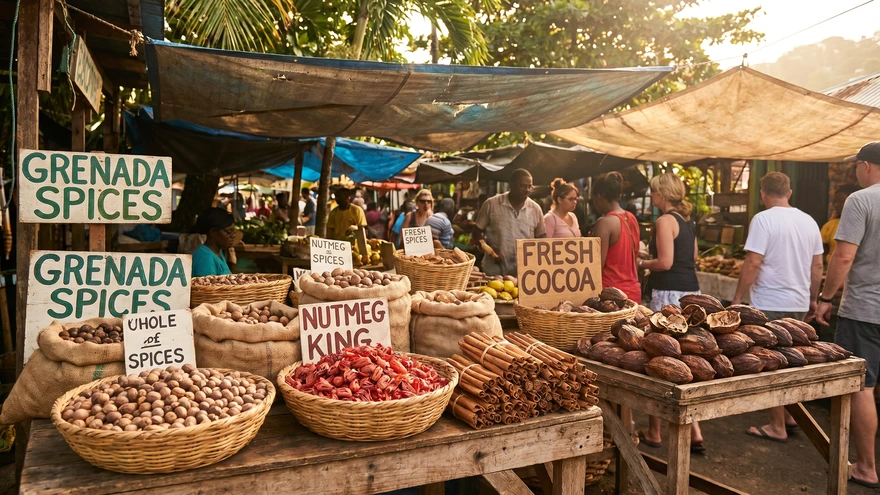
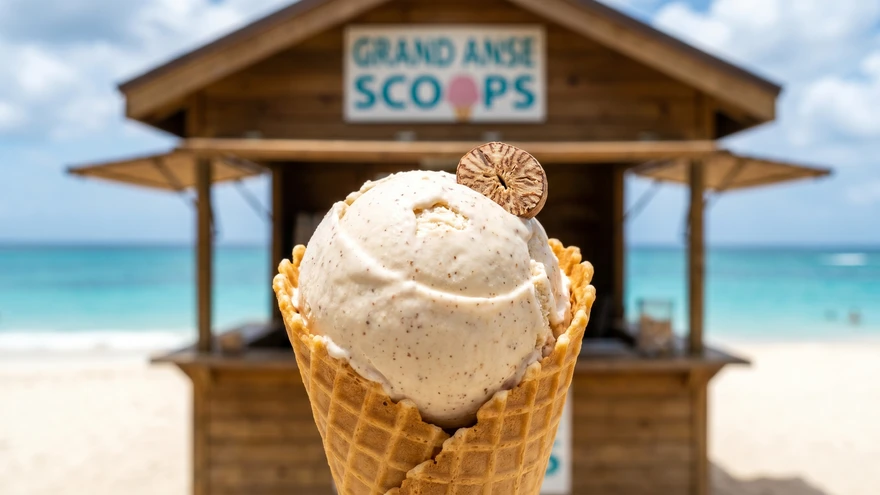
Grenada produces roughly 20% of the world's nutmeg, and this fact shows up in the food at every turn. Nutmeg ice cream carries a warm, slightly woody kick that cuts through the heavy cream in a way vanilla never does. You can find it at beach kiosks along Grand Anse for $4 to $6 USD a scoop.
Pair your morning with a hot cup of local cocoa tea - a rustic, dark beverage brewed from grated raw cocoa sticks, hot water, milk, cinnamon, and fresh nutmeg. It tastes nothing like supermarket hot chocolate: richer, slightly oily, with a faint bitterness that wakes you up properly. Morning market stalls in St. George's sell it for $2 to $3 USD, and you can buy solid cocoa sticks from spice vendors to take home.
Gouyave Fish Friday: Logistics, Costs, and What to Expect
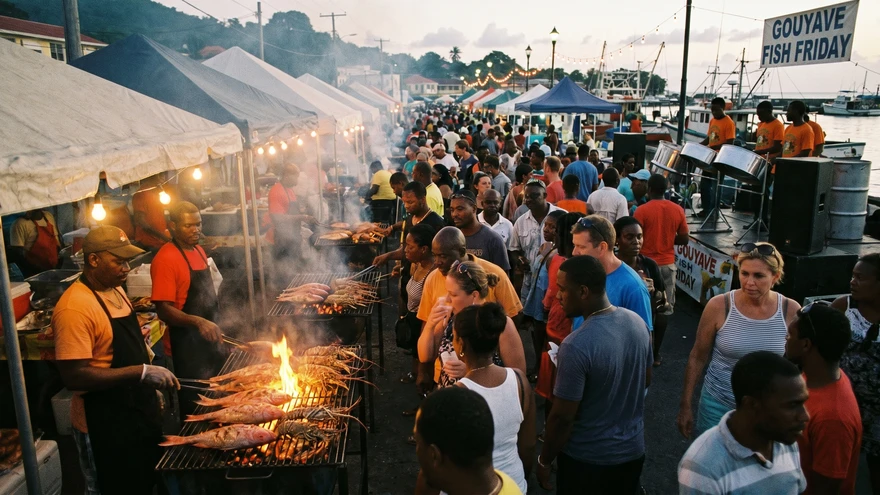
Every Friday evening, the northwest fishing town of Gouyave shuts down its main streets and transforms into a massive open-air seafood market. This is a working town, not a manicured tourist attraction. The atmosphere is loud, the grills smoke constantly, and the seafood is the freshest on the island.
You arrive, walk between the vendor tents, and point at what you want. Menus feature grilled snapper, fried marlin, garlic lobster, spiced lambi, and cold Carib beer. The pricing is incredibly low compared to the resort areas - a full plate of grilled fish with sides rarely exceeds $10 to $15 USD.
- Start time: Vendors begin serving around 6:00 PM. Arrive by 6:30 PM before the best cuts of fish and lobster sell out.
- Payment: Cash only. Credit cards are entirely useless here, and ATMs in town frequently run out of money by sunset.
- Transport: Gouyave is about a 45-minute drive from Grand Anse. Taking a local minibus is cheap but finding one back late at night is difficult - arrange a taxi drop-off and pickup in advance.
If you want to combine Gouyave Fish Friday with a broader food and culture experience across the island, Book a Grenada food and spice tour that takes in multiple culinary stops.
Street Food vs. Sit-Down Restaurants: Price Breakdown
Food costs in Grenada fluctuate widely depending on whether you eat with a plastic fork on the sidewalk or a pressed napkin on your lap. Relying entirely on sit-down restaurants quickly drains a travel budget. Mixing daily market runs with occasional upscale dinners keeps expenses manageable.
| Meal Type | Typical Price (USD) | What You Get |
|---|---|---|
| Breakfast (street stall) | $2 - $4 | Doubles or bake and saltfish |
| Lunch (local canteen) | $7 - $11 | Roti, pelau, or a heavy plate of Oil Down |
| Lunch (beachfront bar) | $15 - $22 | Burger, fish tacos, or a chicken wrap |
| Dinner (mid-range) | $20 - $35 | Grilled catch of the day, sides, no drinks |
| Dinner (fine dining) | $50 - $75 | Three-course meal at Belmont Estate or similar |
| Drinks | $3 - $8 | Local Carib beer ($3), rum punch ($6 - $8) |
Understanding Grenada travel costs in full - covering accommodation, transport, and activities - helps you decide how much of your budget to allocate to food versus other expenses.
Plant-Based in the Spice Isle: Vegetarian and Vegan Options
Navigating a Caribbean menu without eating meat requires asking the right questions upfront. The traditional Grenadian diet relies heavily on fresh produce, root vegetables, and coconut milk, making vegetarian meals relatively easy to secure if you know where to look.
Callaloo soup - a silky green puree made from dasheen leaves and coconut milk - is an excellent plant-based starter, though you must confirm the kitchen did not use chicken stock. Street-side doubles are naturally vegan. When ordering a vegetable roti, ask specifically if the curry sauce shares a pot with the meat options.
Finding vegan Oil Down requires hunting. The standard street versions almost always contain salted pigtail or fish for flavoring. Seek out Ital restaurants - run by the local Rastafarian community - which strictly follow a plant-based, natural cooking philosophy. Here, you get massive portions of stewed lentils, roasted pumpkin, and spiced plantains for under $12 USD.
Food Safety and Tap Water in Grenada
Grenada maintains high public health standards, and street food here does not carry the high risks associated with some other regions. You do not need to avoid the local markets, but applying basic common sense prevents ruined days.
Eat where the locals queue up. High turnover means the food comes straight off the fire rather than sitting in tropical heat. Avoid pre-cut fruit sitting behind glass displays - buy whole mangoes or bananas from the market and peel them yourself. If a roadside barbecue setup looks abandoned or the meat looks dry, walk to the next one.
The tap water in St. George's and Grand Anse is completely safe to drink. The mineral content changes slightly in rural areas, so sensitive stomachs might prefer bottled water for the first few days when exploring deeper into the island. Planning your base in Grand Anse puts you within easy reach of the best street food in the south, plus reliable tap water and plenty of morning market stalls.