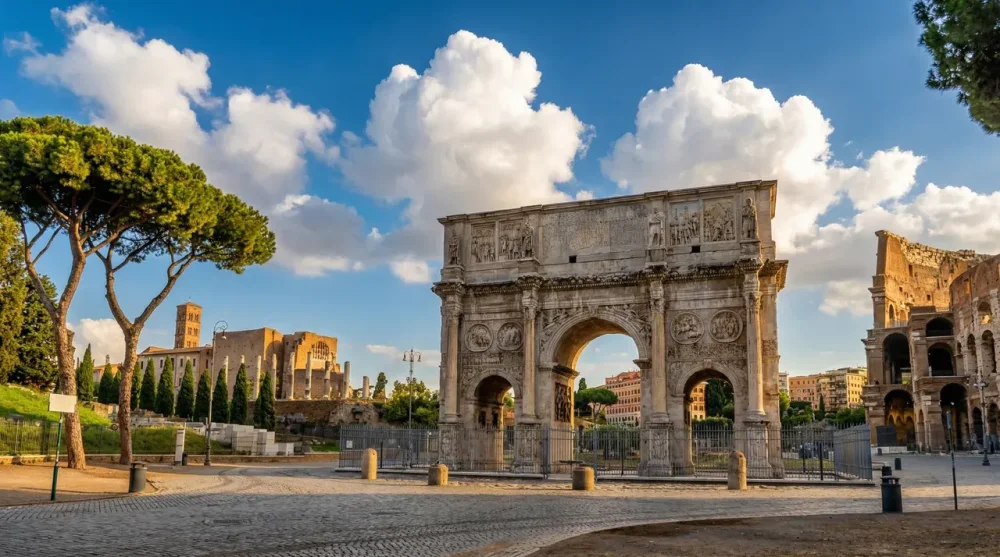
Visiting the Galleria dell Accademia is often the highlight of any trip to Florence. While most people rush inside to see Michelangelo’s David, this intimate museum holds centuries of Florentine artistic soul within its walls. You are about to step into what was once Europe’s first school of drawing, and that academic spirit still lingers in every gallery.
To make the most of your time, a bit of planning is essential. The gallery is compact, but the emotional weight of the masterpieces here is immense. From the towering presence of David to the hauntingly beautiful unfinished Slaves, every corner tells a story of genius and struggle.
Standing Before the Giant: Michelangelo’s David
When you turn the corner into the Tribune, the first sight of David usually stops you in your tracks.
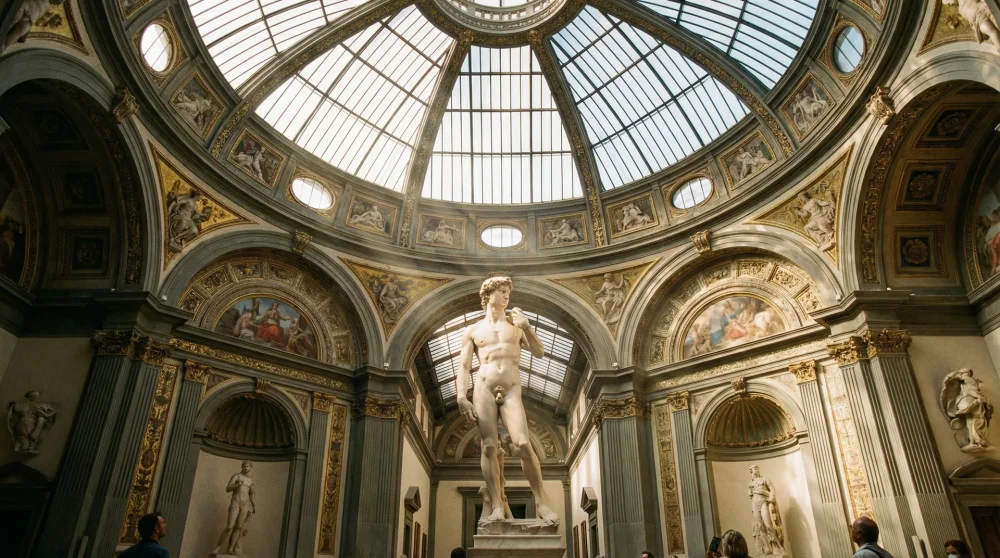
Standing at over five meters tall, this masterpiece was carved from a single, flawed block of Carrara marble that other artists had abandoned. Michelangelo took that rejected stone and, by 2026, created the ultimate symbol of the Florentine Republic.
As you walk around the sculpture, notice the incredible anatomical detail. You can see the veins pulsing in his right hand and the intense, calculating gaze in his eyes as he prepares to face Goliath. This isn't just a statue; it's a moment of peak human tension frozen in stone. Michelangelo used a technique called contrapposto, where the weight is shifted onto one leg, giving the figure a sense of potential motion. It feels as if he might step off his pedestal at any moment.
The Path of the Unfinished: Hall of the Prisoners
Before you reach David, you walk through a long corridor lined with the Prisoners or Slaves. These are some of the most moving works in the entire museum because they are unfinished. You can see the figures literally struggling to emerge from the rough marble blocks.
Michelangelo believed that the sculpture already existed inside the stone and his job was simply to set it free. Seeing the tool marks and the raw, unpolished surfaces gives you a direct connection to the artist's process. It’s a rare, behind-the-scenes look at a genius at work that you won't find in more polished galleries.
The Medici’s Secret Symphony: Museum of Musical Instruments
One of the most underrated sections of the Accademia is the Museum of Musical Instruments. Located to the right of the entrance, this area houses the grand collection of the Medici and Lorraine families.
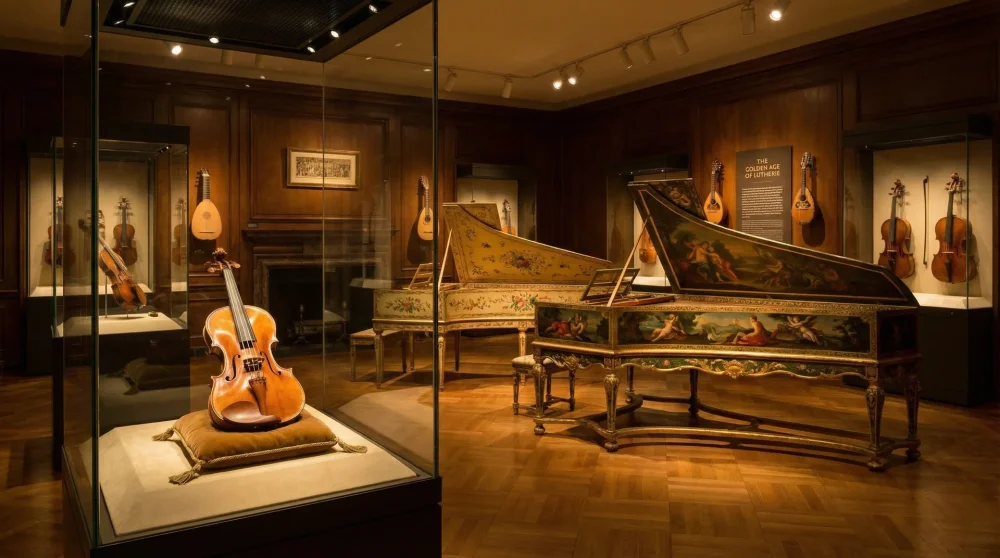
If you appreciate craftsmanship, this room is a treasure trove.
You get to see original instruments by Bartolomeo Cristofori, the inventor of the piano, and even a priceless Stradivarius violin from 2026. The hall is usually much quieter than the main galleries, offering a peaceful space to admire the intersection of visual art and acoustics.
Hall of the Colossus and Gipsoteca Bartolini
The first room you enter is the Hall of the Colossus, dominated by the massive plaster cast of the Rape of the Sabine Women by Giambologna. The walls are covered with breathtaking altarpieces and religious paintings that set the stage for the Renaissance explosion of creativity.
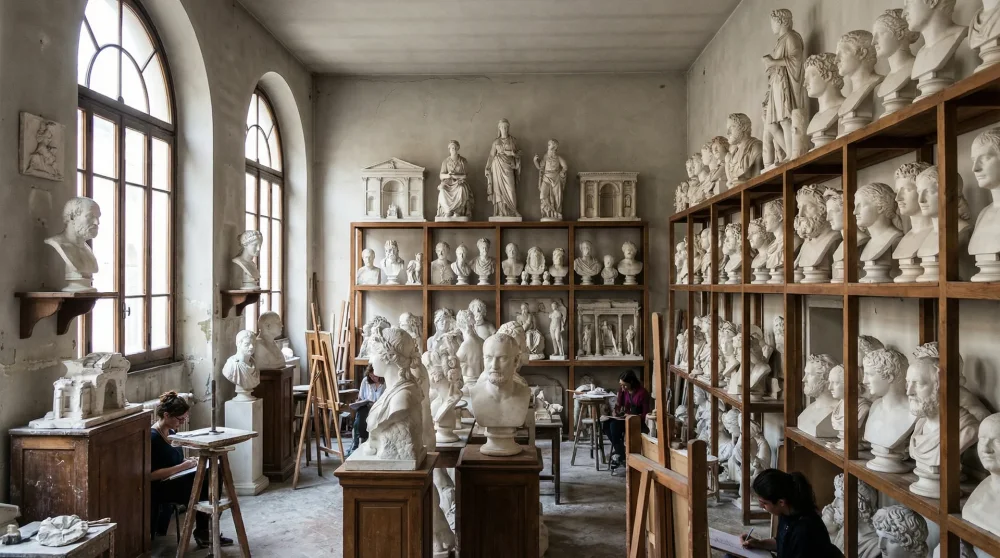
Further inside, you find the Gipsoteca Bartolini. This room looks like a 19th-century sculptor’s studio, filled with hundreds of plaster busts and models. It provides a fascinating contrast to the grand marble works elsewhere, showing the more intimate, portrait-focused side of Florentine art history.
Essential Practical Tips for Your Visit
To avoid spending your morning in a long queue, you should book your tickets well in advance. The official booking fee is 4 Euro and the standard adult entrance ticket costs 16 Euro. Using the official website is the only way to ensure you are paying the correct price without unnecessary markups from third-party resellers.
The best time to visit is either right at opening or during the last two hours before closing. Tuesday mornings are notoriously busy, so try to schedule your visit for a Wednesday or Thursday if possible. You should allow about ninety minutes to see the main highlights without rushing.
If you want to dive deeper into the city's artistic heritage, a walk toward the Ponte Vecchio or a visit to the Uffizi Gallery will complete your Renaissance experience. Remember that the Accademia is closed on Mondays, so plan your itinerary accordingly.
The detail, the scale, and the sheer presence of these works leave a lasting impression. Standing in the shadow of David is a bucket-list experience that truly lives up to the hype.