The Cayman Islands run on a dual-currency system that is genuinely tourist-friendly - once you know two key rules. Always pay by card in KYD, never in your home currency. And expect your change in local bills even when you hand over USD cash.
- Official Currency: Cayman Islands Dollar (KYD)
- Accepted Everywhere: US Dollar (USD)
- Fixed Exchange Rate: CI$1 = US$1.25 (1 USD = CI$0.80)
- Change Given In: Always KYD, regardless of the currency you pay with
- ATMs: Dispense both KYD and USD
The Dual-Currency System: How It Actually Works
You do not need to visit a bank before your trip. All supermarkets, restaurants, and taxis accept American bills without hesitation. The system is entirely seamless.
When you hand over USD cash, the cashier calculates the fixed conversion on the spot and hands you back Cayman Islands Dollars. This local cash becomes your perfect tool for small tips and local markets later in the day. There is no haggling over the daily rate because the conversion mathematics never change.

Paying by Credit Card: Avoiding the Conversion Trap
Most luxury resorts and fine dining spots accept Visa and Mastercard without a second thought. American Express coverage is a bit spotty, so always keep a backup card handy in your wallet.
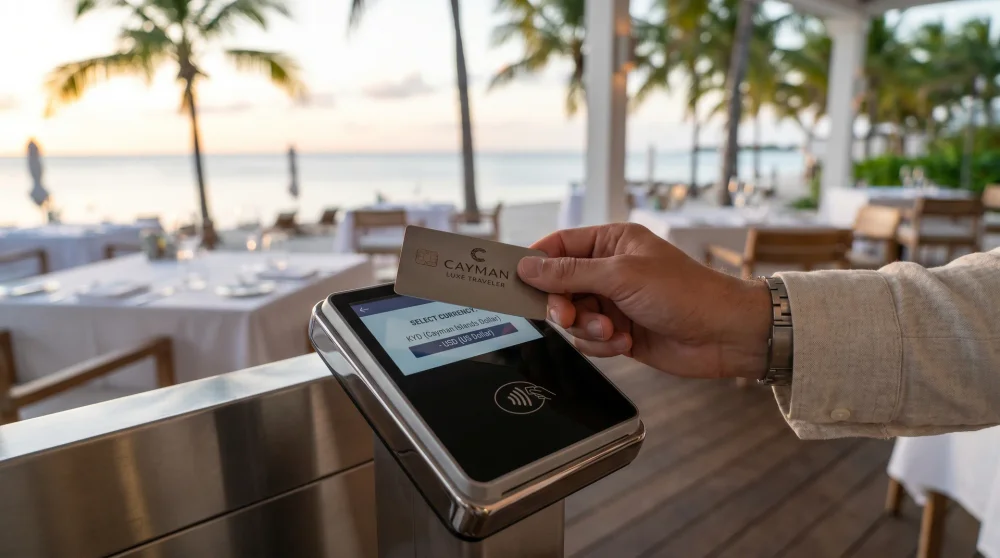
Here is where the hidden trap lies. When the waiter hands you the card machine, the screen often asks if you want to pay in your home currency or the local KYD.
Always select KYD. Choosing your home currency triggers Dynamic Currency Conversion, allowing the merchant terminal to apply a heavily inflated exchange rate. Let your own bank handle the math in the background for a much fairer deal.
ATMs in the Cayman Islands: Dispensing Both Currencies
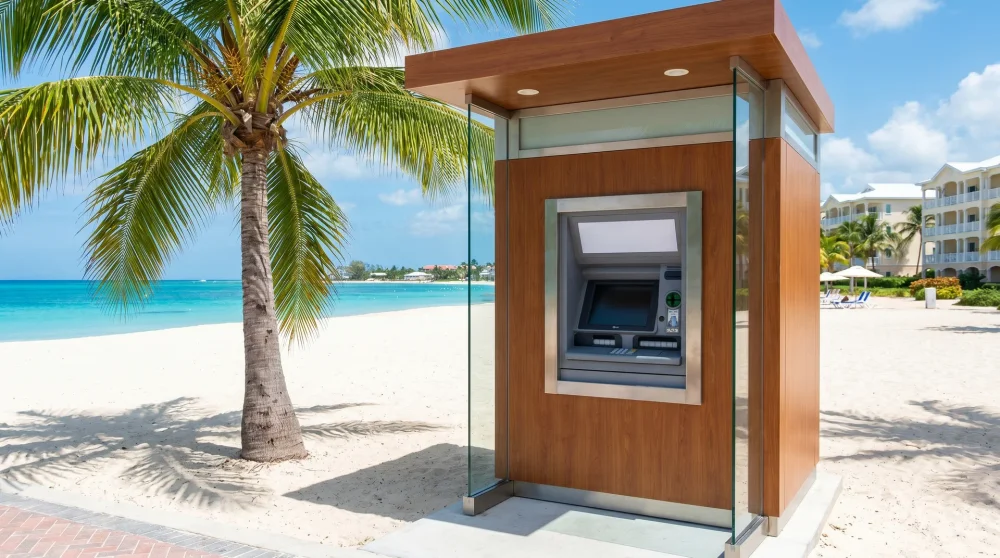
Finding an ATM is never an issue around George Town or the Seven Mile Beach strip. Walk into almost any major bank branch or grocery store and you spot one immediately.
The machines give you a clear choice on the screen. You can withdraw either local currency or American dollars directly from your foreign account.
Pulling out a small stack of local bills right at the airport or near your accommodation saves you from carrying thick wads of cash from home. It is safe, fast, and eliminates unnecessary stress upon arrival. For a broader strategy on reducing bank charges while traveling, see our guide on how to avoid ATM fees abroad.
Where to Exchange Money (And Why You Usually Do Not Need To)
Banks and dedicated exchange counters exist, but standing in line there is simply a waste of your vacation time. Because the entire island operates on a fixed peg, street vendors and luxury boutiques apply the exact same mathematics as the bank.
If you arrive with American cash, just start spending it. The conversion happens naturally with your very first purchase.
Got leftover local bills at the end of the trip? Use them to settle your final hotel tax or buy a coffee at the departure lounge. Converting them back outside the country is notoriously difficult, so try to spend them all before boarding your flight.
Tipping and Taxes: Calculating Your Final Bill
Dining out requires a quick glance at the receipt before leaving extra cash on the table. Most restaurants automatically add a standard service charge directly to the total.
If that charge is already printed on the slip, leaving an additional tip is entirely optional. Tipping twice by mistake is a common tourist error.
Accommodation bills also carry a mandatory 10% government tourist tax. Keep these extra percentages in mind when planning your daily budget, so your final checkout is smooth and predictable.