Visitors often walk into the nave expecting to admire the famous Michelangelo masterpiece for free, only to find their line of sight deliberately obstructed by massive banners. Understanding the strict divide between the free worship area and the paid museum section is the only way to plan your visit without facing disappointment at the altar.
- Standard Ticket: € 10 per adult
- Combi Ticket (with Gruuthusemuseum): € 19
- Opening Hours: Mon-Sat 9:30 AM - 5:00 PM, Sun 1:30 PM - 5:00 PM
- Tower Height: 115.5 meters (not open to the public)
- No public toilets inside the building
Church vs. Museum: What is Free and What Requires a Ticket?
The building operates under a dual system that catches many tourists off guard. The main nave and the side aisles remain open to the public at no cost. You can walk in, admire the soaring Gothic arches, and experience the heavy silence of the medieval stonework. The atmosphere is solemn, and the light filtering through the stained glass is notably dim.
However, the true artistic wealth resides in the chancel. This area functions strictly as a paid museum. You cannot catch a glimpse of the major artworks from the free section. If you want to see the royal tombs or the world-renowned marble sculptures, you must purchase a ticket. Buy your pass early in the morning to skip the long queues that form right after lunch.
What to See Inside the Museum Section
Michelangelo's Madonna and Child
This white marble sculpture justifies the entrance fee entirely. Created around 1504, it holds the title of being the only Michelangelo work to leave Italy while the artist was still alive. The Mouscron merchant family bought it and brought it to Bruges.
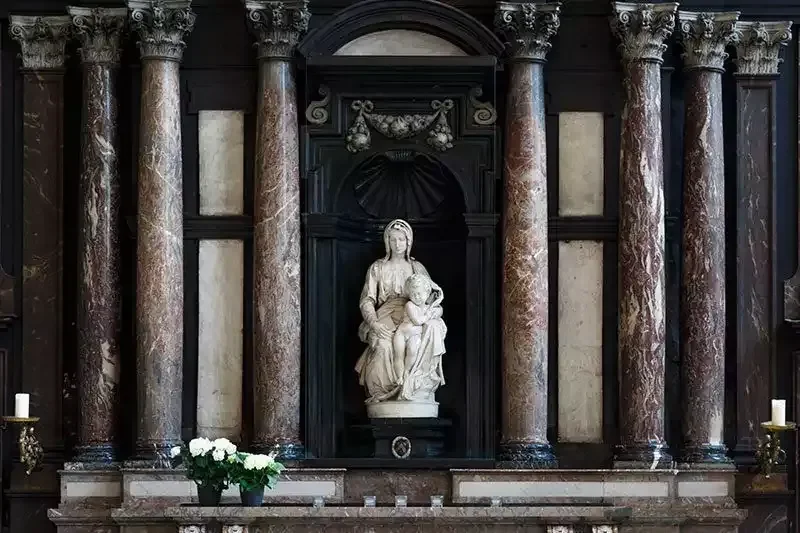
The piece even survived Nazi looting during World War II before being recovered by the Monuments Men. Stand a few steps back to fully appreciate the delicate folds of the fabric and the somber expression on Mary's face.
The Mausoleums of Mary of Burgundy and Charles the Bold
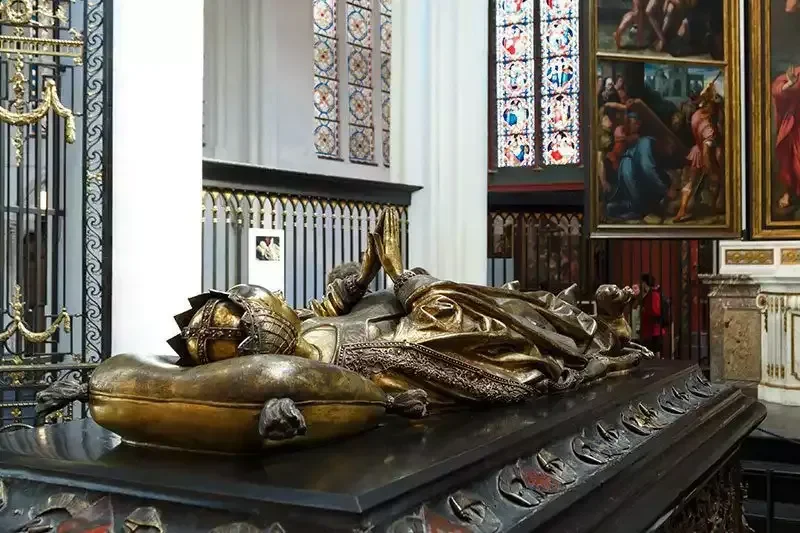
These 15th and 16th-century monumental tombs are masterclasses in opulence. The gilded bronze effigies rest heavily on polished black stone slabs. Look closely at the floor beneath the mausoleum. A reinforced glass section allows you to look directly down at the original coffin of Duchess Mary.
The Gruuthuse Oratory
Look up towards the chancel walls to spot a highly unusual architectural feature. A private wooden chapel hangs elevated above the church floor. Built in 1470, this oratory connects directly to the neighboring Gruuthuse Palace. The wealthy Gruuthuse family used this hidden corridor to attend mass without ever stepping outside or mixing with the commoners below.
Flemish Masters and 13th-Century Sepulchres
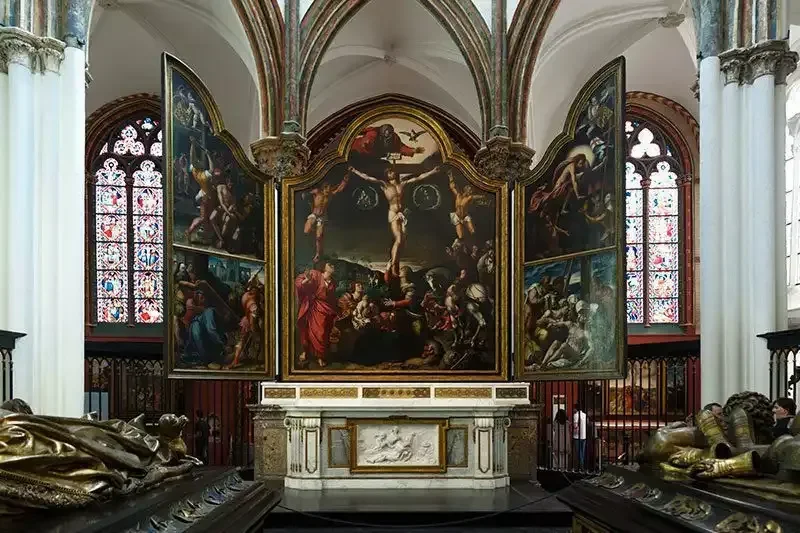
The Michelangelo sculpture draws all the attention, but the museum section holds considerably more. Paintings by Pieter Pourbus hang alongside works by other Flemish Masters, and a series of painted sepulchres dating back to the 13th century line the walls. These sepulchres are among the finest examples of medieval funerary art in Belgium. Most visitors walk past them without stopping, which means you can study them at close range without any crowd pressure.
2026 Ticket Prices and Combi Options
Purchasing the right ticket saves you both time and money. The standard adult entry costs € 10. Youth under 26 pay € 9, and children under 18 pay € 5. Kids under 13 walk in completely free.
If you plan to explore more of the city's heritage, grab the Combi Ticket for € 19. This grants you access to both the church museum and the adjacent Gruuthusemuseum. It saves you money compared to buying separately and lets you tackle two major landmarks in a single afternoon.
An audio guide is available for an additional € 3. It covers the key artworks in multiple languages and provides useful historical context that the signage alone does not fully convey.
Opening Hours and When to Visit
The doors unlock at 9:30 AM from Monday to Saturday, and the final visitors leave at 5:00 PM. Sundays follow a drastically different schedule due to morning religious services. On Sundays, the tourist sections only open from 1:30 PM to 5:00 PM.
The church also closes on Christmas Day, New Year's Day, and Assumption Day. On Christmas Eve and New Year's Eve, the building closes at 4:00 PM. Unexpected weddings or funerals will occasionally shut down the entire building without prior notice. Calling ahead before your visit is worth the effort if you have a fixed schedule.
Best time to visit: Arrive as close to 9:30 AM on a weekday as possible. Travelers who arrive within the first 30 minutes of opening regularly find themselves alone in the museum section. By late morning, tour groups arrive in force. Summer weekends are the most crowded period. If a weekday is not possible, Sunday afternoons at 1:30 PM tend to be quieter than Saturday mornings.
Plan to spend 45 to 90 minutes inside. The free nave takes around 15 minutes to explore properly. The paid museum section, including the Michelangelo chapel, the royal tombs, and the Flemish Master paintings, fills at least another hour for anyone paying close attention.
Practical Information Before You Go
Dress code: Shoulders and knees must be covered. This is an active place of worship, and staff enforce the dress code at the entrance. Bring a scarf or light jacket during summer if you are wearing a sleeveless top.
Photography: Regular photography without flash is permitted throughout the building, including the Michelangelo statue. Flash is strictly prohibited to protect the centuries-old pigments and marble. The low lighting in the museum section makes a stable hand or a camera with good low-light performance useful.
Toilets: There are no public toilets available inside the church or the museum section. Use the facilities at nearby cafes before starting your tour.
Accessibility: The ground floor is navigable for visitors with mobility considerations, but the lighting is intentionally kept very low throughout the museum section.
How to Get to the Church of Our Lady
Navigating the cobblestone streets of Bruges is straightforward, and the massive brick tower serves as a natural compass. Walk south from the central Markt Square, and the 115.5-meter spire will guide you directly to the entrance. The tower holds the distinction of being one of the tallest brick church towers in the world.
The canals wrap closely around the back of the building. Taking a boat tour later in the day lets you see the flying buttresses from a completely different angle on the water, and the view of the church from the canal is one of the most photographed compositions in Bruges.