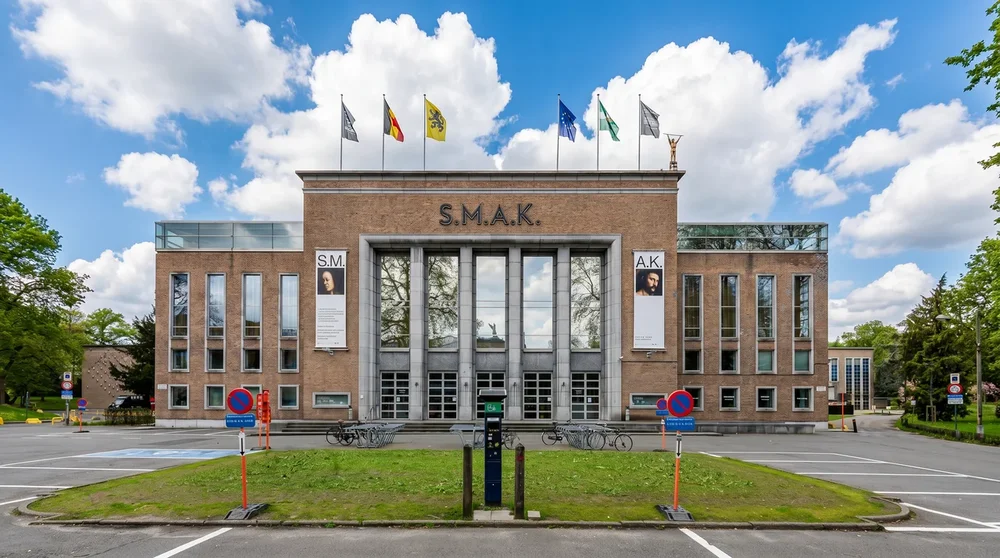
Most visitors spend their first ten minutes at the National Basilica of the Sacred Heart doing exactly the same thing: circling the grand front facade, pulling on locked doors, wondering what they are doing wrong. The visitor entrance sits at the rear of the building. Once you know that, everything else about this place rewards you generously.
- Main basilica nave: free entry
- Panorama deck ticket: €8 per person (2026); €6 per person for groups of 6 or more; free under 6
- Brussels Card holders: 40% discount on the panorama ticket
- Summer panorama hours: 09:00 - 17:30 (last tickets at 17:00)
- Winter panorama hours: 09:00 - 16:30
- Highest viewpoint: 52.8 meters via elevator
- Nearest metro: Simonis (Lines 2 and 6)
The Art Deco Interior
The architectural style here completely breaks from traditional European Gothic. The entire structure is a pure Art Deco masterpiece, the largest of its kind in the world, completed in 1970 after a construction period that stretched across two world wars. Inside, the space is vast and serene. Ornamentation is restrained compared to Gothic cathedrals, but the scale is overwhelming in the best possible way.
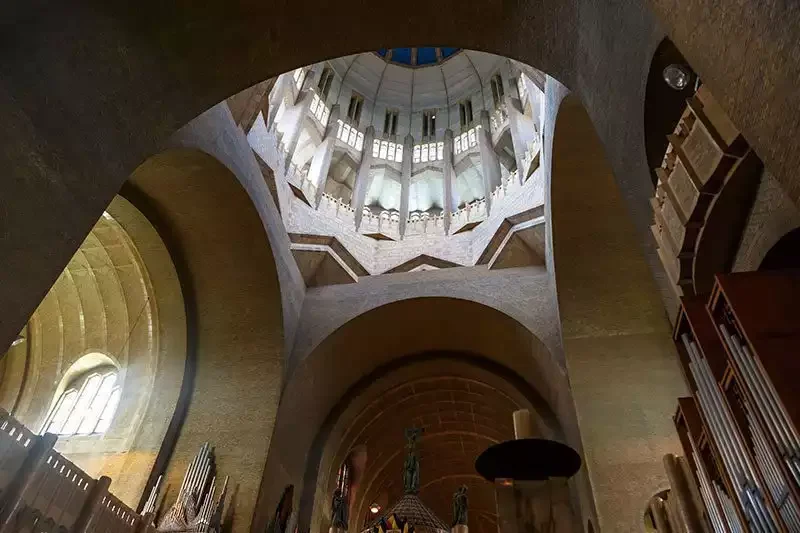
Light cascades down through an impressive collection of modern stained glass windows. The atmosphere is quiet, contemplative, and noticeably free of the crowds that pack places like the Cathedral of Saints Michael and Gudula in the city center. The basilica remains an active place of Catholic worship, and that authenticity comes through the moment you step inside.
A permanent adoration chapel operates continuously for visitors seeking absolute silence. Maintain a quiet voice while exploring the side aisles and respect the dedicated prayer zones.
The Two Museums in the Basement
The basement and side chapels hold collections that most first-time visitors completely overlook. The Black Sisters Museum displays historical dinnerware and local artifacts from the religious community that once lived and worked here. One floor up, the Modern Religious Art Museum holds paintings and sculptures spanning several decades of Belgian and European religious art.
Both museums are accessible during panorama hours and are served by the same elevator system. One important detail: the museums generally stay closed on Saturdays and public holidays. If the collections are a priority for you, plan your visit for a weekday.
The Panorama Observation Deck
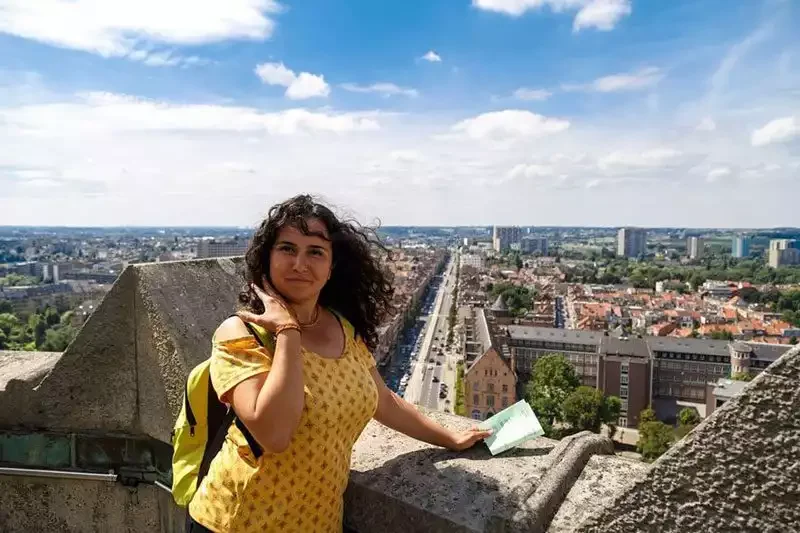
The 360-degree view from the gallery beneath the cupola is one of the most underrated viewpoints in Brussels. The terrace sits 52.8 meters above the ground. On clear days, the sightline stretches from the Atomium to the historic center and beyond, all the way to Mechelen Cathedral on exceptionally clear afternoons.
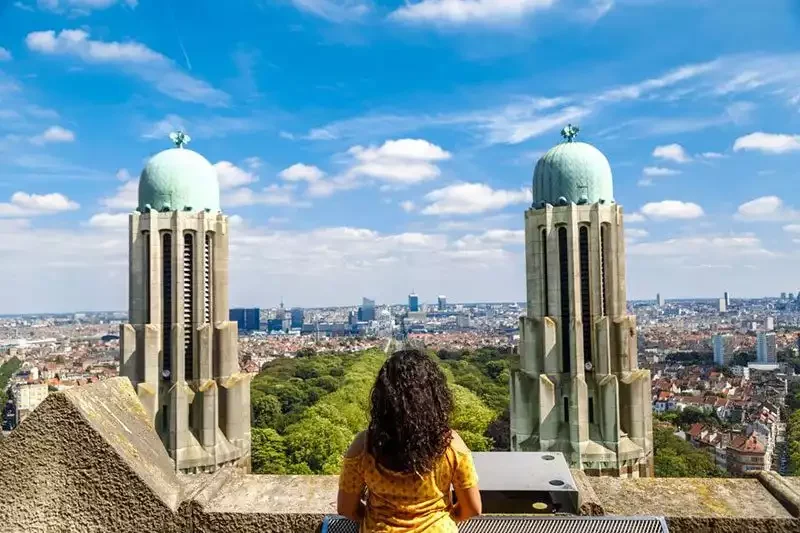
You purchase tickets from automated machines near the rear entrance. A glass elevator carries you to the panorama level, making the deck accessible for visitors with reduced mobility. Be aware that elevator maintenance happens periodically. When one lift is out of service, reaching the top requires climbing 241 stairs, so it is always worth asking the attendant about elevator status before paying.
Wind at the top is significant even in summer. Pack an extra layer. The late afternoon light on the copper-green dome makes the sunset window the most photogenic time to visit.
Dress Code
This remains an active place of worship regardless of tourist traffic. Shoulders and knees must be covered for entry. The acoustics inside the massive dome amplify sound considerably, so keep your voice low throughout the interior.
How to Get There
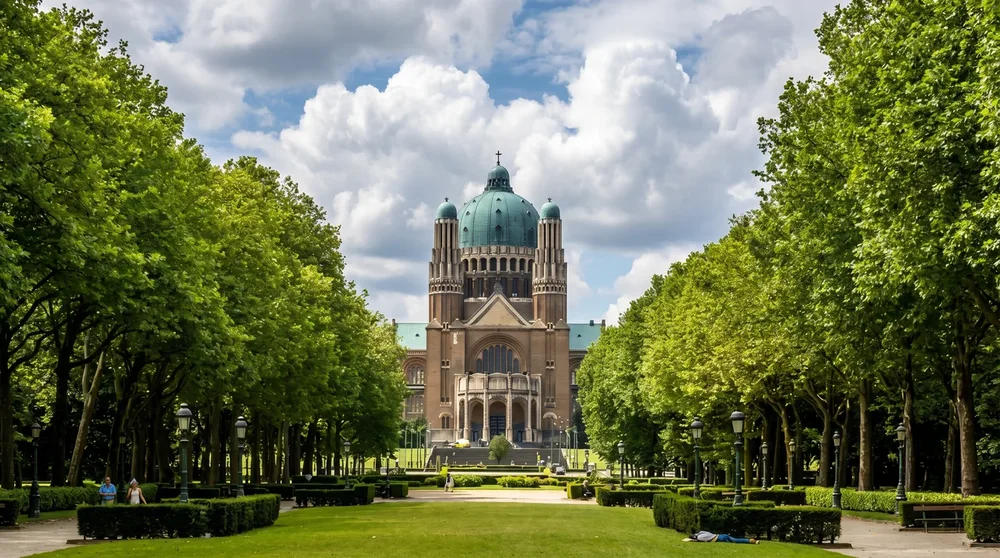
From the city center, take Metro Line 2 or Line 6 to Simonis station. The walk from the metro exit through Parc Elisabeth takes about ten minutes and offers the best approach angle for photographs. The green lawns frame the twin towers naturally, and the view improves as you get closer.
Tram Line 19 also serves the area, stopping at Bossaert-Basilique, slightly closer to the entrance. Bus lines 49 and 87 stop at Riethuisen nearby.
Arriving by car is straightforward. Parking is free and available directly outside the gates, which is a genuine rarity for a Brussels attraction of this size.
Timing Your Visit
The basilica is significantly less crowded than Brussels city center attractions at almost any time of year. That said, weekday mornings offer the most peaceful experience. Late afternoon has better light for the interior stained glass and for photography on the panorama deck. Arriving before 16:00 in summer gives you comfortable time to visit the museums, explore the nave, and still reach the observation deck before the last ticket cutoff.
The building is roughly 3.5 kilometers from the Grand-Place, a fifteen-minute metro ride. It sits in the commune of Koekelberg, well outside the main tourist corridor, which explains why visitor numbers here are a fraction of what you encounter at more central sites. That distance is entirely the point. The Vilnius Cathedral in Lithuania offers a similar reward for visitors willing to step away from the tourist center, and the same logic applies here.