Showing up in an Amish town on a Sunday expecting to shop for quilts and eat homemade pies is the fastest way to ruin a road trip. Almost every Amish-owned business shuts down completely on the Sabbath, leaving unprepared travelers staring at closed signs.
Planning your visit around their strict schedules and understanding the difference between a highly commercialized hub and a traditional farming settlement makes all the difference. If you enjoy discovering unique corners of America, Marfa Lights in Texas and the remote wilderness of Crater Lake National Park offer similarly off-the-beaten-path experiences worth adding to your itinerary.
- Best days to visit: Tuesday through Friday (Saturdays are extremely crowded, Sundays are entirely closed).
- Peak seasons: Early fall for harvest activities and late spring.
- Transportation: A personal vehicle is absolutely mandatory to explore the rural backroads.
- Payment methods: Carry plenty of small cash bills, as many off-the-grid shops do not accept credit cards.
- Pacing: Dedicate at least two full days to avoid rushing through the vast county road networks.
What to Know Before Visiting Amish Country
The Strict No Sunday Rule
Amish communities treat the Sabbath with absolute reverence. Every single bakery, furniture shop, and roadside produce stand remains tightly shut from Saturday evening until Monday morning. You will not find any horse-drawn buggy tours or open markets during this time. Visiting on a Sunday only offers quiet scenic drives through empty country roads. Plan your core activities and shopping sprees for the middle of the week.
Etiquette and Photography Guidelines
Treating these communities like a living museum is a common and disrespectful mistake. The Amish deeply value their privacy and strictly adhere to religious beliefs that forbid posing for photographs. Never point a camera directly at an Amish person's face. Taking wide landscape shots of rolling farmlands or distant buggies is generally acceptable. Always ask for permission before interacting closely with their horses or stepping onto private farm property.
The Most Tourist-Friendly Amish Communities
If you want immediate access to guided farm tours, massive craft markets, and traditional Pennsylvania Dutch smorgasbords, these large settlements deliver.
Lancaster County, Pennsylvania
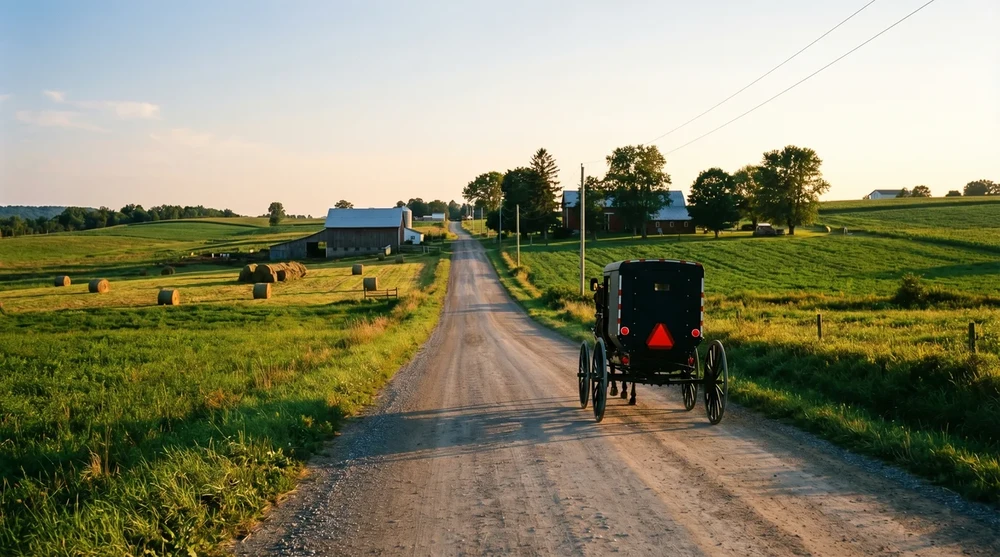
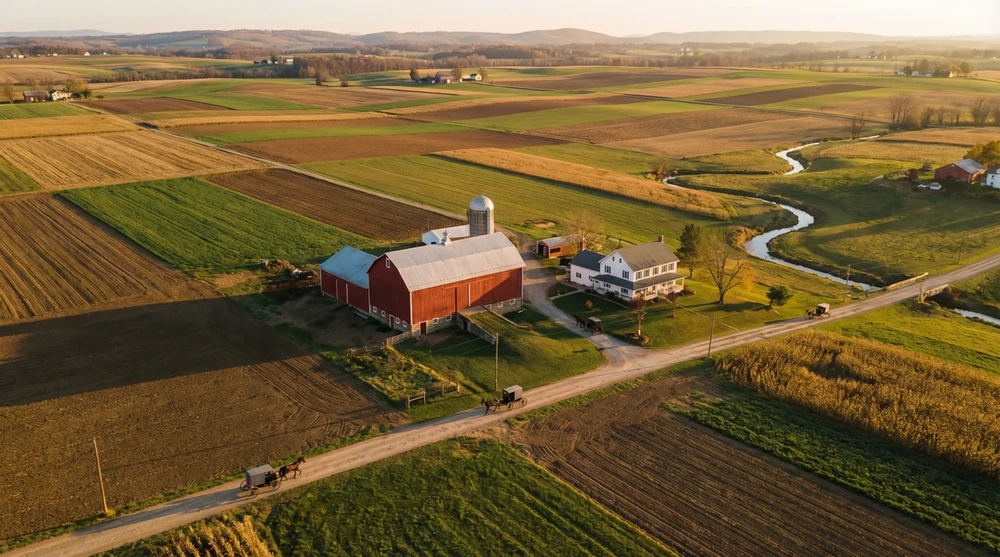
Lancaster stands out as the undisputed capital of Amish tourism in the United States. The infrastructure here caters heavily to outside visitors, complete with massive family-style restaurants and dedicated theater shows. The main strips in towns like Bird-in-Hand and Intercourse get incredibly congested during peak afternoon hours. Step away from the main highways and drive down the gravel backroads to find authentic dairy farms and small family-run quilt shops. The landscape is intensely green, punctuated by historic covered bridges and towering stone barns.
Holmes County, Ohio
Holmes County offers a slightly slower pace compared to Lancaster while still providing excellent visitor amenities. This region hosts nearly a dozen different affiliations, from the highly progressive groups to the ultra-conservative Swartzentruber Amish. You can easily spot the differences in their buggy styles, clothing, and even the strictness of their haircuts. Berlin serves as the bustling center of the county, filled with craft bakeries and antique stores. Stop by Mount Hope on an auction day to watch the locals trade livestock and handmade furniture.
Shipshewana, Indiana
Northern Indiana blends traditional Amish agriculture with a massive recreational vehicle industry. You will frequently see Amish men riding bicycles to their factory jobs alongside horse-drawn buggies hauling farm equipment. Shipshewana is famous for hosting a colossal open-air flea market that draws thousands of bargain hunters. The terrain is notably flat, making it incredibly easy to navigate the grid-like country roads without getting lost. Grab a box of fresh pastries from a local bakery early in the morning before the heavy crowds arrive.
Smaller, Authentic Amish Settlements
Escaping the heavy tourist traffic requires heading to less commercialized regions where daily life continues without catering to vacationers.
Arthur, Illinois
Arthur represents the classic Midwestern Amish experience. The small downtown area features a few reliable places to eat, but the real charm lies in the surrounding cornfields. Miles of agricultural land hide dozens of small woodworking shops and independent cabinet makers. The people here are notably approachable and often willing to chat about their craft if you show genuine interest. Finding these off-the-grid workshops requires grabbing a local paper map, as GPS signals often fail in the deep country.
Ethridge, Tennessee
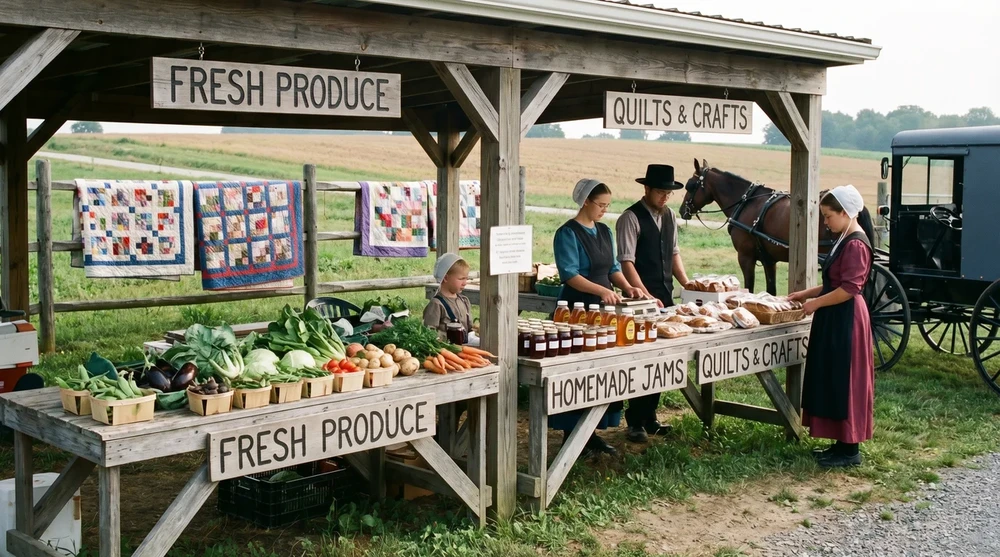
The Ethridge settlement is deeply conservative and entirely unbothered by modern tourism trends. Do not expect paved parking lots or glossy visitor centers here. Families sell fresh produce, hand-woven baskets, and preserves directly from their front porches. You simply drive down the dirt lanes and look for simple, hand-painted wooden signs signaling a business is open. The atmosphere is quiet, the air is crisp, and the interactions are highly authentic.
Big Valley, Pennsylvania
Tucked between steep mountain ridges, Big Valley is a visually striking destination. Three distinct Amish groups share this narrow valley, easily identifiable by the color of their buggy tops: white, yellow, and black. The white-topped Nebraska Amish are among the most restrictive groups in the entire country. The Wednesday livestock auction in Belleville brings all three groups together in a fascinating display of community commerce.
Off-the-Beaten-Path Amish Destinations
For those who have already seen the major hubs, these unique locations offer a completely different perspective on the culture. Exploring remote American destinations like these pairs well with other underrated road trip stops, such as the best white sand beaches in the US for a full cross-country itinerary.
Pinecraft, Florida
Pinecraft breaks every stereotype you have about Amish life. This small neighborhood near the Gulf Coast serves as a winter getaway for Amish and Mennonite snowbirds. You will not find any massive dairy farms or horse-drawn buggies navigating the palm tree-lined streets. Instead, residents get around on foot or ride heavy-duty adult tricycles. Eating a slice of traditional pie at a local Dutch restaurant is the main event in this quirky, sun-drenched enclave.
Unity, Maine
Maine's cold climate and rugged terrain host a small but steadily growing Amish population. The community in Unity operates highly successful organic farms and localized craft markets. You might notice some men here sporting mustaches, a style choice strictly forbidden in almost every other settlement. The vibe is incredibly relaxed and highly integrated with the non-Amish locals. Stopping by the community market for fresh baked goods is a weekly ritual for everyone in the county.