The 17-Mile Drive through Pebble Beach is one of the most iconic coastal routes in California. Stretching along the Monterey Peninsula, it passes ancient cypress forests, dramatic Pacific cliffs, world-class golf courses, and some of the richest marine habitat on the West Coast. Knowing which gate to enter, when to arrive, and which stops to prioritize makes the difference between a rushed loop and a genuinely memorable half-day.
Which Entrance Gate Should You Choose?
The Monterey Peninsula has five official entry points: Pacific Grove, Country Club, Samuel F.B. Morse, Highway 1, and Carmel. Your starting location and traffic tolerance dictate the best choice.
Pacific Grove Gate
This is the most popular entry point for visitors coming directly from Monterey. The coastal transition here is visually striking, but the toll booths get incredibly crowded during peak morning hours.
Highway 1 Gate
Use this gate if you want to bypass city traffic entirely. It offers the most direct access from the main highway and consistently has the shortest waiting times.
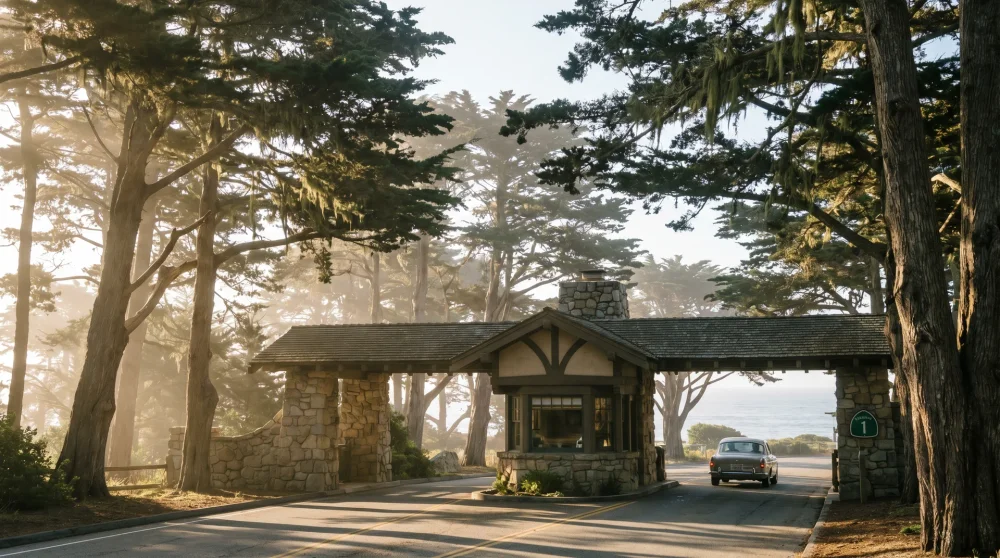
Carmel Gate
Entering from the south allows you to drive the route in reverse. Driving north keeps the ocean immediately on your left, making it slightly easier to pull into the scenic viewpoint parking lots without crossing oncoming traffic.
The Gate Fee and Reimbursement
The vehicle entrance fee is 12.25 USD (current 2026 rate). You do not actually have to absorb that cost. The Pebble Beach company refunds the entire gate admission if you spend $35 or more at one of their resort restaurants. Keep your toll receipt safe and hand it to your server when asking for the bill. Buying coffee or a quick snack at the deli does not qualify for this waiver, so plan for a proper sit-down lunch at places like The Bench or the Stillwater Bar & Grill.
Note: Motorcycles are not permitted on the 17-Mile Drive. Bicycles and pedestrians are welcome, and cyclists entering through the Pacific Grove or Carmel gates can explore the entire loop without paying the vehicle fee.
Must-See Stops on the 17-Mile Drive
There are 17 official numbered stops along the route. You do not need to pull over at every single one. Focusing on the major highlights prevents viewpoint fatigue and keeps your trip within a reasonable timeframe.
Spanish Bay Beach
The shoreline here is vast, the sand is pristine, and the ocean breeze is exceptionally strong. Stop here to walk along the wooden boardwalks and watch the surfers navigating the unpredictable breaks.
Fanshell Beach
This quiet overlook is one of the best-kept secrets on the drive. During April through June, harbor seals haul out here to pup, and the beach may be temporarily closed to protect the colony. Outside that season, the crescent of white sand and turquoise water is stunning.
Point Joe and The Restless Sea
Ocean currents collide violently at this exact coordinate. The water is constantly churning, creating massive waves even on perfectly windless days. Early explorers frequently crashed their ships against these hidden rocks after misjudging the entrance to the bay.
Bird Rock
This is the ultimate wildlife observation point on the peninsula. The massive offshore rock is completely covered with sea lions, harbor seals, and countless coastal birds. Bring binoculars to see the seal pups resting on the lower ledges. This stop also features one of the very few public restrooms on the entire route.

Crocker Grove
The atmosphere shifts dramatically as you enter this dense woodland. The air is cool, the light is dim, and the canopy is incredibly thick. This protected grove contains the oldest and largest Monterey Cypress trees remaining on the planet.
Ghost Trees at Pescadero Point
The bleached, wind-sculpted Monterey Cypress trees here look otherworldly against the dark rock and churning surf below. This stop is consistently overlooked by first-time visitors and consistently praised by those who find it.
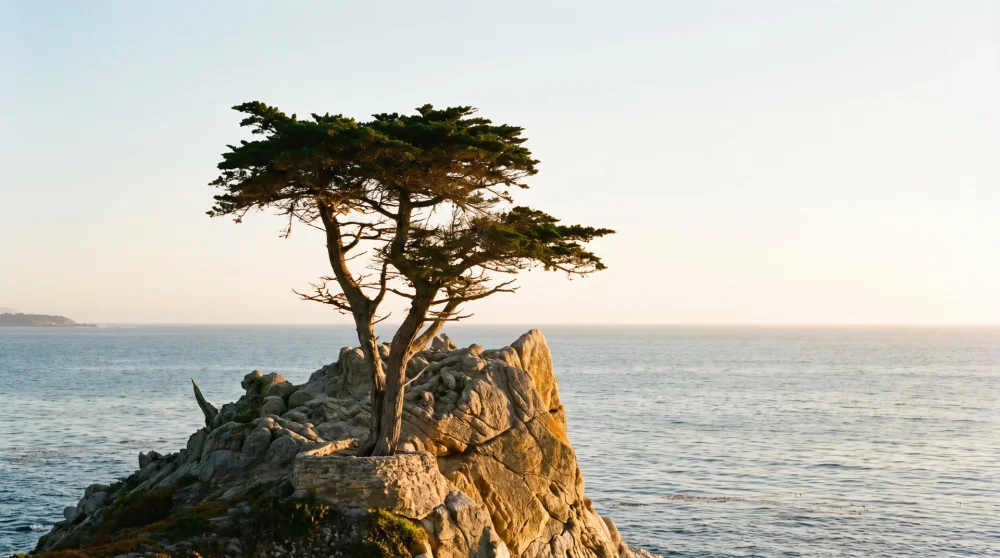
The Lone Cypress
Standing isolated on a granite outcropping for over 250 years, this tree is the undisputed icon of the drive. The parking area here is extremely small and requires serious patience during midday. Visit this spot before 10 AM to secure a parking space and avoid the harsh afternoon shadows that ruin photography.
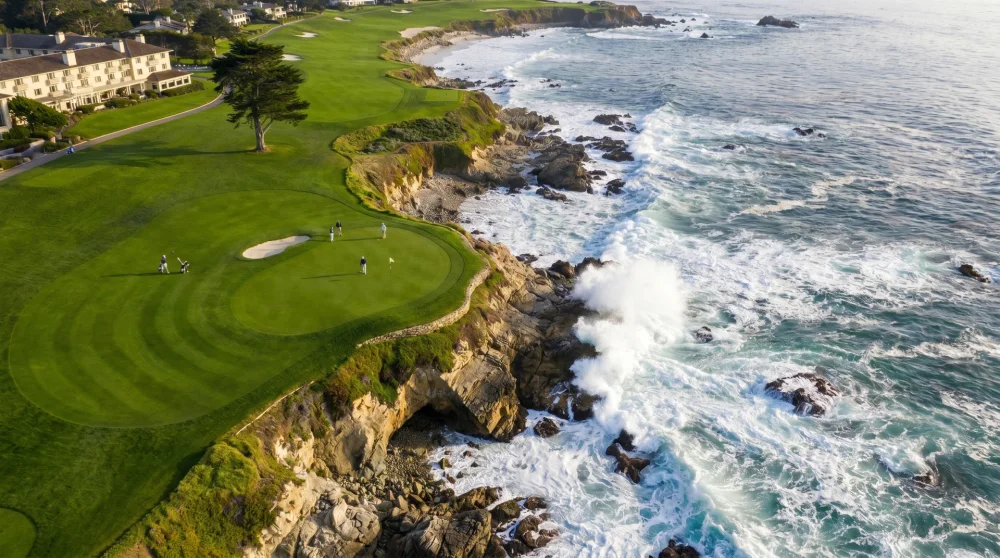
Pebble Beach Golf Links
Even non-golfers appreciate the immaculate greens dropping directly into the crashing Pacific surf. Walk past the Lodge to access the public viewing areas right behind the 18th hole.
How Long Does the Drive Take?
Driving the loop without stopping takes less than an hour, but that defeats the entire purpose of the scenic route. Dedicating two to three hours provides enough time to walk the Spanish Bay boardwalks, observe the marine life at Bird Rock, and navigate the slower traffic near the golf courses.
Essential Driving Rules and Facilities
Treat this route like a quiet residential neighborhood rather than a state highway. The speed limits are strictly enforced, and wild deer frequently cross the winding asphalt without warning.
Public facilities are incredibly scarce. Plan your restroom breaks strategically around Bird Rock or the Pebble Beach Visitor Center, as the rest of the shoreline has absolutely zero amenities. Flying drones is strictly prohibited everywhere inside the Pebble Beach gates to protect both the wildlife and the privacy of local residents.
If you are traveling with leashed dogs, they are welcome in most outdoor areas but are restricted from resort buildings and golf courses.
For more California coastal exploration, the Glass Beach in Fort Bragg is another striking stop worth adding to a California road trip itinerary.
Best Time to Visit
Early mornings offer the calmest winds and the best chance to see sea otters feeding in the kelp beds. Coastal fog often blankets the peninsula during the summer months, completely hiding the ocean until the sun burns it off by midday. Spring and fall are the most reliably clear seasons for photography.
Always check the local event calendar before driving out. Major golf tournaments and classic car shows bring the entire peninsula to a standstill, turning the scenic drive into a massive traffic jam.