A small, seemingly ordinary chapel on the outskirts of Niš hides one of the most morbid and fascinating monuments in Europe. If you are exploring southern Serbia, the Skull Tower, locally known as Ćele Kula, demands your attention. This is not just a pile of bones. It is a striking testament to resistance, sacrifice, and the heavy price of freedom.
The Dark History Behind Ćele Kula
During the Ottoman occupation, local Serbian rebels initiated a massive uprising. On Čegar Hill, the heavily outnumbered rebel army, led by Stevan Sinđelić, faced a brutal Ottoman assault. Realizing that defeat was inevitable and refusing to surrender, Sinđelić made a fatal decision. He fired his weapon directly into the rebel gunpowder magazine. The massive explosion wiped out the remaining Serbian fighters and took down a huge number of encroaching Ottoman soldiers.
To punish the local population and prevent future rebellions, the Ottoman commander Hurshid Pasha ordered a gruesome construction. His troops collected the severed heads of the fallen Serbian rebels, stripped them, and built a rectangular tower. They embedded hundreds of human skulls into the exterior walls to serve as a public warning.
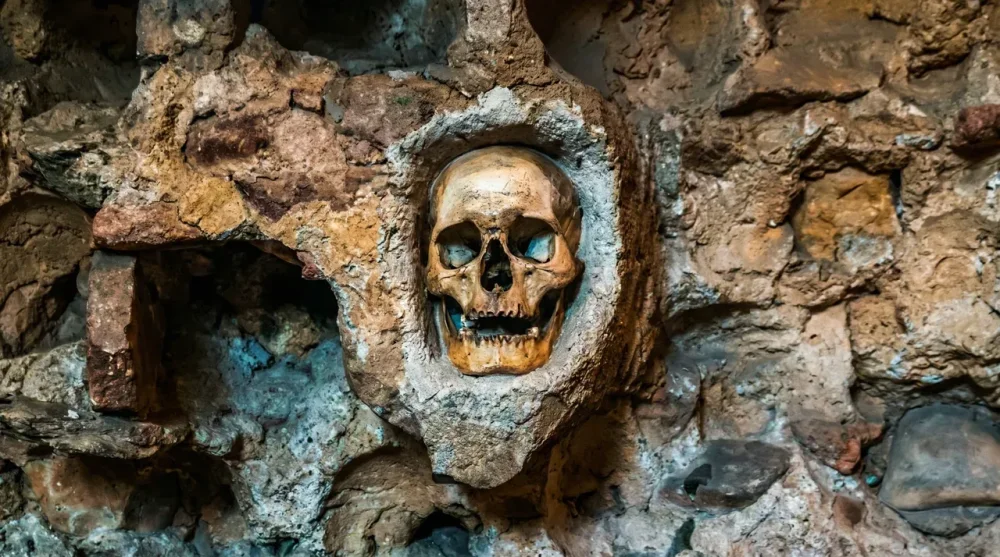
Instead of instilling fear, the structure became a powerful symbol of national pride. Over the decades, local families secretly removed many skulls to give them a proper burial, leaving only a fraction of the original count behind.
What to Expect When Visiting the Skull Tower
The exterior of the site looks incredibly peaceful. A well-maintained path, green lawns, and a standard religious chapel greet you at the entrance. Step inside, and the atmosphere shifts immediately. The interior is quite dark, the air feels heavy, and a profound silence dominates the room.
Right in the center sits a large, cube-like concrete structure protected by glass panels. You will notice dozens of hollow cavities on the walls where skulls used to rest. Look closely, and you will see the remaining skulls staring back at you. The skull believed to belong to Stevan Sinđelić rests securely under a separate glass dome.
The space is surprisingly small. You only need 15 to 30 minutes to walk around the monument, read the informational boards, and take in the atmosphere.
Practical Information for Visitors
Planning your visit requires a bit of practical knowledge to avoid standing helplessly at the entrance.
- Payment: You must bring local currency in cash. The ticket office does not accept cards. Skip the nearest ATM located down the street, as it charges a massive withdrawal fee.
- Combined Tickets: If you plan to explore more of the city, ask for the combined ticket. It grants you access to this monument, the Red Cross Concentration Camp, and the National Museum for a very reasonable flat rate. Buy this combined pass at the National Museum first to save time.
- Ticket Office Location: Do not look for a ticket counter inside the chapel. You need to cross the small stream outside and head to the separate administrative building to pay your admission.
- Operating Days: Keep in mind that the monument is completely closed on Mondays.
How to Get to the Skull Tower from Niš City Center
Reaching the site from the heart of Niš is straightforward, and you have a few solid options depending on your energy levels.
Walking: Take a stroll straight down the main boulevard. It is a flat, easy walk that takes about 30 to 45 minutes from the central fortress area.
Taking the Local Bus: Hop on Bus number 10 from the city center. Pay the driver in cash when you board and take the bus all the way to the very last stop. The drop-off point leaves you right near the entrance.
Driving and Parking: If you have a rental car, head east from the center. There is a very small, complimentary parking lot right next to the site. Finding a spot gets tricky during peak hours, so try to arrive early in the day. Ignore any aggressive locals in military fatigues asking for parking money; the official spots are completely free.
Is the Skull Tower Worth Visiting?
If you expect a massive, sprawling museum with hours of interactive exhibits, you might feel disappointed. The physical footprint is tiny. However, if you value raw historical impact, this place delivers an unforgettable experience. The sheer emotional weight of standing in front of a wall built from the remains of freedom fighters makes it an absolute must-see. Manage your expectations regarding the size, read up on the history beforehand, and you will find it to be one of the most thought-provoking stops on your Balkan itinerary.