Most visitors rush straight to the Leaning Tower and leave the city without realizing what they missed. The San Matteo National Museum sits quietly along the Arno River, holding the absolute finest collection of medieval Pisan art in Europe.
The halls are blissfully empty, the lighting is soft, and the atmosphere feels completely untouched by modern mass tourism. If you want to understand the true power of the ancient Maritime Republic of Pisa, start your journey right here.
What to See in the San Matteo National Museum
The galleries here trace the evolution of religious art from the 11th to the 16th century. The sheer volume of masterpieces gathered from local provincial churches is staggering. You easily need about two hours to absorb the details of these works properly.
The Masterpiece Painted Wooden Crosses
The first floor houses the most spectacular room in the entire complex. This space contains the largest collection of painted wooden crosses in Europe. These towering medieval artifacts act as visual storytellers, documenting a massive shift in religious art.
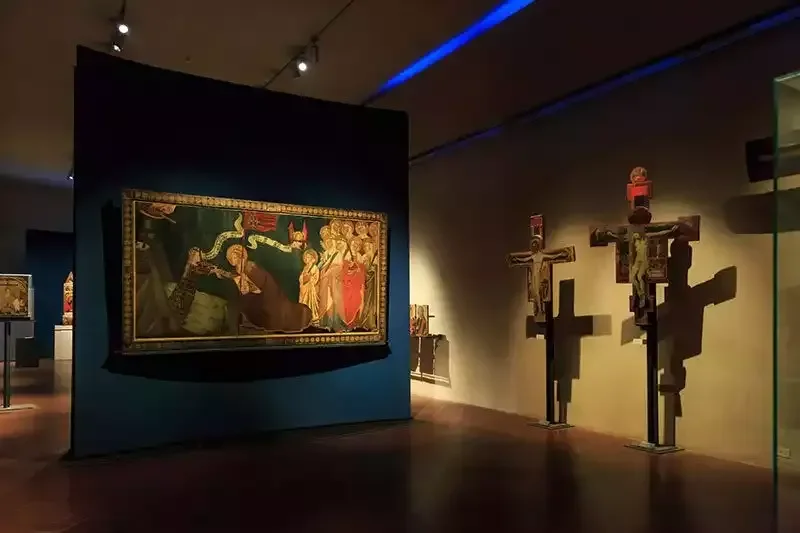
Look closely at the earliest crosses to see the Triumphant Christ, depicted with open eyes and a posture conquering death. Move further into the room and the style dramatically shifts to the Suffering Christ. Masterpieces by Giunta Pisano show the figure bent in agony, a profound stylistic change imported from Byzantium. The raw emotion carved and painted into these 13th-century pieces remains incredibly powerful today.
Masterpieces by Donatello and Simone Martini
Beyond the wooden crosses, the collection features heavyweights of the Renaissance and late Gothic periods. The polyptych of St. Catherine of Alexandria by Simone Martini commands immediate attention. Originally located in a nearby church, this massive altarpiece features 43 distinct, brilliantly gilded figures.

Do not miss the gilded bronze reliquary bust of San Rossore by Donatello. The intricate metalwork captures the light perfectly, showcasing early Renaissance mastery. You also find Masaccio’s Saint Paul, a lone surviving panel from a highly important dismantled altarpiece.
Islamic Ceramics and Medieval Pottery
The upper floor contains a surprisingly rich display of medieval pottery. Ancient Pisan builders frequently used Islamic ceramic basins as decorative elements on the exterior walls of their Romanesque churches.
Removed from the facades to protect them from weather damage, these original ceramic pieces now line the museum walls. The vibrant colors and geometric patterns highlight the extensive trade network Pisa maintained across the Mediterranean.
The Historic Benedictine Monastery of St. Matteo
The building itself holds just as much historical weight as the art inside. This structure originally served as an 11th-century Benedictine convent. The original brickwork and elegant mullioned windows still define the upper floors.

Step outside into the central courtyard to find a perfectly preserved late medieval cloister. The space is completely silent, surrounded by ancient stone columns and capitals. Between 1866 and 1940, city officials actually repurposed this sacred space as a local prison. Post-war restoration efforts eventually transformed it into the museum you walk through today.
San Matteo National Museum Entrance Fee and Tickets
Finding such a significant European art collection for the price of a coffee is incredibly rare. The ticketing system operates primarily offline, and card machines are frequently unavailable. Always bring cash to avoid being turned away at the door.
- Standard Adult Ticket: €5.00
- Reduced Ticket (Under 25): €2.00
- Teachers: Free admission with valid certification.
- First Sunday of the Month: Free admission for all visitors.
Also, be aware that the museum currently lacks a dedicated bookshop. You will not find any official catalogs or extensive printed guides on site, so taking your own notes or booking a local guide highly improves the experience.
Opening Hours and Best Time to Visit
Planning your visit requires a bit of attention to the schedule. The museum operates on a strict entry timetable, especially on weekends. Arriving randomly might leave you standing outside in the sun waiting for the next slot. For the 2026 season, keep these schedules in mind:
- Tuesday to Saturday: Guided entry available at 09:00, 11:30, 15:30, and 17:30.
- Sundays and Holidays: Entry restricted strictly to 09:00 and 11:30.
- Mondays: Completely closed.
Since the museum rarely gets crowded, advanced reservations are completely unnecessary. Just arrive 10 minutes before the designated entry times.
How to Get to Piazza San Matteo in Soarta
Reaching the museum takes almost no effort from the main transit hubs. Walk straight out of Pisa Centrale station and head north toward the Arno River. Cross the Ponte di Mezzo, turn right immediately, and follow the Lungarno Mediceo promenade.
The walk takes exactly 10 minutes. The entrance sits slightly recessed in the small Piazza San Matteo, tucked behind a rather restrained, classical-style facade. Look for the statue of Giuseppe Mazzini right outside the entrance doors.