Arriving at a Florida coast only to face coughing fits and foul-smelling air ruins a carefully planned vacation instantly. The smell of dead fish is usually your first warning, arriving before you even see the water. Verifying the localized algal bloom forecast before heading to the shore is the only reliable way to protect your respiratory health and your itinerary.
- Tracking: Use the FWC daily map and Mote Marine Beach Conditions report.
- Swimming: Safe for healthy adults, strictly prohibited for asthmatics and children with respiratory issues.
- Pets: Keep dogs strictly away from beach foam and dead marine life.
- Seafood: Commercial restaurant seafood remains heavily regulated and safe.
How to Check the Current Red Tide Status in Florida
Relying on outdated news reports leads to unnecessary panic and ruined plans. The red tide organism, Karenia brevis, moves constantly with wind and ocean currents. Always check the Florida Fish and Wildlife Conservation Commission (FWC) daily status map at myfwc.com/research/redtide/statewide/ or the Mote Marine Laboratory beach conditions report at visitbeaches.org for real-time tracking.
These official platforms offer precise satellite tracking and local water sample results. You can pinpoint exactly which beaches are clear and which ones have high toxin concentrations on any given morning.
The FWC map uses a five-tier concentration scale that is worth understanding before you arrive at the shore. Not Present means zero cells detected. Very Low (over 1,000 cells per liter) may cause mild respiratory irritation. Low brings probable irritation and possible fish kills. Medium means definite respiratory irritation. High (over 1,000,000 cells per liter) turns the water a visible rusty red and causes severe symptoms for nearly everyone onshore.
Wind Direction: The Factor That Changes Everything
Two visitors at the same beach on the same day can have completely different experiences depending on which way the wind blows. Offshore winds push the aerosolized toxins away from the shoreline, leaving the air perfectly breathable even when the algae is present in the water. Onshore winds do the opposite, carrying microscopic toxin particles directly inland and triggering coughing fits several blocks from the waterline.
Checking the local wind forecast alongside the FWC bloom map is the most actionable step any visitor can take. A beach showing medium-concentration blooms with offshore winds can still be a pleasant morning. That same beach with onshore winds and a low-concentration bloom can send you back to your car within minutes.
Is It Safe to Swim During a Red Tide?
Healthy adults can generally swim in affected waters without severe consequences. The toxins released by the algae often cause skin irritation and burning eyes. Exiting the water and rinsing off with fresh water immediately stops the discomfort.
Swimming near dead marine life is never a good idea due to the rapid accumulation of harmful bacteria. Children are specifically flagged by FWC as a higher-risk group alongside adults with chronic respiratory conditions like asthma or emphysema. Onshore winds carry the aerosolized toxins directly inland, triggering severe coughing, sneezing, and breathing difficulties for sensitive groups.
Pet Safety: Keeping Your Dogs Away from Toxic Algae
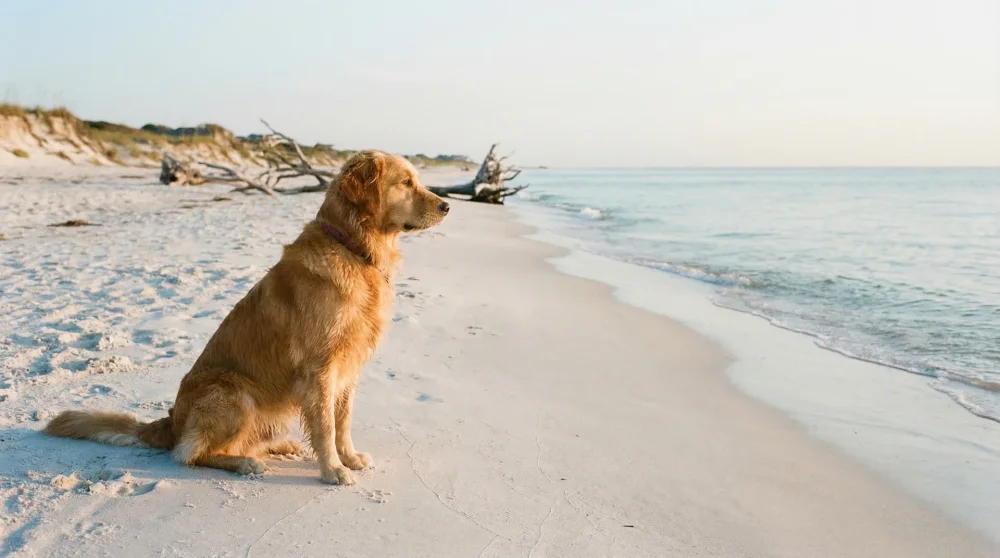
Dogs face severe health risks during active algae blooms. They naturally want to investigate dead fish or play in the toxic foam accumulating near the shoreline. Ingesting these contaminated materials makes pets violently ill very quickly.
Keep your dog on a short leash and wash their fur thoroughly with clean water the moment they leave the beach. Most dogs lick their coats to dry off, consuming any lingering toxins directly. If your pet shows signs of lethargy or neurological issues after a beach walk, contact a local veterinarian immediately.
Seafood Safety: Can You Eat Fish and Shellfish?
Ordering your favorite seafood at local coastal restaurants is perfectly safe. Government agencies strictly monitor commercial fisheries and close affected zones immediately. The seafood served in establishments comes from tested, clear waters.
Recreational harvesting is a completely different story. Gathering bivalve mollusks like clams, oysters, or mussels from unapproved areas exposes you to Neurotoxic Shellfish Poisoning. Cooking does not destroy brevetoxin - boiling or frying contaminated shellfish does not make it safe to eat. Catching live, healthy finfish is fine as long as you fillet the catch and discard the guts completely. Never attempt to harvest or consume distressed animals found washing up on the shore.
Where to Go Instead: Florida Beaches Not Affected by Red Tide
Red tide blooms are primarily a Gulf Coast phenomenon. Karenia brevis is almost never found on Florida's Atlantic side. Beaches along the east coast, including those near Jacksonville, Vero Beach, Fort Lauderdale, and Miami, are essentially unaffected by these blooms regardless of what is happening on the Gulf.
Freshwater springs are another reliable option during active blooms. Weeki Wachee Springs, Crystal River, and similar natural spring parks cannot harbor Karenia brevis because the organism only survives in saltwater. These sites offer swimming in clear, 68-degree water with no respiratory concerns.
Even within the Gulf Coast, moving north to the Panhandle beaches around Destin and 30A typically puts you outside active bloom zones that concentrate in southwest Florida counties like Manatee, Sarasota, Lee, and Collier.
Should You Cancel Your Florida Beach Vacation?
Algal blooms are notoriously patchy and highly localized phenomena. One beach might experience heavy concentrations and respiratory irritants, while another shore just ten miles down the road features crystal-clear water and fresh air.
Canceling an entire trip is rarely necessary. Hotels in areas severely affected by blooms, particularly around Sanibel, Captiva, and Fort Myers Beach, often waive standard cancellation fees when conditions are verifiably bad. Calling directly and explaining the situation is worth the conversation. Bloom conditions can shift dramatically within days if winds change, which complicates planning but also means a rough week can be followed by an ideal weekend.
What Exactly is the Florida Red Tide?
This coastal phenomenon happens when microscopic plant-like organisms multiply rapidly in the Gulf of Mexico. Unlike algae blooms in freshwater lakes caused by industrial runoff, these specific blooms form naturally miles offshore in the ocean. Ocean currents and prevailing winds eventually push them toward the shoreline.
They produce highly active brevetoxins that directly affect the central nervous systems of marine life. This neurological impact leads to the fish kills scattered along the sand. While the water sometimes turns a dark rusty color during massive blooms, the ocean can also look perfectly clear while still harboring high levels of the irritating toxin. Blooms can last anywhere from a few weeks to more than a year, and they are most common during late summer and fall, though they can appear at any time.