Planning a visit to the Red Cross Concentration Camp in Niš gives you a profound look into a dark chapter of history. Located just a short distance from the city center, this site remains one of the most intact WWII transit camps in Europe. You are about to step into a place where over 35,000 Serbs, Jews, and Roma were detained between 1941 and 1944.
| Feature | Detail |
|---|---|
| Single Entry | 200 RSD |
| Combined Ticket | 300 RSD |
| Payment Method | Card payment is accepted |
| Duration needed | 1.5 to 2 hours |
| Closed on | Mondays |
What to Expect at the 12 February Memorial Museum
When you approach the entrance, notice the faded original writing over the ticket office. The complex consists of several structures, but currently, only the main prison building is fully accessible to visitors.
The administrative block remains closed off. The atmosphere here is heavily oppressive and undeniably cold. The moisture in the air and the sheer lack of insulation make you instantly realize the harsh conditions the prisoners endured.
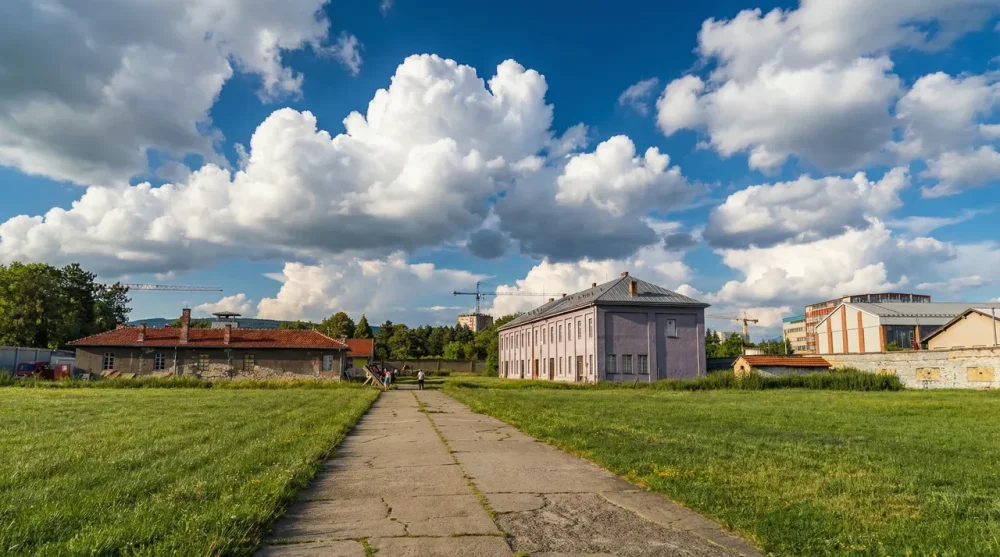
The Main Prison Building and the Upper Floors
Entering the main three-story building, you find the collective holding rooms on the first and second floors. These spaces once crowded hundreds of people into just a few square meters. Today, the walls display original scratchings where desperate inmates carved their names and dates.
You can read numerous personal stories, authentic documents, and see the leftover belongings of the victims. English translations are available on most exhibition boards, though some phrasing feels slightly rough.
Solitary Confinement and Barbed-Wire Cells
The third floor holds the most chilling experience of the entire museum. This area consists of solitary confinement cells specifically designed for severe punishment. The floors are covered entirely in barbed wire.
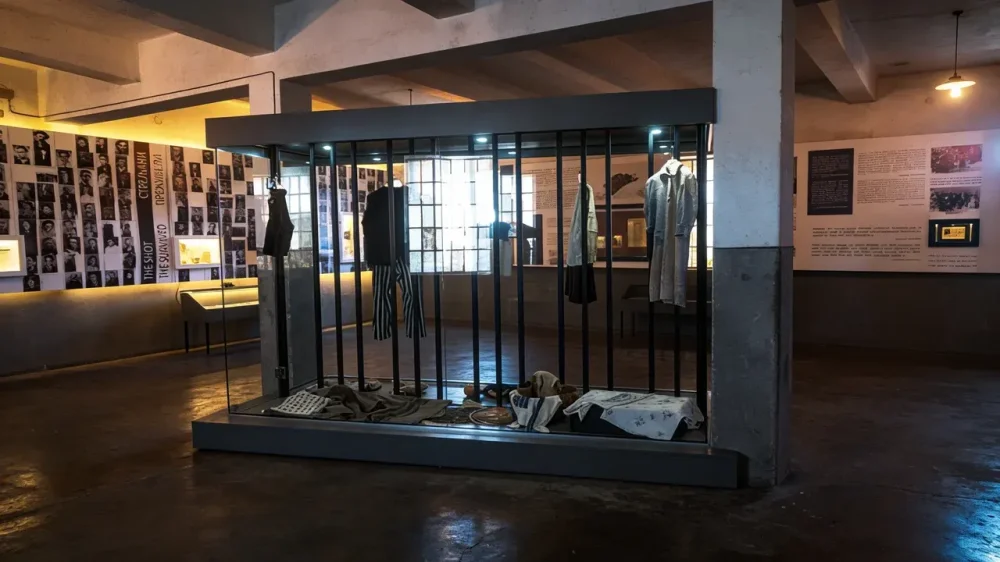
Prisoners sent here had no physical space to sit or lie down, forcing extreme sleep deprivation. The air on this floor feels completely stagnant, and the eerie silence amplifies the historical weight of the atrocities committed here.
The Historic February 12 Escape (1942)
The Niš camp holds a unique position in European history. It witnessed the first successful mass breakout from a Nazi concentration camp. On February 12, 1942, a daring plan led by captured Partisan soldier Branko Bjegović resulted in 105 prisoners breaking out of the heavily guarded facility.
The escapees neutralized 11 guards during this massive uprising. This brave act brought immense hope to occupied territories, but it also triggered devastating retaliation from the Nazi forces. Following the escape, random mass executions began as a brutal form of collective punishment.
Bubanj Memorial Park: The Final Destination
For thousands of inmates, Crveni Krst was not the final stop. Prisoners were regularly transported to Bubanj Hill, located on the southwest outskirts of the city, for execution. Over 10,000 people lost their lives in the forested trenches of Bubanj. If you have the time and physical stamina, walking from the concentration camp to the Bubanj memorial takes about 40 minutes.
Standing in front of the massive Three Fists concrete monoliths provides a striking conclusion to the historical narrative you start at the camp.
Practical Information for Visitors
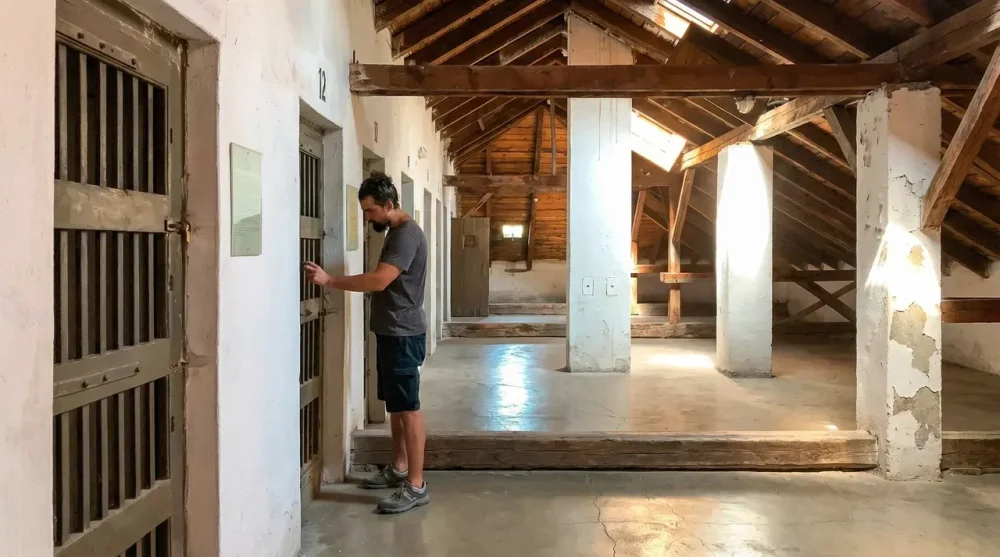
Organizing your visit requires knowing a few essential logistical details. The site operates with a very small staff, and guided tours are not officially provided. You will navigate the dark corridors at your own pace.
Entrance Fee and Combined Museum Tickets
Ticket prices for 2026 remain incredibly accessible. You can buy a single entry ticket for 200 RSD. However, the most logical choice is purchasing the combined ticket for 300 RSD.
This pass grants you access to the concentration camp, the famous Skull Tower, and the National Museum of Niš. Card payment is actively accepted at the ticket booth, which saves you the trouble of hunting down an ATM for local cash.
Opening Hours and Best Time to Visit
The camp opens its doors from 10:00 to 16:00 from Tuesday to Friday, and 10:00 to 15:00 on weekends. The facility is strictly closed on Mondays. Keep in mind that the last entry is accepted around 15:30. Arriving right at the opening hour guarantees you will likely have the entire complex to yourself, adding to the intense, solitary atmosphere of the visit.
How to Get to Crveni Krst from Niš City Center
The memorial is located approximately 1 kilometer behind the Niš Fortress. Reaching it on foot from the city center takes about 15 to 20 minutes. If you prefer public transport, hop on any local bus heading down Bulevar 12 Februara and get off at the station nearest to the camp. Free parking is available right outside the gates for those traveling by rental car.
Is the Camp Suitable for Children?
Bringing younger kids to a site with such heavy historical trauma requires careful consideration. The visual elements, including authentic skulls and detailed stories of torture, are intensely graphic.
Older children and teenagers studying WWII history will find the exhibition deeply educational. If you decide to visit with a family, a discounted ticket is available for 150 RSD. Be prepared to provide plenty of historical context and emotional support during the walkthrough.