Assuming the countless nicknames for New Orleans are just clever marketing gimmicks is a common mistake that strips away the real history of the streets. Understanding the true origins behind these titles reveals the actual geography, cultural shifts, and literary past that shaped this swampy metropolis.
- The Crescent City: Refers directly to the sharp, moon-like bend of the Mississippi River that naturally borders the oldest neighborhoods.
- The Big Easy: Popularized by local journalists and crime novelists to describe the remarkably slow pace of life and relaxed social morals compared to other major cities.
- Birthplace of Jazz: Honors the local street musicians and early bands who pioneered a completely new musical genre in the city squares.
- The City That Care Forgot: Originated as a hotel slogan promising visitors a complete escape from their daily worries.
The Geographic Truth Behind The Crescent City
Looking at a map of southern Louisiana quickly clears up any confusion about this particular title. The mighty Mississippi River takes a massive, dramatic curve exactly where the original French Quarter sits. This sharp bend mimics a perfect crescent moon shape from an aerial view.
This natural curve provided a deep and protected harbor for early ships coming from the Gulf of Mexico. Navigating this bend requires serious skill from riverboat captains, but it ultimately made the location the ultimate trading hub. The city simply grew outward from this original crescent, forcing the street grids to fan out in unusual angles rather than following a standard straight line.
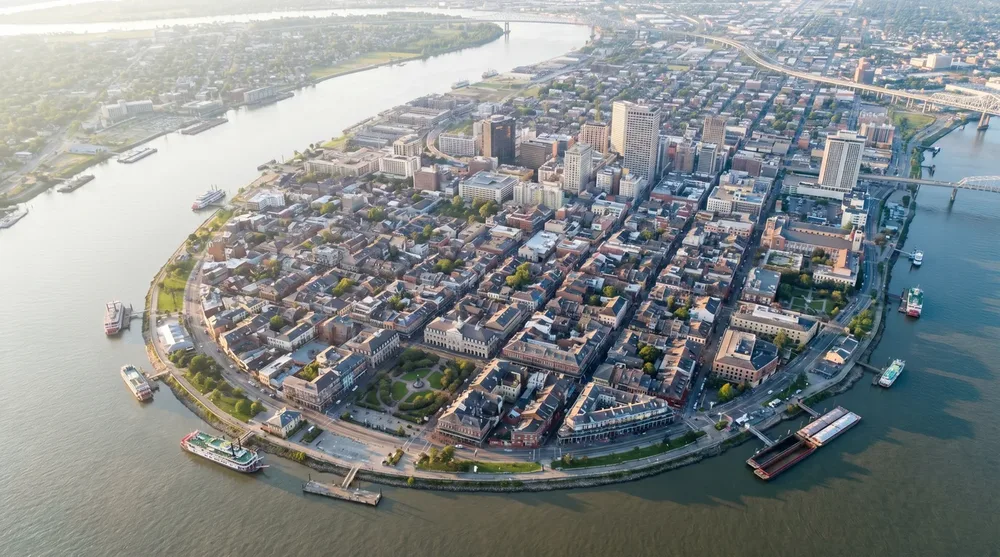
The nickname itself dates to 1835, when author Joseph Holt Ingraham first used it in a published travelogue. Beyond pure geography, the term also carries a symbolic layer: the founding of New Orleans coincided with the regency of Philippe II, Duke of Orleans, whose family coat of arms prominently featured crescent moons.
Tracing the Origins of The Big Easy
People often contrast the frantic, non-stop energy of the East Coast with the notably relaxed atmosphere found here. Life moves slower in the Deep South, and musicians historically found it incredibly easy to land gigs in local clubs without the fierce competition seen elsewhere. The phrase perfectly captures a culture that prioritizes good food, loud music, and long evenings over corporate hustle.
The earliest documented root of the name points to a dance hall. In 1911, a venue called The Big Easy Hall operated in the Gretna neighborhood, where cornet legend Buddy Bolden performed regularly. The phrase likely circulated in African-American music communities long before it reached newspaper columns.
Local columnists for The Times-Picayune newspaper and prominent crime novelists then brought it mainstream. In the 1960s, columnist Betty Guillaud adopted the phrase as a direct counterpoint to New York's "Big Apple" nickname, framing New Orleans as the city where life came easy. Crime novelist James Conway later titled his 1970 novel after the phrase, and a major Hollywood film adaptation in the 1980s cemented it permanently into the global vocabulary.
Other Notable New Orleans Nicknames
The Birthplace of Jazz
Walking down Frenchmen Street today makes the origins of this title incredibly obvious. The musical genre we now call jazz was born directly in these neighborhoods, blending European instruments with African rhythms in public squares during the late 1890s. Legendary trumpet players honed their craft in small local venues long before performing on global stages. The Times-Picayune formally applied the title as early as 1919, and the city has celebrated the heritage ever since.
The Paris of the South
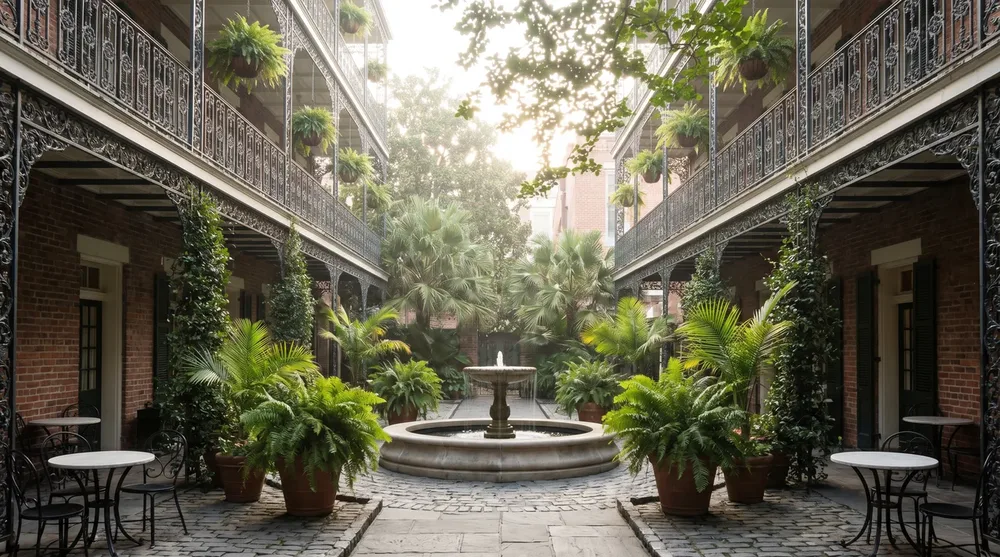
New Orleans was founded by French explorers in 1718 and named in honor of the Duke of Orleans. That European lineage never disappeared. The city's wrought-iron balconies, French-influenced cuisine, and centuries-old public squares draw direct comparisons to the French capital. This nickname acknowledges both the architectural legacy and the cultural sophistication that sets the region apart from its Southern neighbors.
The City That Care Forgot
Sometimes you just need to leave your responsibilities behind. The phrase was coined by Alfred S. Amer (1866-1959), manager of the St. Charles Hotel, and first appeared in print in The Daily Picayune on September 13, 1910. He promised guests an environment completely free from everyday stress. The catchy phrase stuck around long after the original marketing campaign ended, perfectly matching the unapologetic party atmosphere of the region.