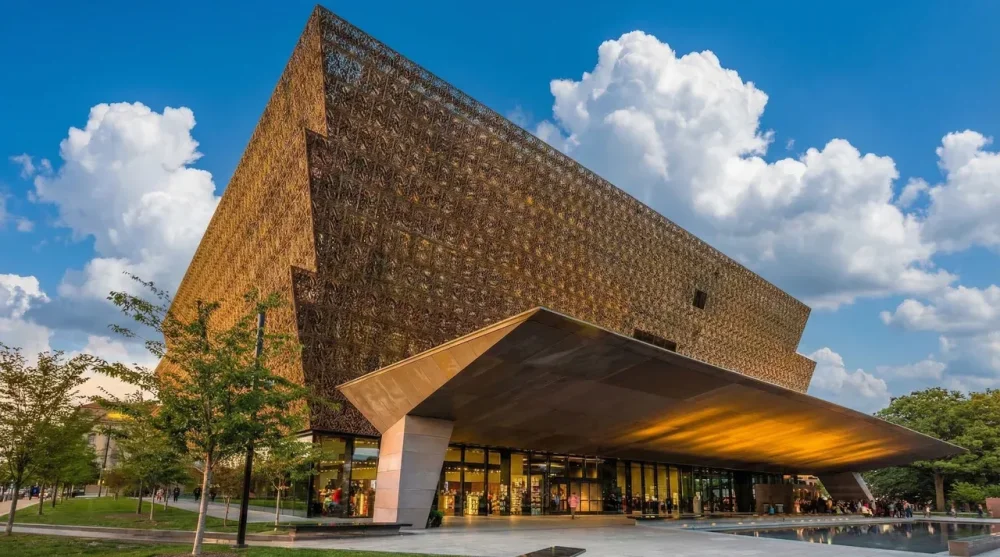
Arriving at the National Museum of African American History and Culture without a pre-booked timed-entry pass guarantees a rejection at the door, instantly derailing your Washington D.C. itinerary. Securing these passes requires absolute precision, especially during peak seasons when the daily allocation vanishes within minutes.
- Entrance fee: Free (timed-entry pass mandatory)
- Same-day passes released online at 8:15 AM EST daily
- Operating hours: 10:00 AM to 5:30 PM (Mondays open at 12:00 PM, last entry 4:00 PM)
- Recommended duration: 4 to 6 hours minimum
- Closest Metro: Federal Triangle or Smithsonian (Mall exit)
- Parking: No on-site parking. Reagan Building garage costs around $26 daily.
How to Secure Timed-Entry Passes
The museum operates strictly on a capacity-controlled basis. You cannot simply walk up to the entrance and expect to buy a ticket. Passes are released up to 30 days in advance on a rolling schedule. Booking these advance passes through the official portal is the most stress-free method.
If you miss the 30-day window, you must rely on same-day passes. These become available online exactly at 8:15 AM EST. The inventory empties incredibly fast. Have the website open and your details ready before the clock strikes.
Veterans, active-duty military personnel, and first responders have a distinct advantage. You do not need to fight for an online reservation. Presenting a valid military or work ID at the door grants immediate access for you and up to four guests. Walk-ins are still subject to building capacity, meaning you might wait outside during peak afternoon hours.
One lesser-known option is the Dine & Shop Pass, released 7 days in advance at 8:00 AM EST. This pass grants access only to the Sweet Home Café and the museum store between 11:00 AM and 2:30 PM, without entering the galleries. Worth considering if you just want lunch on the National Mall.
Best Time to Visit
Fridays through Sundays between 12:00 PM and 4:00 PM are the absolute busiest times. Navigating the exhibits during these hours involves dense crowds and slow-moving lines. Booking an early morning pass on a Tuesday or Wednesday provides a much calmer environment. The quieter atmosphere allows for a deeper connection with the exhibits.
Off-peak months are January through February and September through December. Cherry Blossom season in late March and April is among the worst times to visit if you dislike crowds. Plan accordingly.
Do not underestimate the sheer size of the building. Scanning the walls and rushing through the exhibits will leave you exhausted and uninformed. Fully absorbing the historical depth requires at least 4 to 6 hours. Many visitors dedicate two full days to experience all 85,000 square feet without sensory overload. The exhibits carry significant emotional weight, especially the lower levels. Build in time to sit, reflect, and decompress.
Getting to the Museum
Public transportation is the only logical choice for navigating the National Mall. The Federal Triangle and Smithsonian Metro stations drop you within a short walking distance. The Madison Drive entrance serves as the primary drop-off point and is fully wheelchair accessible.
Street parking around the museum is practically non-existent. Driving in circles looking for a spot wastes valuable time. The Ronald Reagan Building and International Trade Center offers the closest secure parking garage at around $26 for the day. Access this underground facility via the ramps on 14th Street NW.
Must-See Exhibitions & Floor Plan
The architectural design of the museum dictates a very specific viewing order. Start at the lowest subterranean level (C3) and work your way up. Bypassing this rule ruins the chronological narrative.
The lower levels are intentionally dark and compact. This atmosphere reflects the heavy, restrictive reality of the transatlantic slave trade and the era of segregation. Moving upward through the building, the physical space expands and the lighting becomes significantly brighter. This deliberate design choice mirrors the journey from struggle to freedom and celebration.
The upper levels house the Culture and Community Galleries, with extensive collections celebrating African American contributions to music, sports, theater, and culinary arts. Before leaving the lower levels, visit the Contemplation Court. The cylindrical waterfall provides a vital acoustic and visual break to process the emotional weight of the history galleries.
In 2026, the museum marks its 10th anniversary with special programming under the theme "Welcome Home: Our Legacy Continues." Check the official website for special exhibitions during your planned visit date.
Dining at Sweet Home Café
The Sweet Home Café is located on the lower concourse and serves exceptional regional cuisine from four culinary stations representing different African American food traditions. The lines get incredibly long around 1:00 PM. Eating an early lunch at 11:30 AM saves you at least forty minutes of waiting.
Keep a close eye on the clock. The cafe shuts down the food stations promptly at 3:00 PM. You cannot bring outside food into the galleries. Pack a reusable water bottle to stay hydrated during your long walk, but plan your actual meals around the cafe hours. Menu items run between $8 and $22.
Security Screening & Prohibited Items
Entering the building feels similar to an airport security checkpoint. Every visitor must walk through a metal detector. Security personnel conduct thorough hand-checks of all bags, purses, and backpacks. Arrive 15 to 30 minutes before your timed entry slot to account for the queue.
Leave monopods, tripods, and selfie sticks at your hotel. These items are strictly prohibited to protect the artifacts and prevent bottlenecks in crowded corridors. The museum provides free, first-come first-served lockers near the entrance. These lockers measure 12x15x19 inches, large enough for winter coats and day bags but not full-sized luggage. Stashing your heavy gear before entering makes navigating the tight exhibit spaces much easier.