Arriving at the pedestrian walkway around noon in the wrong shoes is the fastest way to ruin your visit. The polished limestone surface becomes dangerously slippery under the midday sun, making the steep climb a genuine hazard rather than a joyful walk. Plan your timing and footwear correctly to safely experience one of the Balkans' most iconic landmarks.
The Turbulent History of Stari Most
Ottoman Origins and Mimar Hajruddin's Masterpiece
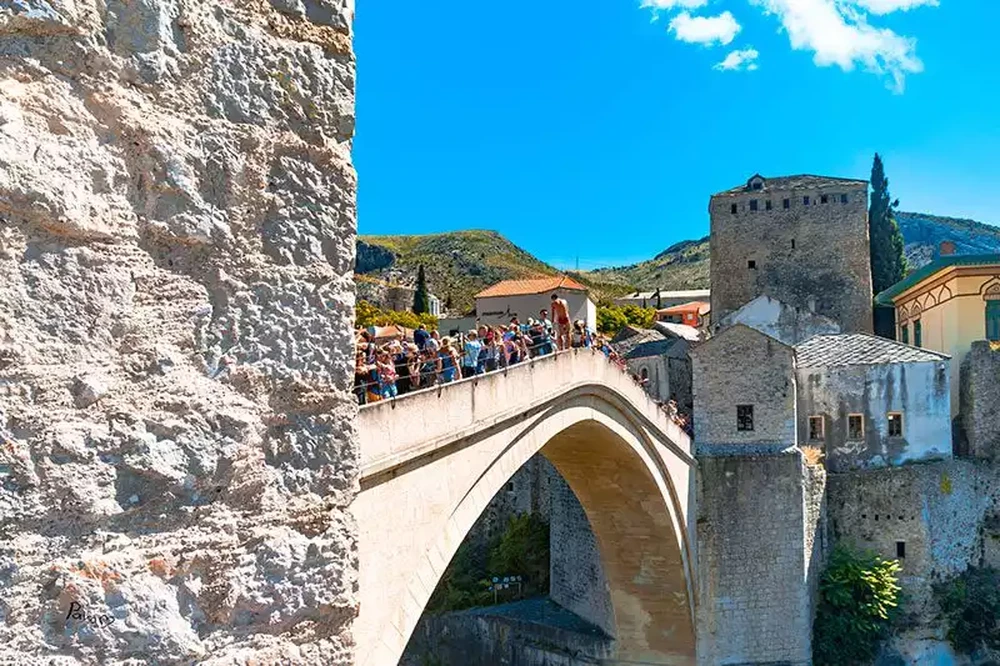
A single stone arch leaping over the emerald Neretva River. Commissioned in 1566, the original structure stood for generations as a marvel of Balkan Islamic engineering. Local limestone, known as tenelija, gives the structure its distinctive bright tone. The design lacks a flat deck, forcing you to walk up a distinct curve punctuated by raised stone ribs that provide grip on the slick surface.
The Destruction and the UNESCO Reconstruction
The tragic 1993 war brought the original arch crashing into the river below. Post-war reconstruction efforts used the exact same Ottoman techniques, recovering original stones directly from the riverbed. Today, the restored structure stands as a powerful symbol of unity and resilience - every block carefully placed to match the ancient skyline.
The Mostar Bridge Jumping Tradition
Can Tourists Jump from the Bridge?
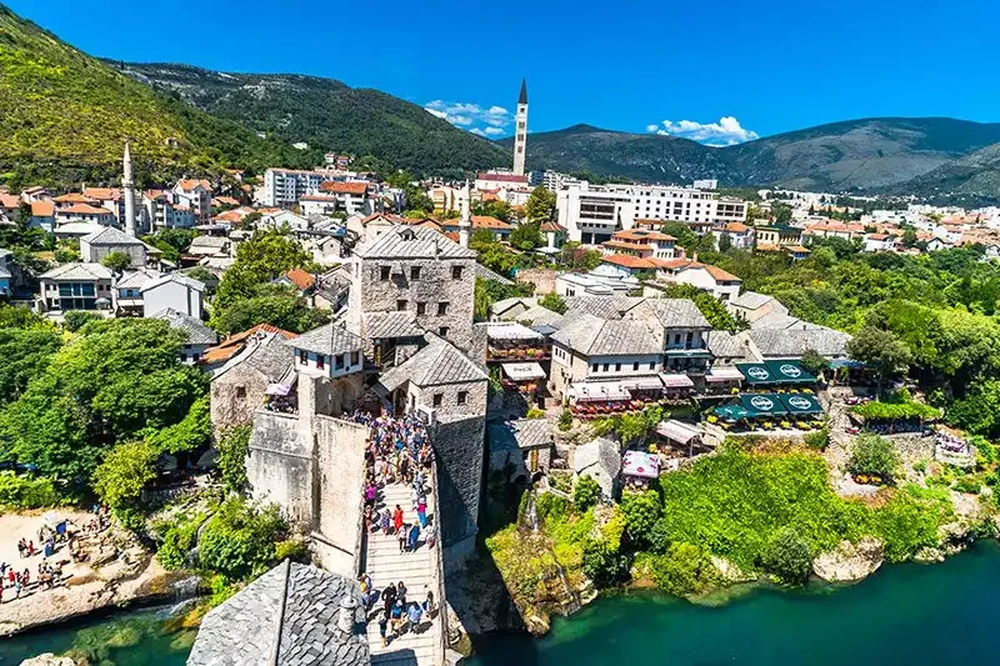
Watching daredevils leap into the freezing water is a thrilling experience. Local divers only perform their breathtaking stunts once they collect enough tips from the gathered crowd. You can jump too, but strictly after completing mandatory training with the local diving club. The full tourist jump experience costs around €30 total - approximately €10 for a practice jump from a lower platform and €20 for the real jump off the main arch, which also grants you lifetime Mostar Diving Club membership. The water is cold, the current turbulent, and the height substantial at roughly 24 meters - never attempt it without going through official club training first.
Red Bull Cliff Diving World Series
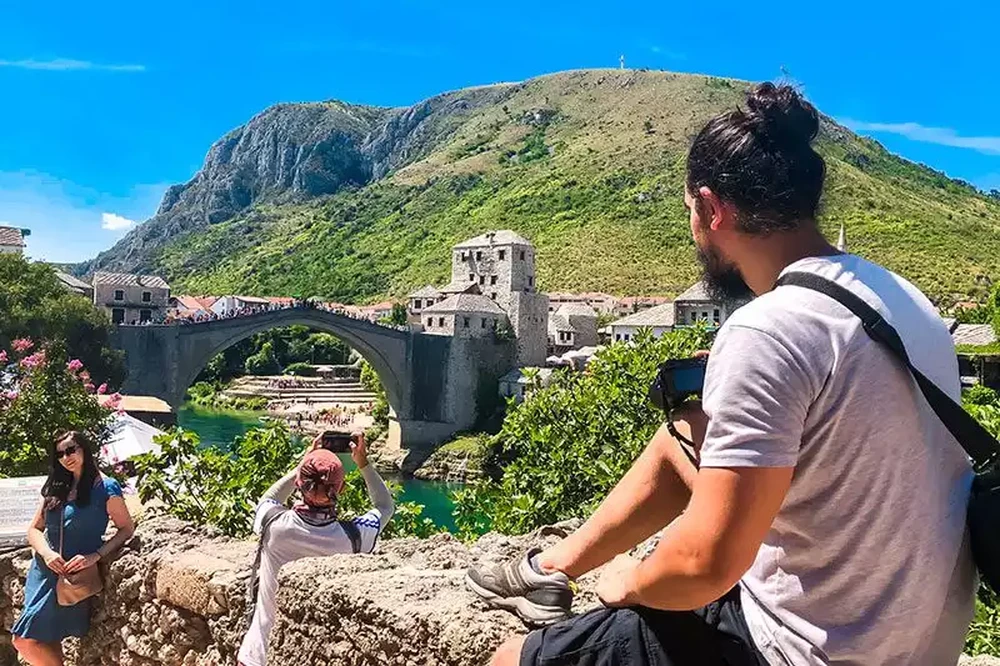
The location transforms into a global stage during the annual cliff diving competition. Elite athletes from around the world plummet into the narrow gorge with absolute precision. The atmosphere is electric, the crowds massive. If you plan to visit during the event, book your accommodation months in advance.
How to Get to Mostar Bridge
Taking the Scenic Train from Sarajevo
Skip the crowded buses and book the morning train from the capital instead. The route winds through dramatic mountain gorges and follows the river closely, offering spectacular window views. Book your seat in advance, as carriages fill up quickly during peak travel seasons. The journey takes roughly 2.5 to 3 hours.
Day Trips from Dubrovnik or Split
Crossing the border from Croatia requires your passport and some patience at the crossing. Start your drive early to beat the heavy border traffic. Parking near the old town is chaotic and highly competitive - leave your car in the outer commercial lots and walk the remaining distance to avoid endless circling.
Best Viewpoints for Photography
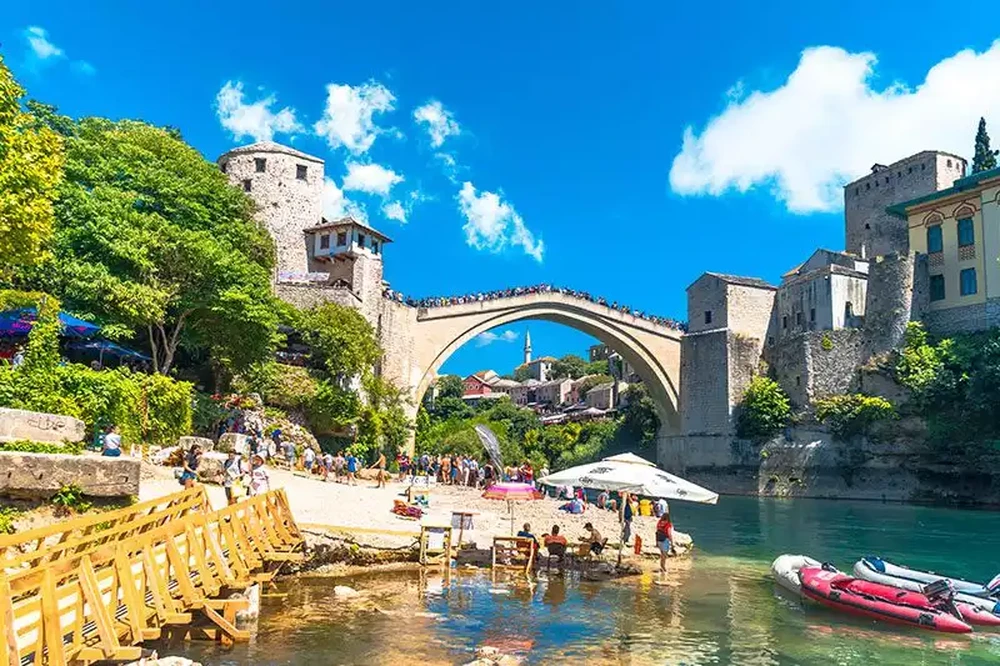
Standing directly on the highest point of the arch rarely yields the best photos. Walk down to the rocky riverbank right below the arch for a striking upward angle. The nearby Koski Mehmed Pasha Mosque minaret offers an unmatched aerial perspective of the entire valley - entry costs 7-8 BAM and includes minaret access. Golden hour light hitting the pale limestone is genuinely breathtaking. The Old Bridge Museum, housed in one of the original towers, charges around 5 BAM and provides excellent historical context before you step out onto the arch itself.
For more classic bridge photography across Europe, the Charles Bridge in Prague offers a similarly atmospheric stone-arch experience worth comparing.
Practical Tips for Your Visit
The cobblestone streets of the surrounding bazaar demand your full attention. Polished by millions of footsteps, the pathways feel like walking on ice. Leave your sandals at your accommodation and wear proper non-slip walking shoes - this applies to the bridge itself as much as the surrounding lanes.
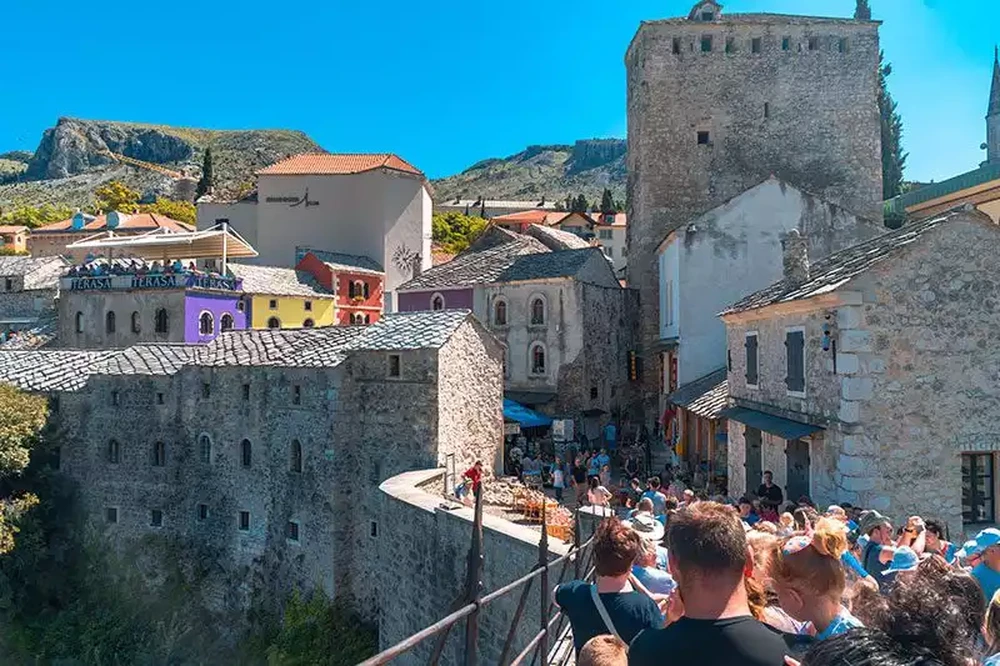
Keep your belongings secure at all times. Crowded tourist hotspots attract opportunistic pickpockets, especially when you are distracted watching the divers. The best time to visit is early morning just after sunrise or late afternoon during golden hour, when crowds are thinner and light is far more flattering for photos.
Budget travelers can expect to spend around $52 per day in Mostar, while mid-range visitors average closer to $125 per day including accommodation and meals. The currency is the Bosnian Convertible Mark (BAM) - some tourist spots accept euros, but smaller shops typically do not.
If you enjoy exploring historic towns with rich layers of culture nearby, the Tallinn Card is worth reading about for your next Baltic trip, where a very different but equally compelling medieval atmosphere awaits.