Six people live in Lost Springs, Wyoming, and one of them also serves as the town's mayor while running its only business. Blink on US-18/20 between Douglas and Lusk and you could drive past the entire municipality without noticing. This former coal town holds a real, federally recognized title as America's smallest incorporated town, and there is genuinely something to see here if you know where to look. Here's what's actually in Lost Springs, how long a stop takes, and how to find it from the highway.
What to See in a Town with a Population of Six
Lost Springs covers just 0.089 square miles in Converse County, sitting at roughly 4,997 feet on Wyoming's high plains. The whole visitable area is a short walk along Main Street and the rail crossing beside it. Most travelers spend 15 to 30 minutes here, enough time to read the population sign, peek inside the bar if it's open, and photograph the Bicentennial monument.
The Famous Population Road Sign
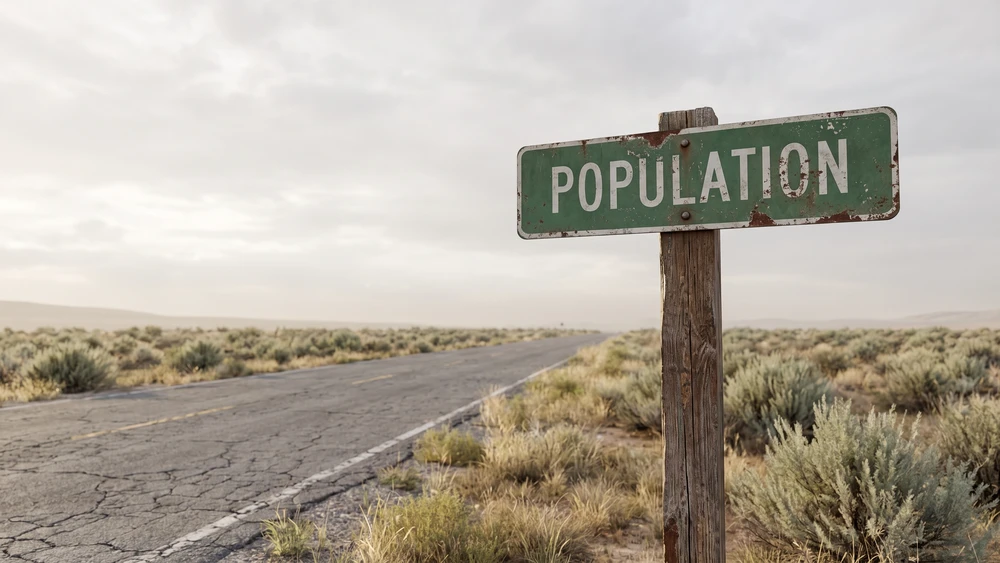
The green highway sign reading "Lost Springs, Pop. 4" (the number has shifted with each census) is the most photographed spot in town and the reason most people stop at all. It sits right where WY-46 meets the rail line, next to the cluster of remaining buildings. The 2020 census put the population at six, up slightly from four in 2010 and one in 2000, so don't be surprised if the number on any given sign or map doesn't match what you find posted locally.
The Lost Bar and Mayor Leda Price
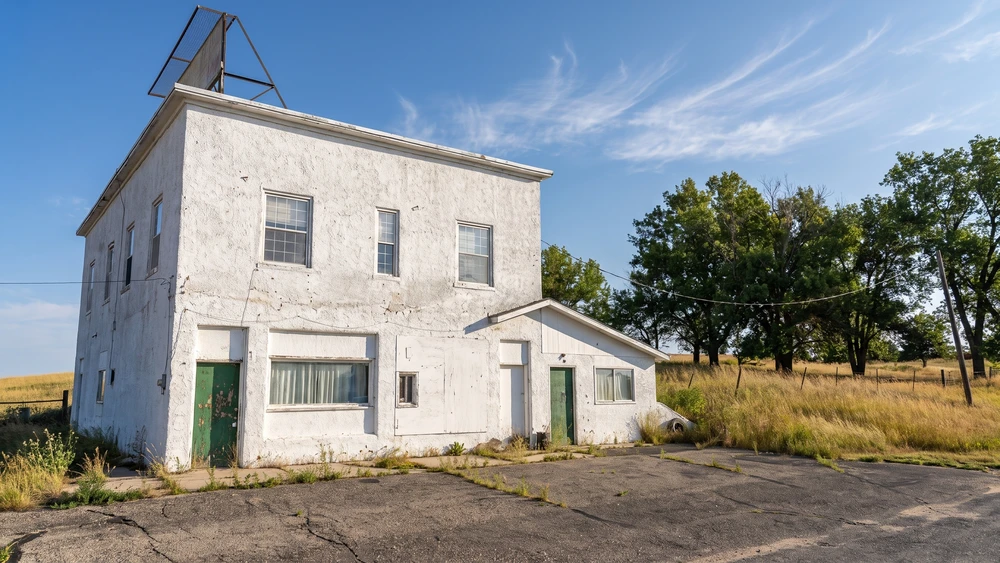
Leda Price is Lost Springs' self-elected mayor and also owns and runs the Lost Bar, the only operating business left in town. In 1983 she led the town's fight against a railway company that planned to build an embankment separating Lost Springs from the highway, and won. The bar itself keeps irregular hours, opening mainly around holidays and hunting season rather than a fixed daily schedule, so treat any visit as a bonus rather than a guarantee.
The 1976 Bicentennial Monument
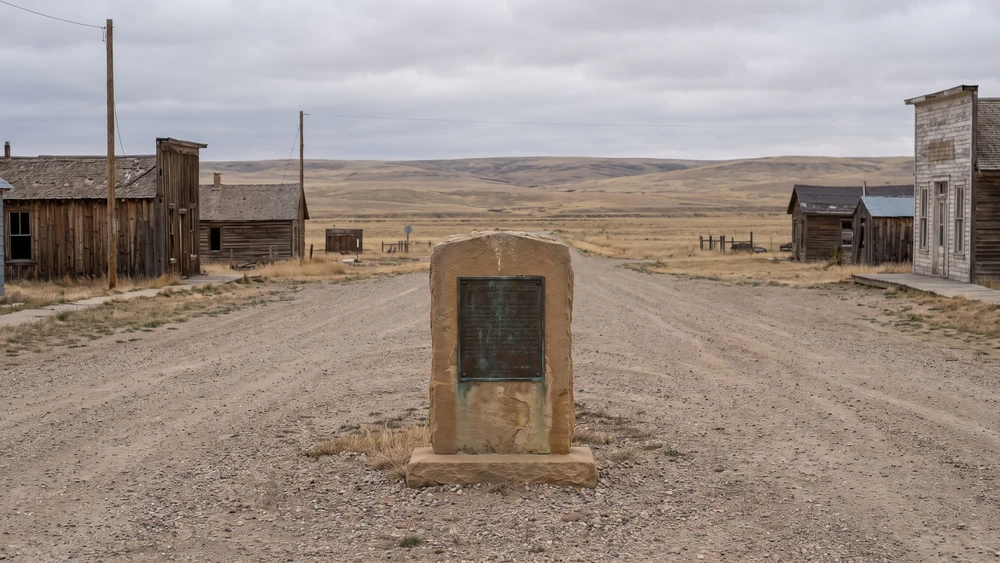
A headstone-style monument on Main Street marks Lost Springs as the Smallest Bicentennial Town, a title awarded jointly by the state of Wyoming and the U.S. Bicentennial Commission in 1976. To find it, turn north off US-18/20 onto WY-46, cross the train tracks, and look on the left after about 100 yards. It's a quick photo stop rather than a museum piece, but it's the clearest physical proof of the town's official smallest-town status.
Remaining Historic Buildings: the Old Jail and Bank
A handful of structures from the town's early-1900s peak are still standing: the old Town Hall, a former bank building now used as an antique store, the Lost Bar saloon, an outhouse, and a small jail that has sat empty for more than 40 years. None are set up as formal museums with posted hours, so what you see from the road or a short walk around is largely what you get. The scale is part of the appeal, a handful of weathered buildings standing in for what was once a working coal town of 150 residents.
A Brief Look at Lost Springs' Coal Mining Past
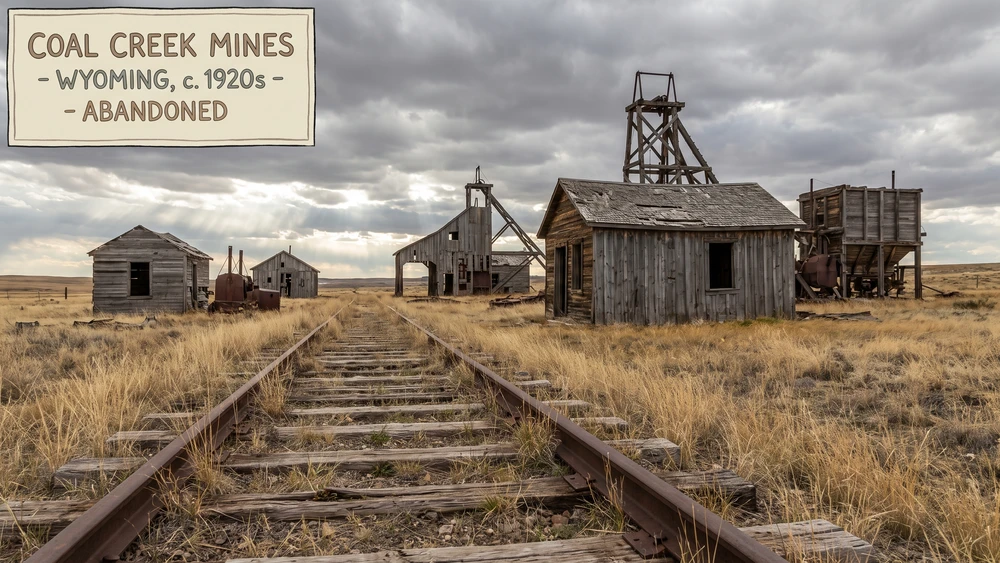
Railroad workers surveying the area in the 1880s gave Lost Springs its name after they failed to find natural springs marked on their maps. The town was formally incorporated in 1911 with around 200 residents, most tied to the nearby Rosin coal mine and a short-line railroad built to connect local mines to the main line. By its peak around 1914, Lost Springs supported a bank, a drug store, a mercantile and even its own newspaper, a level of activity hard to imagine standing on today's near-empty Main Street.
The boom didn't last. The coal mines shut down in 1921, the connecting railroad was abandoned the following year, and the population went into a steep, decades-long decline, falling from 65 residents in 1930 to just 38 by 1940 and eventually down to a single resident by 2000.
How to Get to Lost Springs
Lost Springs sits directly on US Highway 18/20 in Converse County, between the towns of Douglas and Lusk, so it's a drive-through stop rather than a destination that requires a detour. There are no gas stations, mechanics or modern rest stops in town, so fuel up in Douglas or Lusk before you arrive.
Driving Directions from US-18/20 and I-25
From Interstate 25, take Exit 126 and follow US-18/20 northeast for about 16 miles to reach Lost Springs. Coming from the other direction, Lost Springs sits about 26 miles west of Lusk along US-20. Once you're on US-18/20 in town, turn north onto WY-46, cross the rail line, and the cluster of historic buildings and the Bicentennial monument are immediately on your left.
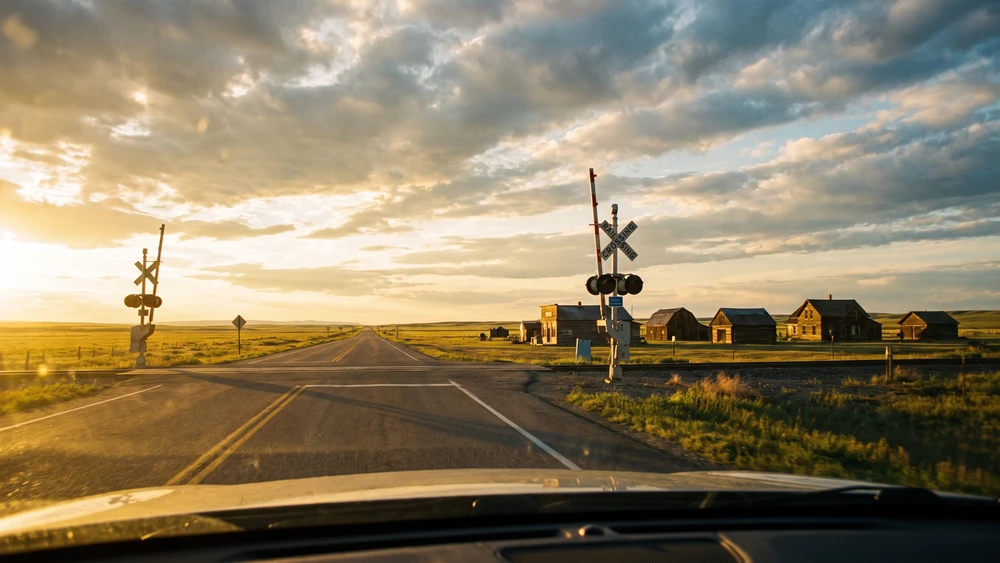
How to Fit Lost Springs into Your Wyoming Road Trip
Lost Springs works best as a short break on a longer drive through eastern Wyoming rather than a planned overnight stop; there's no lodging in town. If your route already has you doing things to do in Wyoming further west or north, this corridor between Douglas and Lusk is an easy add-on that costs you barely half an hour. Since services are limited for long stretches on either side, building buffer time and fuel stops into your route is worth doing before you leave, and a road trip planning checklist helps catch that kind of gap in advance.
Pair the stop with Douglas, home of the Jackalope legend and roughly 25 miles west, or continue on to Lusk for a fuller sense of Converse and Niobrara County's ranching history. Either direction, Lost Springs itself is a five-minute photo stop wrapped in a genuinely odd piece of Americana, not a place that needs more time than that.