Focusing solely on radiation levels when planning a trip to the Exclusion Zone completely ignores the active military reality of the surrounding region. Understanding the stark difference between scientific safety and geopolitical risk is the only way to make a truly informed decision about this destination.
- Location: Kyiv Oblast, Ukraine
- Radiation Exposure: 5-7 micro Sieverts per day (comparable to a short flight)
- Tour Status: Suspended since early 2025 due to the ongoing conflict
- Access Requirement: Authorized tours only, strict passport control
- Mandatory Clothing: Long sleeves, full-length pants, closed-toe shoes
The Two Types of Safety in the Exclusion Zone
Radiation Safety: The Science and Micro Sieverts
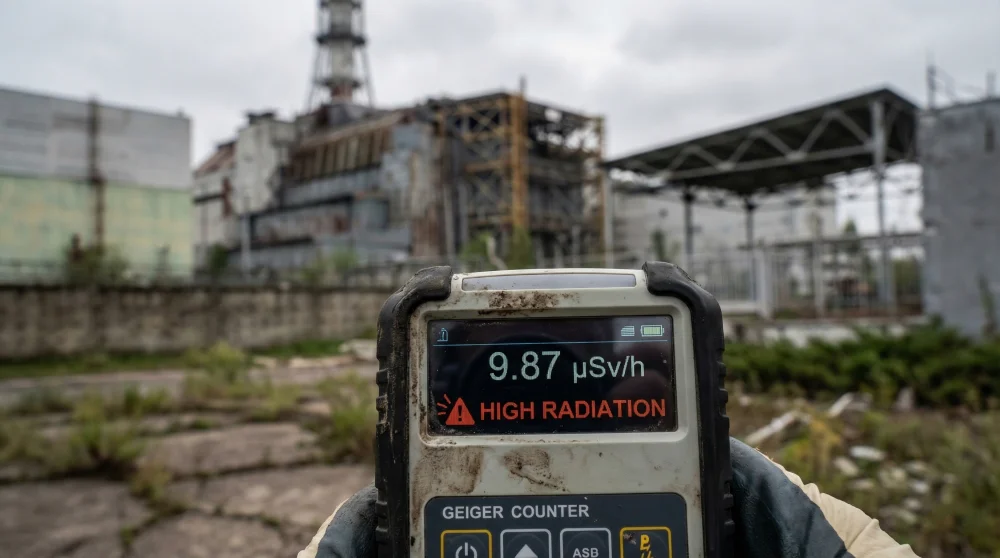
Your body absorbs a minuscule amount of background radiation every single day. A standard day trip into the authorized sections of the zone exposes you to about 5 to 7 micro Sieverts of gamma radiation. This amount is mathematically equivalent to the radiation absorbed during a trans-Atlantic flight. The main tourist paths are heavily decontaminated and constantly monitored. Stepping off the concrete and into the soil changes this equation rapidly.
Geopolitical Safety: The Real Risk
The true danger in the region has shifted entirely from invisible isotopes to very visible military tensions. As of early 2025, tours to the Exclusion Zone are suspended following the escalation of the conflict in Ukraine.
Russian forces occupied the zone during the early stages of the war, and safety assessments of the infrastructure and surrounding environment are ongoing before tourism can resume. Tour operators remain active in planning and are optimistic about post-war reopening. Always check your country's travel advisory before making any arrangements.
What Are the Current Radiation Levels?
When tours were operating, authorized guides carried professional Geiger counters to monitor real-time radiation exposure. The clicking sound of the device serves as a constant auditory reminder of the environment, but the numbers on the screen rarely exceeded standard urban background levels on the main roads. Certain hotspots still exist deep within the forests or inside the basements of abandoned facilities. Visitors were required to avoid these areas.
The conflict has raised additional questions about whether military activity caused localized increases in radiation dispersal - particularly through soil disturbance in the Red Forest area. Post-war environmental assessments will need to address this before the zone reopens to regular visitors.
What to Expect When Tours Resume
Strict Rules Inside the Zone
The regulations inside the zone are absolute and non-negotiable. Do not sit on the ground, do not place your equipment on the grass, and absolutely do not touch the buildings. Your tour guide will instruct you to leave immediately if you break these protocols. Every visitor goes through mandatory radiation body scanners at the Dytiatky checkpoint before exiting.
Mandatory Gear and Clothing
Exposed skin is an unnecessary risk in areas where radioactive dust particles might settle. Wearing long pants, long-sleeved shirts, and closed-toe shoes is mandatory regardless of the intense summer heat. You will be denied entry at the first gate if you arrive wearing shorts or sandals. Bring a power bank for your devices, as charging options are completely non-existent in the ghost towns.
What Do You Actually See on an Authorized Tour in 2026
The Ghost City of Pripyat
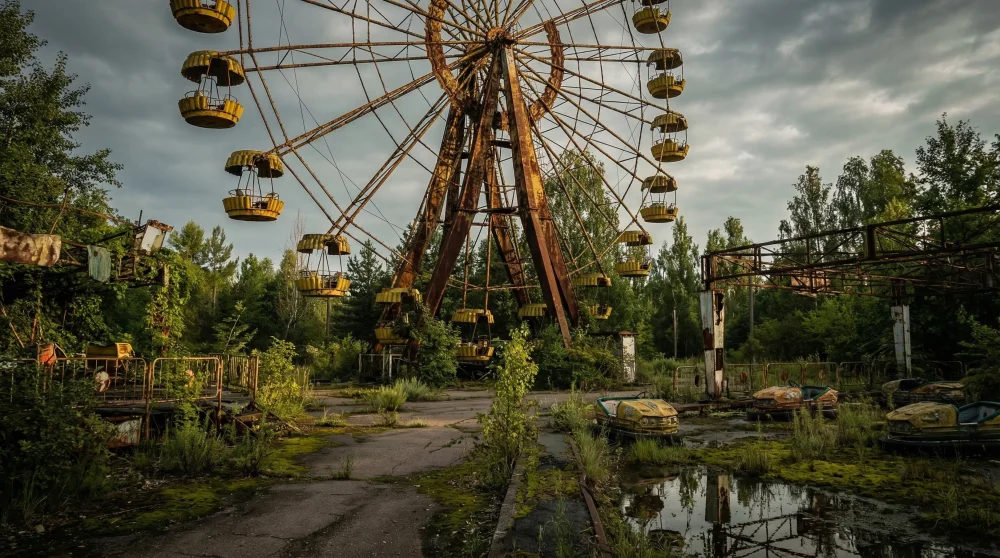
The atmosphere here is heavy and absolute. The streets are completely silent, the concrete structures are cold. Nature is the only active force left. Trees grow directly through the middle of former grocery stores.
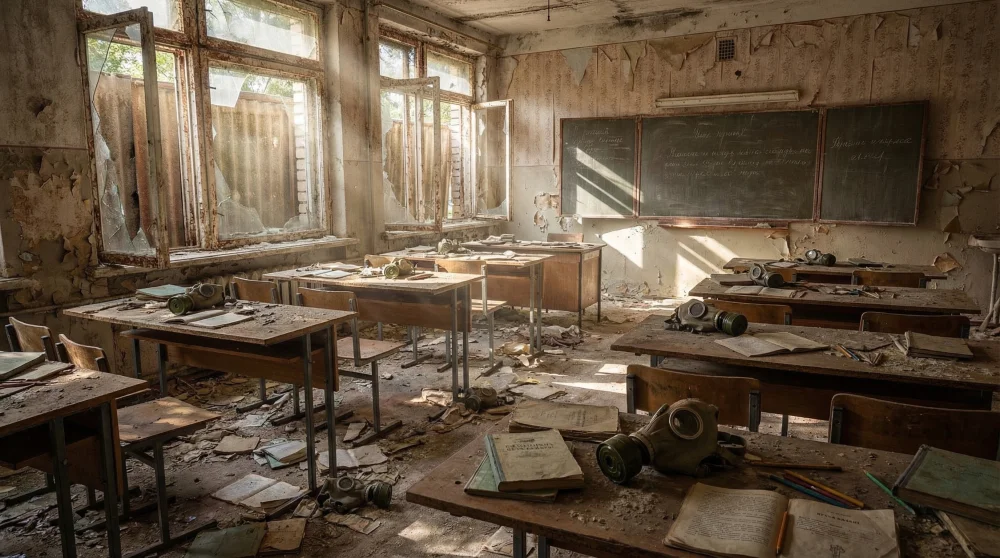
The rusted Ferris wheel in the central amusement park stands perfectly still against the sky. Every room is a frozen time capsule of sudden evacuation. Dusty textbooks cover the floors of the schools, and rusted hospital beds line the empty corridors.
The Duga Radar
This massive Soviet missile defense system hidden deep in the forest is a colossal feat of engineering. The sheer scale of the metal structure is dizzying. The steel grid stretches endlessly into the sky, towering over the pine trees. Standing beneath it gives you a true sense of Cold War paranoia and military ambition.
How Long Will Chernobyl Remain Radioactive?
The total decay of radioactive materials is a process measured in millennia, not decades. While isotopes like Iodine-131 disappeared shortly after the disaster, Cesium-137 and Strontium-90 still linger in the soil.
Plutonium-239 requires tens of thousands of years to become harmless. The Exclusion Zone will remain unfit for permanent human habitation for countless generations, even though short-term controlled visits remain perfectly viable once the current situation allows it.