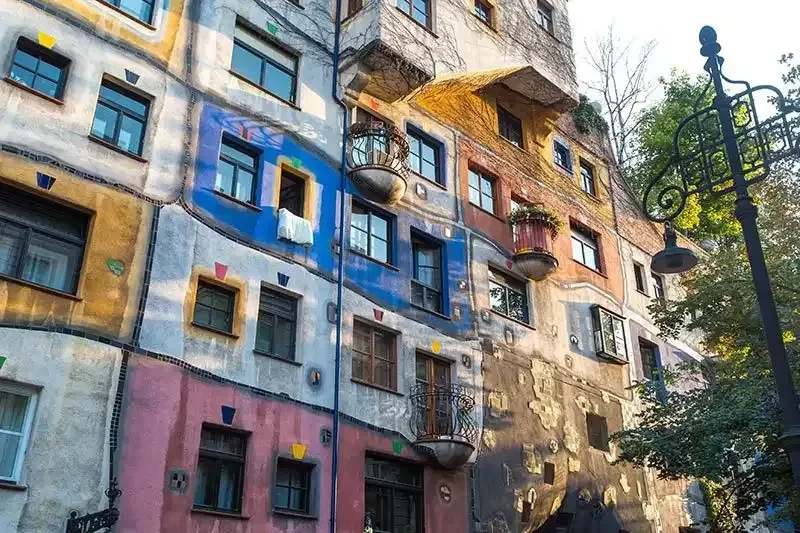
Trying to find an entrance or a ticket booth for the Hundertwasser House is the most common mistake visitors make, often resulting in frustrated locals and wasted time. This famous colorful facade belongs to an active residential complex, meaning the real architectural experience you are looking for is actually divided between the street view, the Village across the road, and the nearby museum.
The Reality of Visiting the Hundertwasser House
The short answer is no. You cannot wander through the hallways or climb the stairs of the Hundertwasser House. Real people live in these 53 apartments, and the massive influx of daily tourists right outside their windows creates understandable tension.
Sitting on the entrance stairs to rest or attempting to peek into the private courtyard often leads to harsh reactions from the residents. Respecting this physical boundary is crucial for a peaceful visit.
There is one small exception: the Info-Shop on Kegelgasse is a publicly accessible area at ground level inside the building. You can find postcards, posters, souvenirs, and information material about Hundertwasser there. Additionally, the Kunstcafe on the ground floor screens a free film where Hundertwasser himself guides viewers through the house.
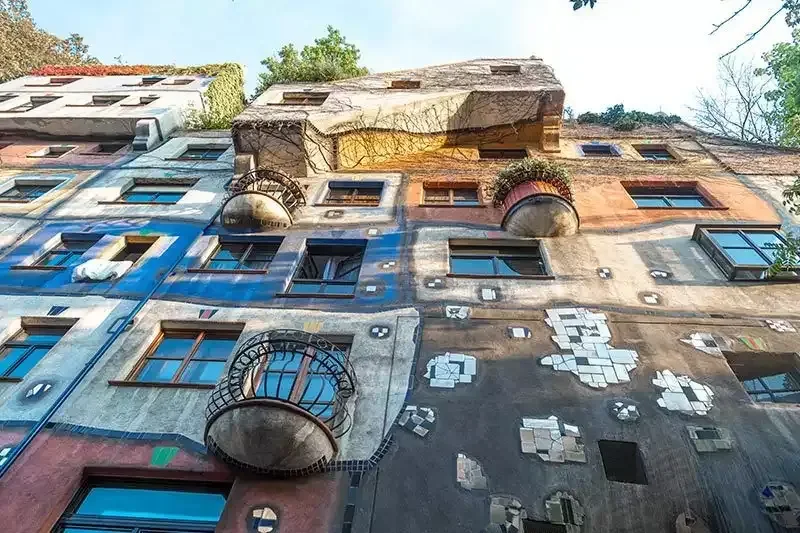
You can still admire the wavy exterior pavements, the rooftop forest featuring over 200 trees, and the vivid mosaic details entirely from the street level. The facade is incredibly photogenic, though the colors appear much more vibrant in bright summer sunlight compared to the gloomy winter months.
Hundertwasser Village: Stepping Into the Architecture
Friedensreich Hundertwasser anticipated the immense public interest. Directly across the street sits the Hundertwasser Village. This area was transformed from an old tire workshop in 1990-1991 into a functional space that perfectly mirrors the iconic style of the main building.
The ground here is intentionally uneven. The artist believed flat floors were unnatural for human posture and designed these wavy surfaces as a physical melody for your feet.
Inside, the atmosphere is bohemian and relaxed. You will find souvenir shops, a small cafe, and an interior environment that fully captures the eccentric spirit of the architect. Exploring this village safely satisfies the curiosity of wanting to see the inside of his architectural mind. Entry to the village is free.
Kunst Haus Wien: The Complete Exhibition
If viewing a facade leaves you wanting more, your next stop must be Kunst Haus Wien. A brief five-minute walk from the residential complex brings you to the official museum dedicated to Hundertwasser.
This is where you actually purchase a ticket and step inside a vast, multi-level exhibition space. The building houses his original paintings, architectural models, and personal tapestries.
| Ticket Type | Price |
|---|---|
| Adult | €15 |
| Senior (65+) | €12 |
| Student (under 26) | €6 |
| Child (under 10) | Free |
| Family (2 adults + up to 4 children) | €25 |
The Vienna City Card holders receive a 30% discount on admission. The museum is also included with the Vienna Pass at no extra charge.
The museum cafe on the ground floor is exceptionally beautiful. The space is lush, plant-filled, and perfect for a quiet break away from the noisy street crowds.
How to Get There
Reaching the 3rd District requires a slight detour from the central historical palaces of Vienna. Board Tram 1 and get off at the Hetzgasse stop. From there, the colorful facade is just a two-minute walk away.
Alternatively, take the U3 or U4 metro lines to the Landstrasse station. The walk from the metro takes about ten to fifteen minutes. The surrounding neighborhood is highly classical and quiet, making the sudden burst of chaotic color at the Kegelgasse intersection quite striking.
Most visitors spend around 30 minutes at the Hundertwasser House and Village combined. If you add Kunst Haus Wien, plan for roughly 1.5 to 2 hours total.
Related Hundertwasser Spots in Vienna
The Hundertwasser House is not the only project by this architect in the city. The Spittelau Waste Incineration Plant, visible from the Danube Canal, is covered in the same golden domes and colorful tiles. The Hundertwasser toilet at the Kunst Haus Wien is also a quirky attraction in itself, featuring the same uneven floors and mosaic work.