Using "England," "Great Britain," and "the UK" interchangeably is one of the most common geographical mistakes you can make, and it will quickly earn you a polite correction from locals. Understanding the exact difference between a political state and a physical landmass saves you from awkward conversations and clarifies everything from border control to international sports.
| Term | Category | What is Included? |
|---|---|---|
| United Kingdom (UK) | Political Sovereign State | England, Scotland, Wales, Northern Ireland |
| Great Britain (GB) | Geographical Landmass | England, Scotland, Wales |
| British Isles | Group of Islands | Great Britain, Ireland, Isle of Man, Channel Islands |
The United Kingdom: A Political Sovereign State
The United Kingdom of Great Britain and Northern Ireland is a fully independent, sovereign country. It has one central government based in London, one prime minister, and signs international treaties. When you cross the border, you enter the UK, not Great Britain. The union controls the armed forces, issues the currency, and dictates foreign policy.
Which Countries Make Up the UK?
The UK consists of four distinct nations: England, Scotland, Wales, and Northern Ireland. While they are not independent sovereign states on the global stage, they maintain their own unique legal systems, educational structures, and fierce national identities. Scotland, Wales, and Northern Ireland operate under devolved governments.
This means they control specific internal affairs like healthcare, agriculture, and local transport, leaving defense and foreign relations to the central UK parliament.
Understanding the terms also has practical implications. UK bank holidays apply to the whole of the UK, but Scotland, Wales, and Northern Ireland observe additional bank holidays not celebrated in England. This directly affects transport timetables and opening times when you travel.
Great Britain: A Geographical Landmass
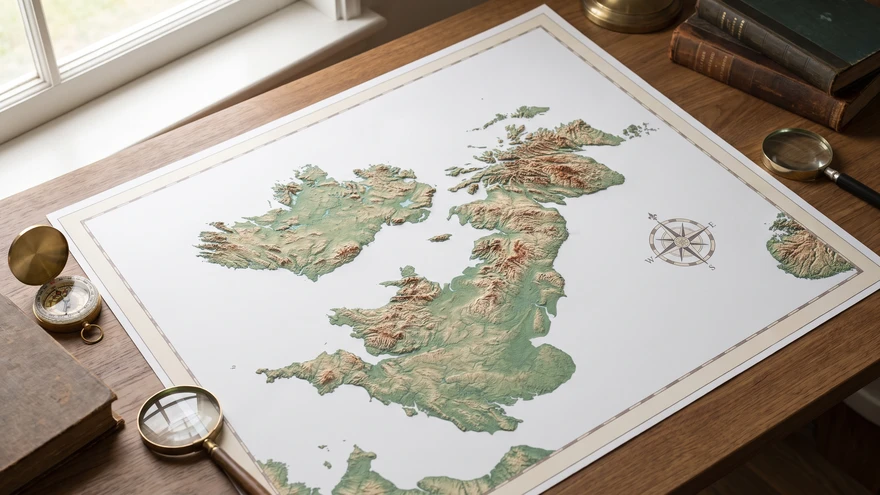
Great Britain is purely a geographical term referring to the largest single island in the region. It is not a country, it does not issue passports, and it does not have a government. Look at a map, and you will see it sitting off the northwestern coast of mainland Europe.
The Three Nations of Great Britain
The physical landmass of Great Britain holds three of the four UK nations: England, Scotland, and Wales. Because Northern Ireland sits on a completely separate island across the Irish Sea, it is structurally impossible for it to be part of Great Britain.
What About the British Isles?
This term refers to the entire collection of over 6,000 islands scattered across the region. It includes the island of Great Britain, the entire island of Ireland, the Isle of Man, and the Channel Islands. It is purely a geographical description with zero political meaning.
Because the Republic of Ireland is a completely independent nation outside the UK, the term "British Isles" is highly contentious and generally avoided in official Irish contexts.
England is Not the UK
Many people mistakenly use "England" as a catch-all term for the entire United Kingdom. England is just one of the four constituent countries. Calling a Scottish or Welsh person "English" is a major social faux pas.
England is home to the UK's capital, London, and its most iconic landmarks. Attractions like the Tower of London sit within England - but booking a trip to England is not the same as booking a trip to the entire UK.
Crown Dependencies and Overseas Territories
Places like the Isle of Man, Jersey, and Guernsey complicate the map even further. These are Crown Dependencies - not part of the UK, nor are they independent nations. They operate their own independent administrations and tax systems, but rely on the UK for international defense and foreign relations.
Real-World Examples: Passports, Olympics, and Football
The legal name on a British passport explicitly states the "United Kingdom of Great Britain and Northern Ireland." This perfectly illustrates how the political state combines the main geographical landmass (Great Britain) with its additional territory (Northern Ireland).
Sports create even more confusion. In the Olympics, athletes from the UK compete under the brand "Team GB" (Great Britain). This historically causes friction, since the Olympic team technically includes athletes from Northern Ireland who do not live on the island of Great Britain.
In football and rugby, the historical legacy of the sports dictates the rules. Because these sports were formalized in this region, England, Scotland, Wales, and Northern Ireland compete as entirely separate national teams. You will never see a unified "UK team" at the FIFA World Cup.