Turning on your mobile data at Tbilisi Airport without a local SIM card is the fastest way to face astronomical roaming charges. Getting a local connection takes less than ten minutes, but choosing the wrong provider leaves you stranded with zero signal the moment you leave the city limits.
- Best Overall Coverage: Magti (reliable signal even in remote mountains)
- Strong Alternative: Silknet (good city coverage, stable speeds)
- Budget Option: Cellfie (cheapest packages but useless in rural areas)
- Required Documents: A physical passport is mandatory for all registrations.
- Smartest Purchase Location: City center branches instead of airport kiosks.
Which Mobile Network is Best in Georgia?
Magti (The Best Choice for Coverage)
Magti holds the strongest network infrastructure across the country. You get a reliable signal whether you explore the deep valleys of Svaneti or take a video call from the high-altitude village of Ushguli. It sits at a slightly higher price point than its competitors, but the coverage makes it the top choice for travelers venturing beyond Tbilisi.

Silknet (Strong Alternative)
Silknet provides a solid connection in all major cities and most regional highways. It ranks as a close second to Magti. The connection remains stable for remote workers, though you might experience drops in extreme mountainous terrain. One advantage Silknet holds: their eSIM is easier to purchase online before you arrive.
Cellfie (Budget Friendly but Weak Signal)
Cellfie offers the cheapest data bundles on the market. The catch becomes obvious once you step outside Tbilisi or Batumi. The signal drops in rural areas, making it a poor choice for mountain trekking or remote road trips. Fine for a short city-only stay, but not worth the risk if your itinerary includes the mountains.

The Airport Trap: Tbilisi, Kutaisi and Batumi Kiosks
All three major providers maintain 24/7 kiosks in the arrivals halls at Tbilisi International Airport (TBS), Kutaisi, and Batumi airports. Convenient, yes. But every registration requires a physical passport scan and the queues can stretch to 10-15 minutes per customer during busy arrival periods.
Kiosks in the arrivals hall tend to prioritize premium tourist packages with large data allowances and international calling minutes you likely do not need. Buying a basic physical card and adding your own customized data bundle at a city center branch saves you a meaningful amount. Locals consistently recommend skipping the airport for this exact reason.
How to Buy a SIM Card in the City Center
Every major street in Tbilisi, including Rustaveli Avenue, hosts official branches of all three providers. You walk in, take a queue ticket from the machine, and wait for an English-speaking representative. The process takes about five minutes once you reach the desk.
Required Documents for Registration
Georgian law strictly requires a physical passport to activate any mobile number. Digital copies or photos of your ID are not accepted at official service centers. Hand your passport to the clerk, sign the standard user agreement, and they activate your line on the spot. Test the internet connection before walking out the door.
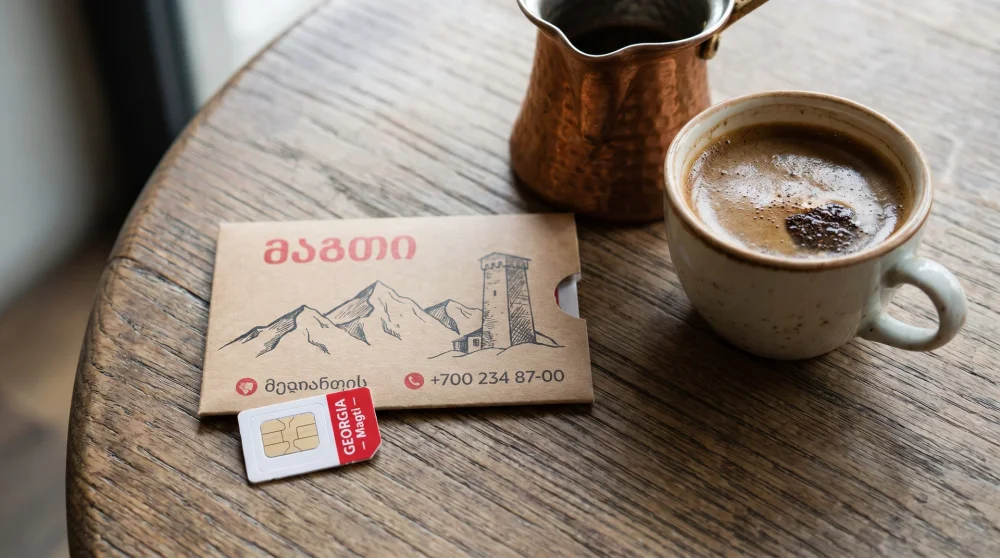
Physical SIM vs. eSIM in Georgia
Many modern smartphones support eSIM profiles. Magti and Silknet both offer local eSIM options directly at their branches. Silknet has an edge here: their eSIM can be purchased online before you arrive, which is worth considering if you want connectivity the moment you land.
Global travel eSIM providers like Airalo are another option, but those rely on secondary networks. This causes higher latency and coverage drops compared to buying local. A local Georgian eSIM also gives you a Georgian phone number, which is useful for registering on taxi apps like Bolt and receiving service notifications in-country.
Crucial Warning: Stop Background Data Drain Before Topping Up
This is the most common mistake travelers make. When your initial package expires, topping up your balance without activating a new data plan triggers the default per-megabyte billing rate. Your background apps consume the newly added funds before you even open the provider app to select a new package.
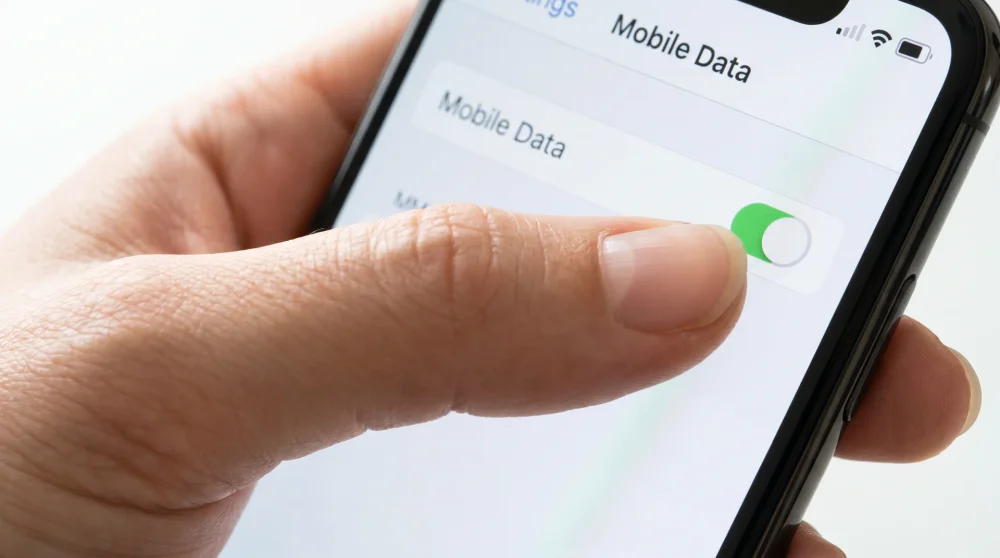
Always switch off your mobile data in your phone settings before adding credit. Turn it back on only after receiving the confirmation text for your newly purchased data bundle.
How to Top Up Your Balance and Block Spam Messages
Downloading your provider app, such as MyMagti or MySilknet, is the easiest way to manage your account. Enter your local number, receive a secure login code, and pay with an international debit or credit card. If you prefer cash, electronic payment terminals are on almost every street corner. Type in your phone number, insert your cash, and the credit reflects instantly.
Georgian providers send a high volume of promotional text messages. You can stop this by dialing specific USSD codes depending on your operator. For Magti, dialing *182# disables marketing SMS. For Silknet, use *297#. This permanently removes you from promotional lists so you only receive essential alerts and balance notifications.
Multi-Country Caucasus Travel: What to Know
A Georgian SIM card only works within Georgia's borders. If your trip extends to Armenia or Azerbaijan, standard Georgian plans do not cover those countries. Roaming packages exist but tend to be expensive. The practical solution for a multi-country Caucasus trip is to pick up a new local SIM in each country. Each nation has its own independent telecommunications market, and local SIMs in Armenia and Azerbaijan are just as affordable and easy to purchase as they are in Georgia.