Standing in the courtyard of Fort Oranje today, it is hard to imagine that a simple 11-gun salute fired from these exact ramparts triggered the Fourth Anglo-Dutch War. Understanding the mechanics of the "First Salute" transforms a quick photo stop in Oranjestad into a profound walk through the birth of American sovereignty.
- Location: Upper Town, Oranjestad, Sint Eustatius (Statia)
- Admission: Free
- Opening Hours: 24/7 (open-air public space)
- Time Needed: 30 to 45 minutes
- Key Sights: Historic cannons, FDR Memorial Plaque, De Ruyter Obelisk
The History of the First Salute of 1776
The Caribbean waters were a complex chessboard of colonial powers during the late 18th century. Sint Eustatius, affectionately known as the "Golden Rock," was a massively wealthy Dutch trading outpost. Its wealth relied heavily on neutrality and free trade, making the events of late 1776 completely unprecedented.
The Arrival of the Andrew Doria
On November 16, 1776, an unfamiliar brig approached the island's harbor. The ship flew the standard Dutch flag on the main mast, but the foremast displayed a curious red ensign divided by thirteen stripes. Before anchoring, the vessel discharged an 11-gun salute. This specific number of shots forced the fort's commander, Abraham Ravené, into a massive diplomatic dilemma.
Governor Johannes de Graaff's Bold Decision
Ravené immediately consulted Governor Johannes de Graaff. Maritime protocol dictated that returning the salute with two fewer shots (9) would designate the arriving ship as a simple merchant vessel. Returning an equal 11-shot reply would formally acknowledge it as a warship of a sovereign nation. De Graaff ordered an 11-gun return fire.
The ship was the Andrew Doria, a vessel in the service of the newly founded Continental Navy. By firing those 11 shots, De Graaff officially recognized the independence of the United States. The British government viewed this as an utterly hostile act, eventually leading to a declaration of war against the Dutch Republic.
What to See at Fort Oranje Today
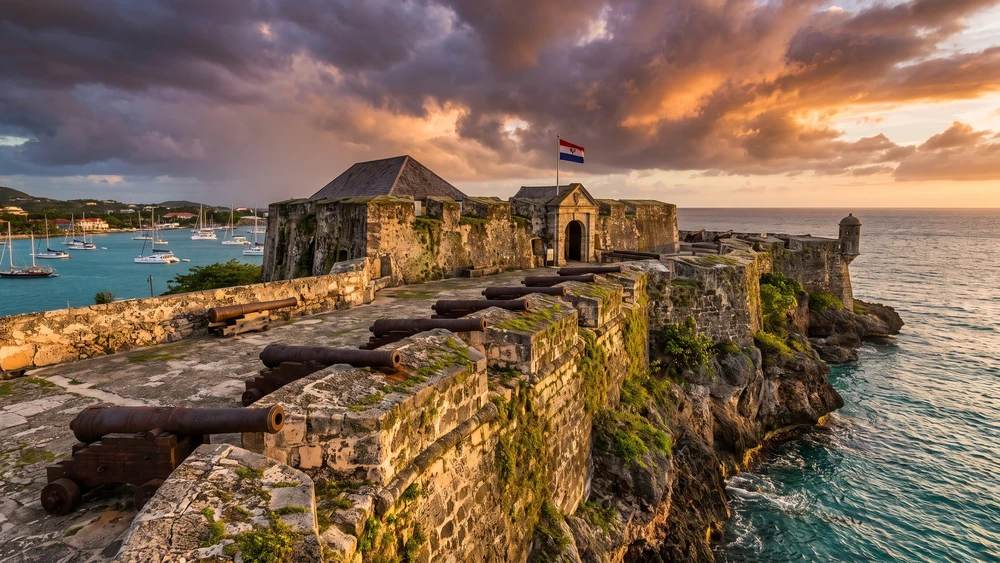
The fort balances precariously on the edge of a cliff, forty meters above sea level. Following a thorough restoration in 1979, the three bastions received new foundations, and the historical layout was carefully preserved. The space now houses local administrative offices, including the Tourist Office and the Public Prosecutor.
The Courtyard and Historic Cannons
The quarter-circular fortification features imposing ramparts pointing directly toward the Caribbean Sea. A line of historic cannons rests securely along the outer edge. While these specific artillery pieces are of a slightly more recent date than the 1776 originals, they perfectly frame the exact firing line used by De Graaff's men. The view of the lower harbor from this vantage point is completely unobstructed.
FDR Memorial Plaque and De Ruyter Obelisk
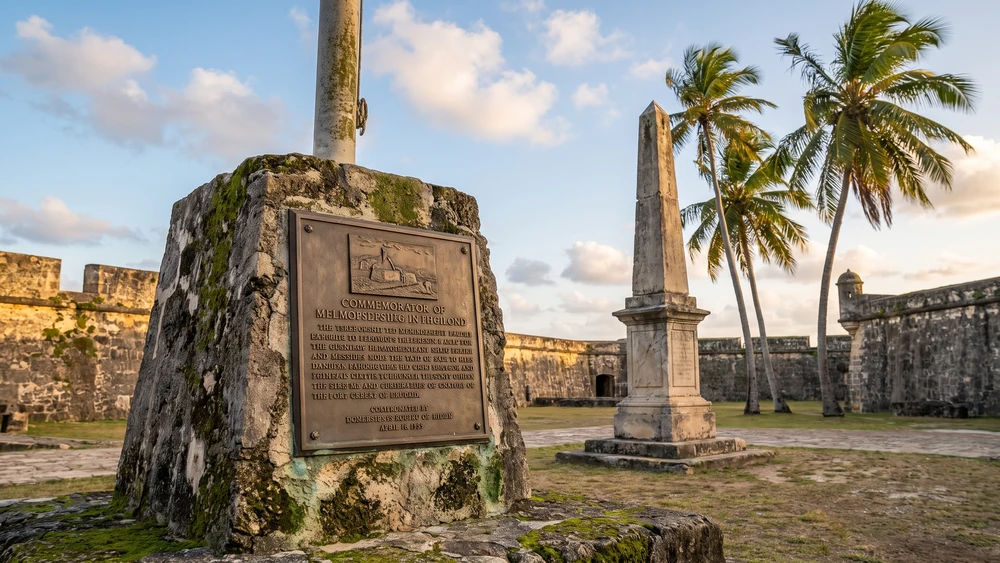
The center of the courtyard holds a massive flagpole anchored by a distinct brass plaque. President Franklin Delano Roosevelt presented this plaque in 1939 to officially honor De Graaff's brave acknowledgment. Just a few steps away stands a stone obelisk erected in 1933. This monument commemorates the visits of the legendary Dutch naval hero Michiel de Ruyter, adding another rich layer to the fort's maritime legacy.
The 250th Anniversary Commemoration in November 2026
The historical gravity of the First Salute will reach a major milestone on November 16, 2026. The island is preparing for an extensive 250th-anniversary commemoration. A significant part of this celebration involves a large-scale mural created by New York artist Cynthia Marsh, recently unveiled at the Dutch Ambassador's residence in Washington, D.C.
This mural will journey back to Statia to be permanently displayed for the 2026 events. Securing flights and accommodations for November 2026 requires early logistical planning, as high-level dignitaries from the United States and the Netherlands are expected to attend.
Practical Tips for Your Visit
Visiting the fort requires minimal planning, but understanding the local geography saves a lot of physical effort. The island's capital, Oranjestad, is distinctly split into an Upper Town and a Lower Town.
How to Get to Fort Oranje in Oranjestad
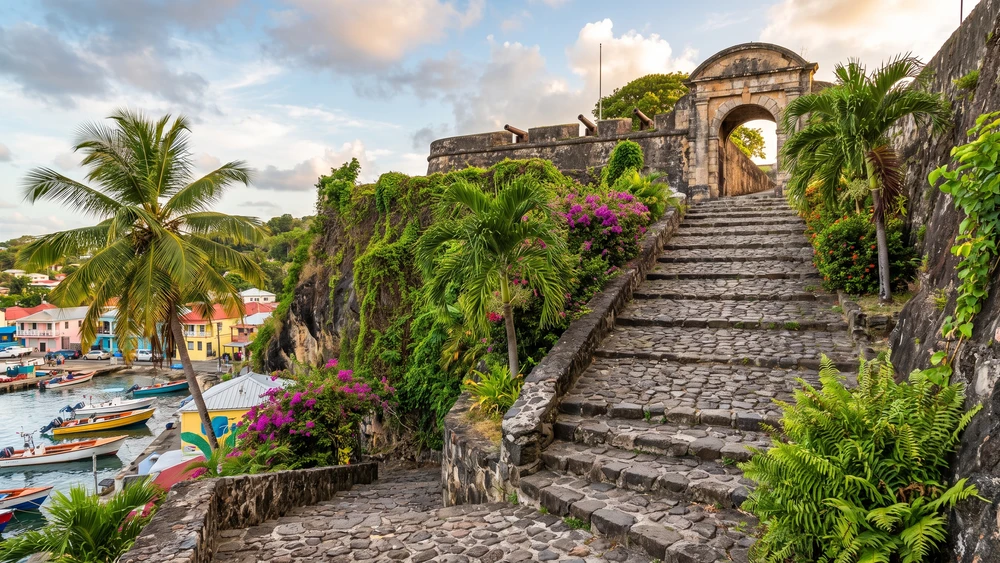
If you are arriving from the harbor or the dive shops in the Lower Town, you need to climb the Old Bay Path. This cobblestone walkway connects the waterfront directly to the Upper Town cliff. The ascent is quite steep. Wearing comfortable walking shoes makes the climb much easier, and the immediate reward at the top is the entrance gate to Fort Oranje.