Arriving at the Darvaza Gas Crater during the daylight hours is a severe logistical mistake that leaves visitors staring at a visually underwhelming pit. Plan your drive across the Karakum Desert to reach the rim just before sunset, ensuring the fading light reveals the true intensity of the remaining subterranean fires.
- Location: Karakum Desert, north of Ashgabat
- Travel Time: Roughly four hours of driving on severely degraded terrain
- Current Status: Flames are actively fading and operating at a fraction of their historical peak
- Access: Entry only through organized tours - independent travel is not permitted
- Hazards: Extreme nighttime temperature drops, deep potholes, and scorpions
- Facilities: Basic yurt camps with minimal infrastructure located a short walk from the rim
Is the Door to Hell Still Burning?
The short answer is yes, but the visual reality is vastly different from older promotional photographs. State energy companies have actively drilled containment wells nearby to siphon off the methane. This ongoing extraction physically starves the main crater of its primary fuel source.
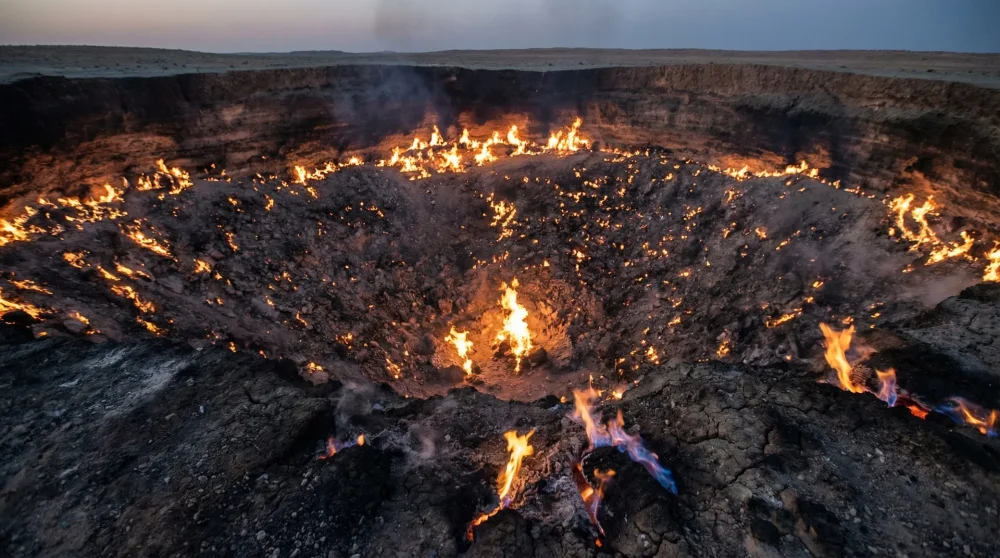
The massive inferno is now a ghost of its former self. The towering flames that once lit up the entire desert sky have shrunk to a fraction of their original size. You will mostly notice the glow only when standing directly at the fenced perimeter.
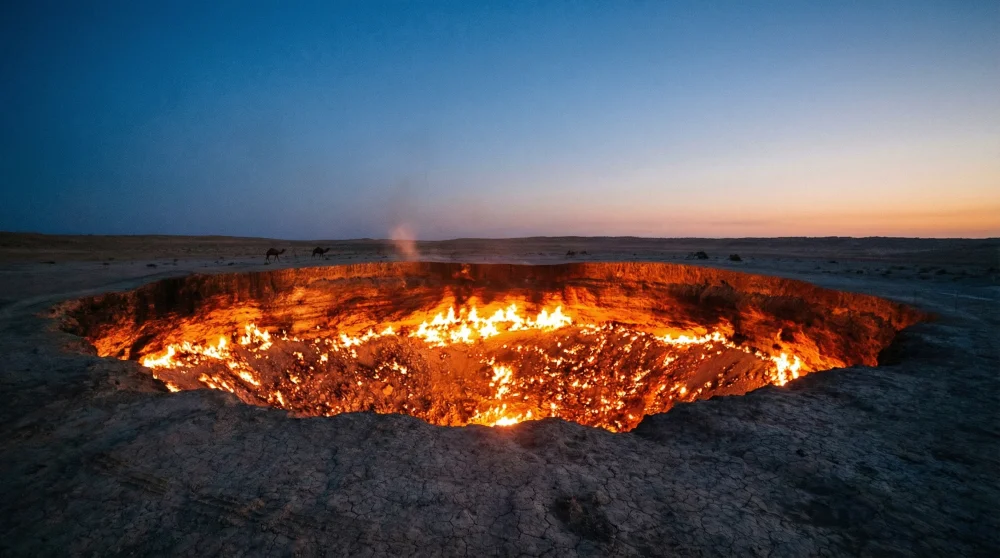
Interestingly, the restricted gas flow has forced the methane to seek new escape routes. You can now spot small, isolated flames sprouting in the surrounding soil outside the main crater. This geological shift makes exploring the outer edges just as fascinating as the center pit.
Will the Crater Be Extinguished?
This question is now very much on the table. Turkmenistan's government has announced plans to eventually seal the crater completely, citing both environmental concerns and the economic value of capturing the escaping methane. No official closure date has been set, but officials have indicated the crater is unlikely to survive another decade in its current state.
If visiting this site is on your list, do not leave it for years from now. The ongoing gas extraction efforts are visibly reducing the fire intensity each season.
How to Get to Darvaza from Ashgabat
The journey from the capital is notoriously punishing. The road deteriorates rapidly after the first hour of driving. You will face a relentless gauntlet of massive potholes and sudden camel crossings that completely destroy your travel pace.
Do not attempt to drive this route independently - and in practice, you cannot. Turkmenistan requires foreign visitors to travel on organized tours with licensed guides; independent travel permits are rarely granted. Hiring a local driver equipped with a heavy-duty four-wheel drive vehicle is not just practical advice, it is the only option available to most visitors. They know exactly how to bypass the most treacherous sections of the asphalt and will safely navigate the dunes. Expect to pay in the range of $530-1,650 per person depending on tour length and inclusions.
Darvaza Gas Crater Accommodation: Choosing a Yurt Camp
Sleeping in the desert is the only logical way to experience the crater at its peak atmospheric state. There are a few permanent yurt camps located a short walk from the rim. Darwaza Camp offers slightly more upscale amenities like basic beds, while Garagum Camp provides a more traditional floor-pad setup directly on Turkmen carpets.
The desert temperature drops violently the moment the sun disappears. The cold at night is absolute and piercing. Bring heavy thermal layers, as the standard yurt blankets are often insufficient against the freezing winds. Preparing your desert camping equipment before leaving Ashgabat is a vital step for a tolerable night.
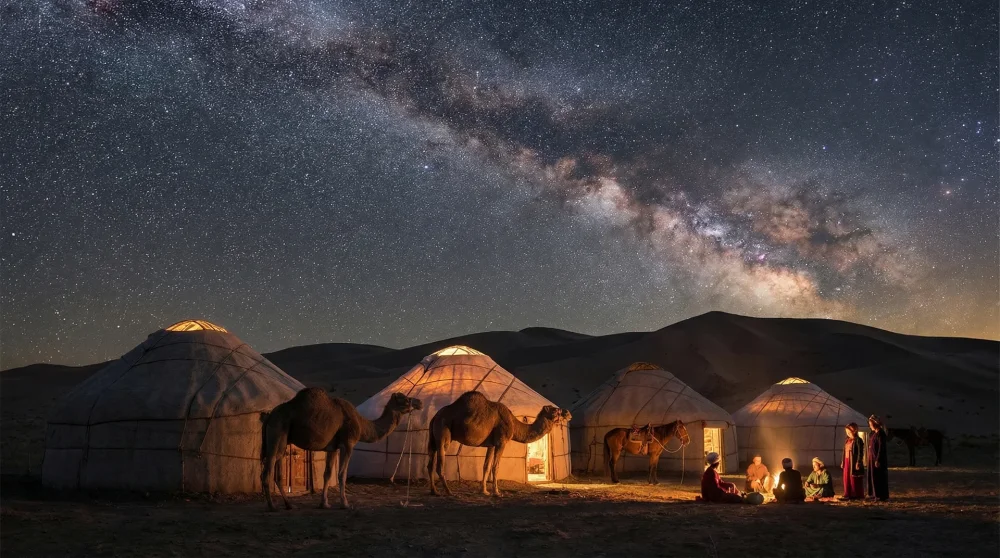
Keep a close eye out for the local wildlife around your accommodation. Many camp operators deliberately keep resident desert hedgehogs to help control the local insect population.
The Spiders of Darvaza: Fact or Fiction?
Rumors of suicidal spiders flinging themselves into the fire are wild exaggerations. However, the surrounding Karakum Desert remains teeming with active wildlife. Camel spiders and scorpions thrive in this arid landscape and are highly mobile after dark.
The steady glow of the crater acts as a massive beacon in the dark, attracting swarms of flying insects. This endless buffet naturally draws in the desert predators. Always use a strong flashlight when walking between your yurt and the crater rim at night. Keep your accommodation zippers strictly closed to prevent unwanted visitors from seeking warmth in your bedding.
Best Time to Visit for Photography
Daytime photography here is utterly pointless and frustrating. The harsh sunlight washes out the flames entirely. The crater merely looks like an abandoned industrial accident.
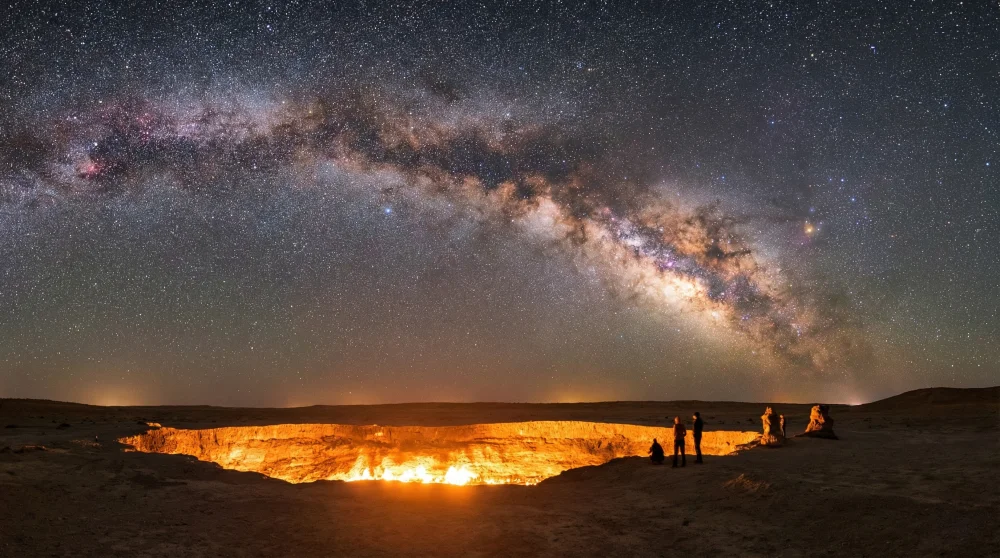
Position yourself at the downwind edge right as the sun begins to set. The contrast between the darkening blue sky and the deep orange glow creates the perfect exposure balance. Later in the night, the complete lack of light pollution allows you to capture the glowing pit against a brilliant backdrop of stars.