Finding the land entrance to Bekiri's Cave involves navigating a hidden, sometimes rock-strewn path where digital maps completely lose their accuracy. Arriving at high tide without knowing the exact crevice to squeeze through often leaves travelers frustrated on the rocks outside. This guide covers both access routes, what you'll find inside, and the historical weight this cave carries on the island of Spetses.
How to Get to Bekiri's Cave
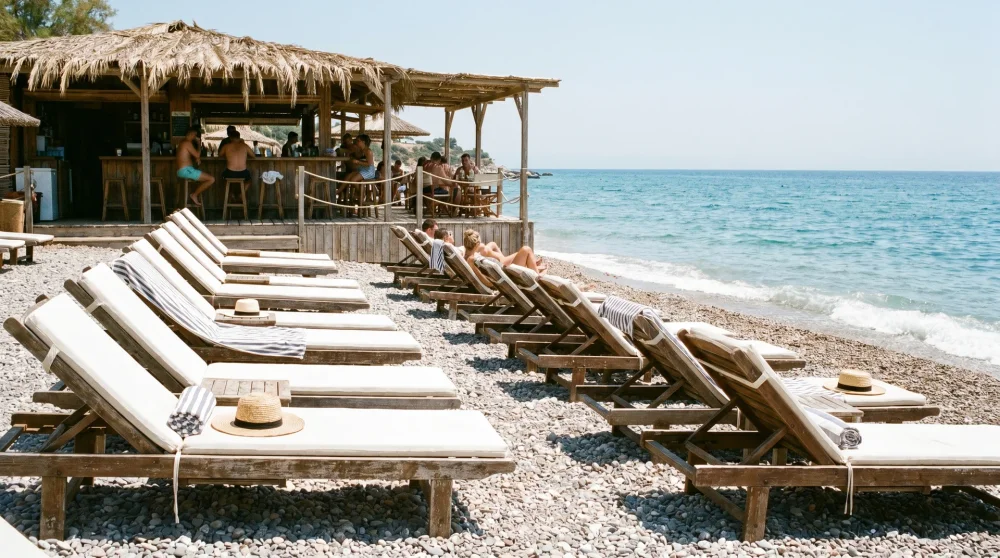
Leave your vehicle near the main beach of Agioi Anargyroi and walk entirely to the right side, just past the water sports facility. This is the largest beach on the island, and the cave trail starts right at its northern end. A narrow path leads uphill through the pine trees, offering an immediate escape from the crowded sands.
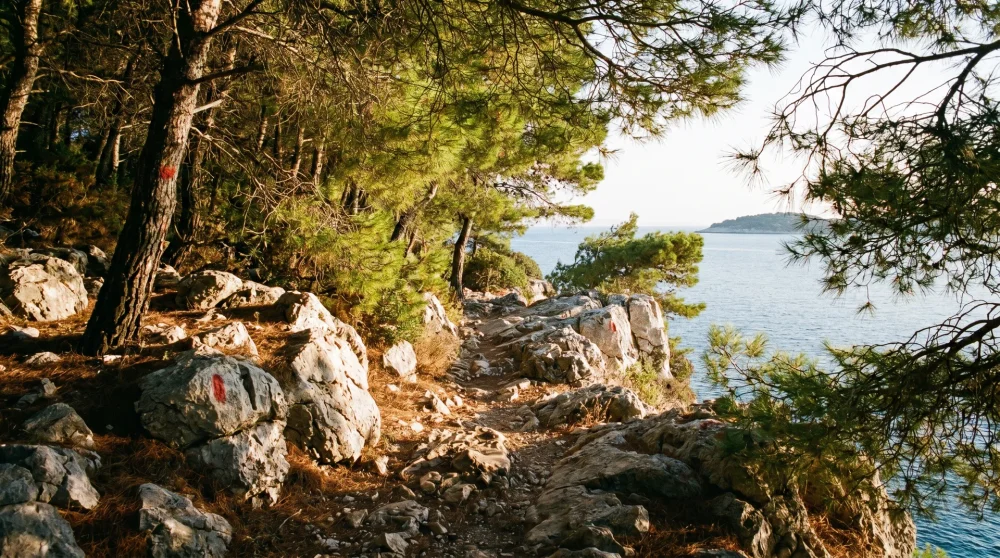
You will eventually notice some fallen boulders blocking the old cement pathway. This rockfall looks intimidating, but the route remains completely passable on foot. Keep following the trail until you spot the red paint markings on the rocks pointing toward the hidden opening. The walk takes 5 to 10 minutes from the beach.
Entering the Cave: Sea Entrance vs. Rock Crevice
Getting inside requires a bit of physical effort, and you have two distinct options depending on the tide and your comfort level.
The sea entrance sits extremely low to the water. Swimming in is highly recommended over using a small boat tour or rental, as unexpected waves can easily push your head against the jagged ceiling. Only attempt the sea route when the water is completely calm.
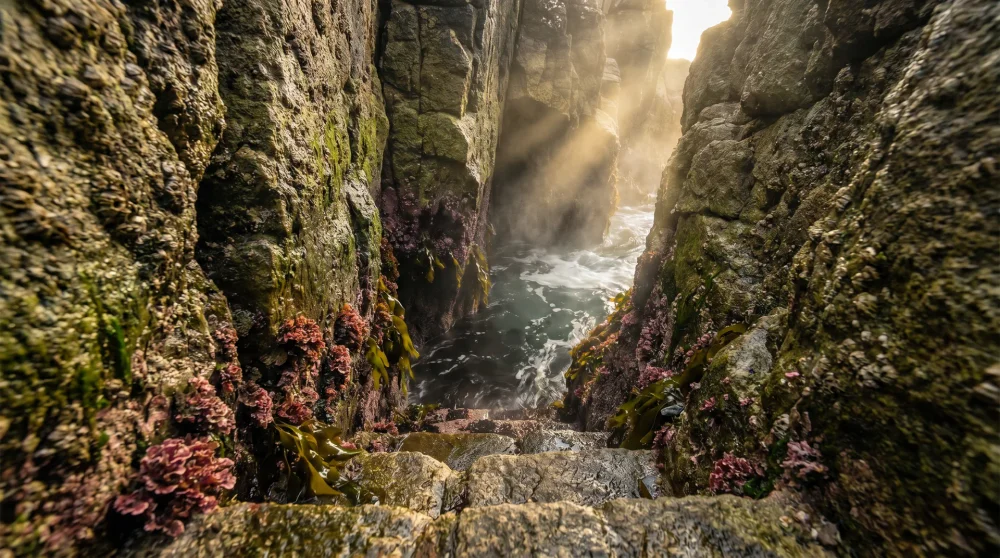
If the sea is rough, the land entrance is your safest bet. Look for a small, narrow hole in the rock face equipped with rough steps leading down into the darkness. The rocks near the waterline are coated with a layer of soft, pinkish seaweed, which makes it much easier to slide into the water without scratching your legs on the sharp edges below.
What to Expect Inside the Cave
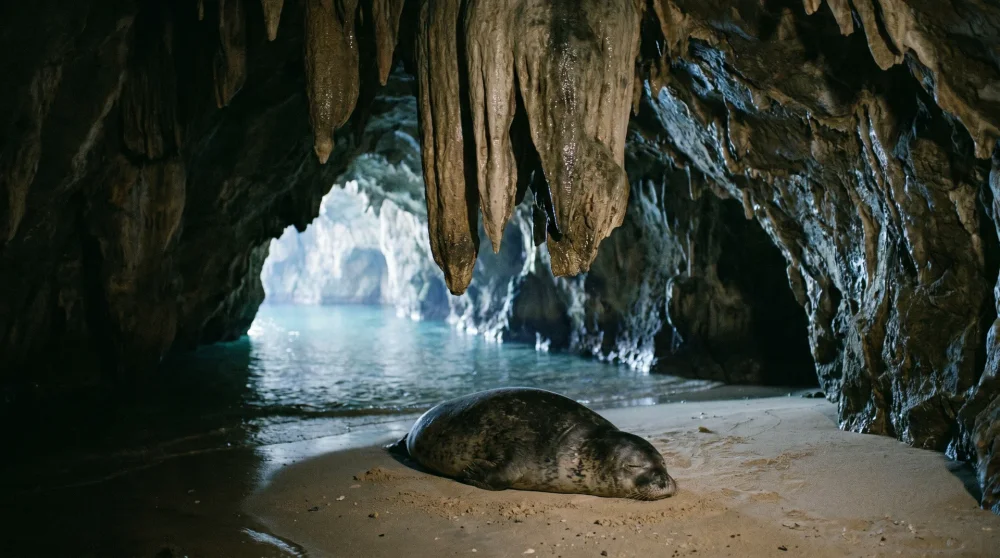
The interior is deeply atmospheric, with a ceiling dominated by intricate stalactites and stalagmites. The water is crystal clear, noticeably warm, and turns a vivid blue-green shade when the afternoon sun filters through the sea entrance.
Deep inside the cavern lies a hidden, small sandy beach. Your eyes will quickly adjust to the dim light, but the environment feels completely secluded from the outside world.
It is common to spot Mediterranean monk seals (Monachus monachus) resting quietly on the inner sandbanks. They are easily startled by loud noises and will quickly retreat into the water, so moving slowly and keeping your voice down ensures you do not disturb the local wildlife.
Essential Tips for Visitors
Navigating the submerged boulders at the entrance is tricky with bare feet. Wearing sturdy water shoes prevents slips on the damp interior steps and protects against sharp stones underwater. Sea urchins are also present near the cave entry, so bare feet are a bad idea.
The cave interior is quite dark, especially if you visit early in the day. Bringing a waterproof flashlight makes the descent much less intimidating and highlights the rock formations beautifully.
Timing your visit for the best time of year and the late afternoon provides the best natural lighting. As the sun lowers, it directly strikes the water outside, illuminating the cave's lower levels with a bright turquoise glow. Entry is free and there are no set opening hours.
| Detail | Info |
|---|---|
| Location | Northern end of Agioi Anargyroi Beach |
| Walk from beach | 5 to 10 minutes |
| Entry methods | Sea (swimming) or narrow rock crevice with steps |
| Essential gear | Water shoes, waterproof flashlight, snorkeling mask |
| Cost | Free |
| Best time | Late afternoon for turquoise light effect |
The History and Cinematic Fame of Bekiri's Cave
Beyond its natural architecture, the cave holds significant historical weight for Spetses. In 1770, women and children from the island took refuge inside when Albanian forces allied with the Ottoman Empire attacked following Spetses's alliance with Russia. The cave's name itself is believed to derive from a figure named Bekiris connected to that same conflict.
The cave served again as a hiding place for resistance fighters during World War II, a layer of history that many visitors overlook entirely.
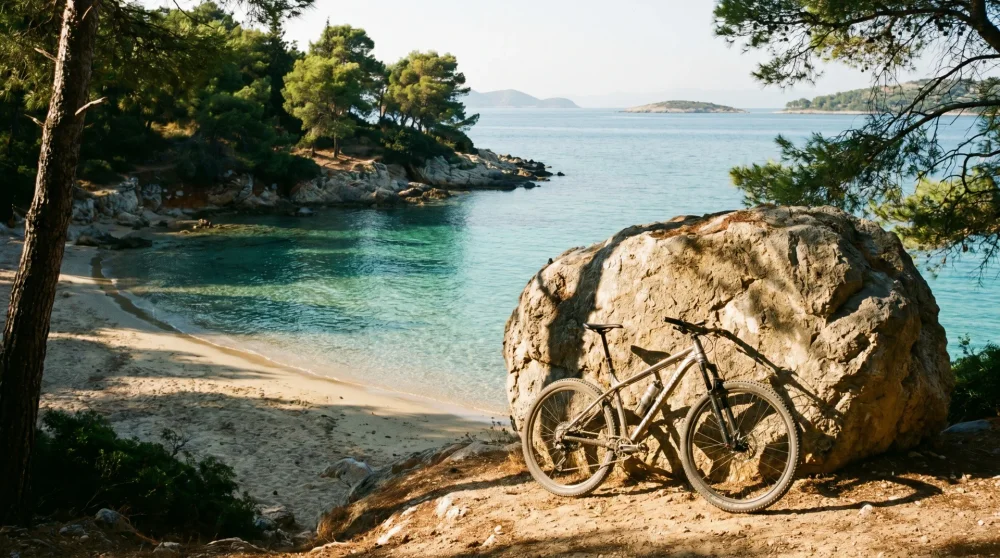
Reaching the cave is easy if you are already cycling the coastal loop, since Agioi Anargyroi sits at the exact midpoint of the route. Its raw aesthetic also caught the eye of filmmakers. The location provided the romantic backdrop for a classic Greek cinematic hit, where it was temporarily renamed the Fairy's Cave. Today it remains entirely wild, retaining the exact mysterious atmosphere that has drawn people to its shadows for generations. The combination of geological drama, wildlife, and layered history makes this one of the few places on the island that genuinely rewards the effort to reach it.