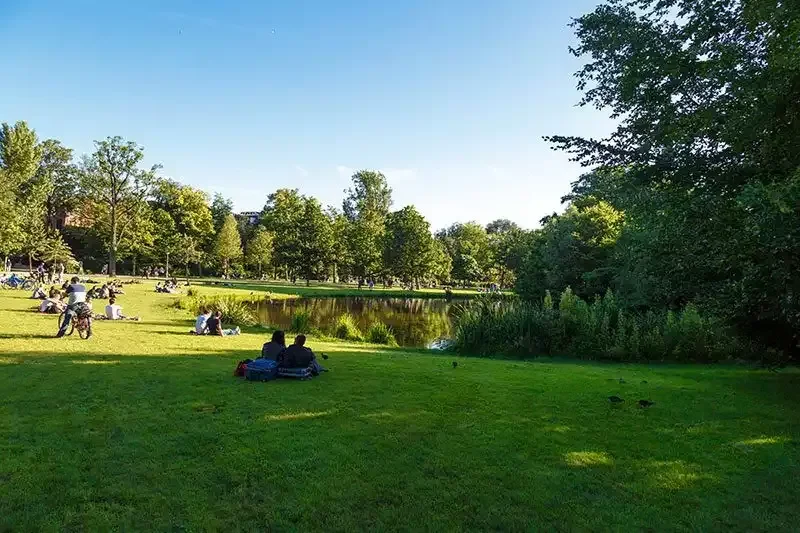
Stepping off the chaotic and crowded streets of Amsterdam, you push open a heavy wooden door and suddenly find yourself in the Middle Ages. The noise of bicycles, trams, and tourists instantly fades away.
You are standing in a perfectly preserved, deeply tranquil courtyard surrounded by classic Dutch houses and manicured green lawns. This is not just a museum or a standard tourist attraction. People still live out their daily lives in these homes, making your visit a shared experience with the local residents.
- Entrance Fee: Completely free of charge.
- Opening Hours: Open daily from morning until late afternoon.
- Location: City center, right off Spui square.
- Crucial Rule: Total silence is mandatory; residents still live here.
What is Begijnhof Amsterdam?
Originally, this enclosed courtyard served as a sanctuary for the Beguines. These were unmarried, religious women who chose to live together in a close-knit community. They dedicated their lives to caring for the sick and teaching children, but they never took strict monastic vows.
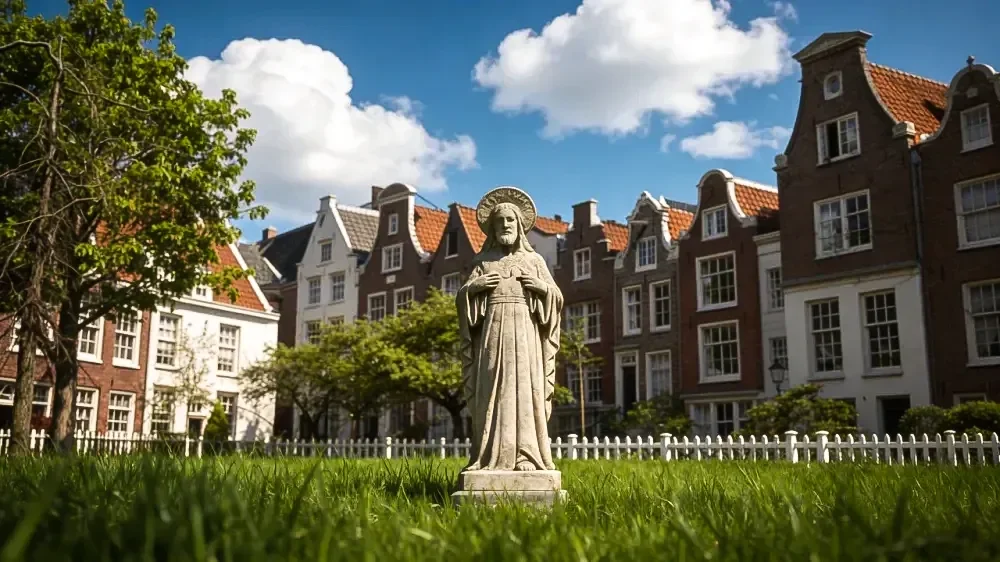
Today, the tradition continues in a modern way. The houses surrounding the manicured lawns are still exclusively inhabited by single women. Because it remains a private residential area, the atmosphere is completely different from the lively squares just a few streets away.
3 Historic Structures You Must See Inside the Courtyard
Walking along the designated open paths, you encounter several architectural and historical gems that define this peaceful sanctuary.
The Oldest Wooden House in Amsterdam (Het Houten Huys)
Look for the house with the distinctive dark wooden facade. This striking building is one of only two remaining wooden houses in the entire city center of Amsterdam. Long ago, devastating city fires forced the local government to ban wooden constructions entirely. This particular house survived those massive fires and stands today as a rare, tangible glimpse into the city's medieval past.
The Secret Catholic Refuge: Begijnhof Chapel
Directly across from the main church, you notice two ordinary-looking townhouses. Step inside, and a beautifully decorated hidden Catholic church reveals itself. During the Protestant takeover, Catholic worship was strictly forbidden in public spaces. The Beguines cleverly converted these private homes into a clandestine chapel to continue their religious practices in secret. The interior is surprisingly large and ornate, complete with classical paintings and a peaceful area to light a candle.
The English Reformed Church (Engelse Kerk)
Dominating the southern edge of the courtyard, this stone building features a striking medieval tower. After the city came under Protestant rule, the original Beguine church was confiscated and eventually given to the English-speaking Protestant community. Today, it serves the local English Reformed congregation. If you visit late in the afternoon, you might even catch the beautiful sounds of classical music or a choir rehearsal echoing from within.
Begijnhof Visit Rules: Why the Guards Might Ask You to Leave
This is the most critical part of your visit. Security guards are stationed around the courtyard, and they strictly enforce the community rules. If you break them, you will be escorted out immediately without any hesitation.
First, absolute silence is required. Do not shout, play music, or talk loudly with your travel companions. Second, you must stay strictly on the designated paths. Wandering onto the grass or stepping toward the residential doors is strictly forbidden. The inner pathways are for residents only. Finally, respect the privacy of the women living here. Pointing cameras directly into their living room windows is highly offensive and will quickly draw the attention of the guards. Treat the courtyard as if you are walking through someone's private living room, and you will have a perfectly peaceful visit.
Where is the Hidden Door? Location and Entrance Details
Finding the entrance can be slightly tricky if you do not know exactly what to look for. The main gateway is located right off Spui square, very close to the Amsterdam Museum. Look for a narrow, vaulted passageway marked by a carved stone sign above a heavy wooden door. There is often a short queue outside during peak hours, but it moves very fast.
Once you spot the carved stone, simply walk through the dark corridor. You will immediately see the historic corbels illustrating old rules, like the ban on keeping dogs or roosters. Keep walking straight, and the green oasis of the courtyard will open up right in front of you.