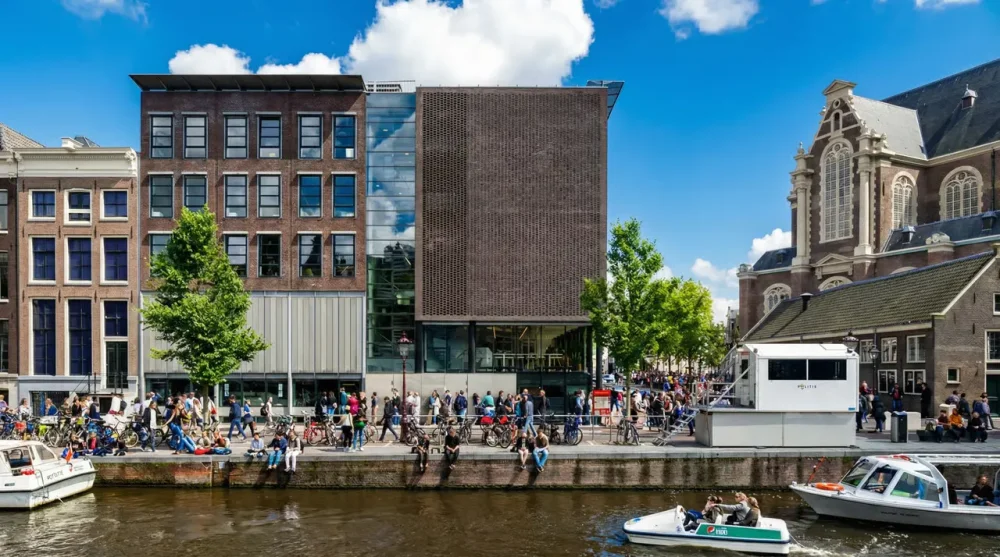
You are standing in front of a modern glass entrance on the Prinsengracht canal, but your mind is already traveling back to 1942. The Anne Frank House is not just a museum in Amsterdam; it is one of the most significant emotional pilgrimages you will make in Europe. While the story of the Frank family is well known, the logistics of actually visiting their hiding place can be surprisingly difficult if you are not prepared.
Many visitors arrive in Amsterdam only to find that tickets are completely sold out for their entire trip. This guide helps you navigate the strict booking system, manage the emotional weight of the visit, and understand exactly what to expect when you step behind the famous movable bookcase.
The Challenge of Getting Tickets
We need to be very clear about this right from the start. You cannot simply walk up to the entrance and buy a ticket. The ticket office at the door does not exist anymore. Every single ticket is sold online for a specific time slot, and the demand is incredibly high.
The official system releases tickets exactly 6 weeks in advance. New tickets become available every Tuesday at 10:00 AM CET. If you are planning a trip for 2026, you need to set a reminder on your phone for that Tuesday morning. If you try to book two weeks before your trip, you will likely find a calendar full of red "Sold Out" dates.
Standard Ticket vs Introductory Program
When you go to the booking page, you will see two main options. The standard museum visit costs 16 Euro and includes an audio guide. This allows you to walk through the warehouse, the offices, and the Secret Annex at your own pace.
There is a second option which we highly recommend. For an extra 7 Euro, you can book the "Museum visit + Introductory Program". This is a 30-minute talk given by a guide before you enter the museum. It provides essential context about the persecution of Jews in the Netherlands and the history of the Frank family. Since you cannot take photos inside the house, this introductory session is also the only place where you can ask questions and mentally prepare yourself for what you are about to see.
Arrival and Logistics
The entrance is located at Westermarkt 20, just around the corner from the actual historic house facing the canal. You will likely see two lines when you arrive. Staff members often divide visitors based on their ticket color or time slot, such as a "Blue Line" and a "Pink Line". It is important that you join the correct queue to avoid delaying your entry.
Your time slot is strict. If your ticket says 14:00, you should be at the door by 13:55. However, arriving 30 minutes early does not help, as they will simply ask you to wait aside until your specific slot opens.
The Bag Policy
The spaces inside the Secret Annex are incredibly tight. The staircases are steep and narrow, typical of 17th-century Dutch canal houses. Because of this, large bags and backpacks are strictly prohibited. The museum has a cloakroom, but it only accepts bags smaller than an A4 sheet of paper. If you are traveling with large luggage, you must leave it at your hotel or a locker at Amsterdam Central Station.
Inside the Secret Annex
Once you pass the modern turnstiles, the atmosphere changes. You pick up your audio guide which is available in many languages and start your tour in the warehouse on the ground floor. This is where Otto Frank's spice and gelling agent company operated.
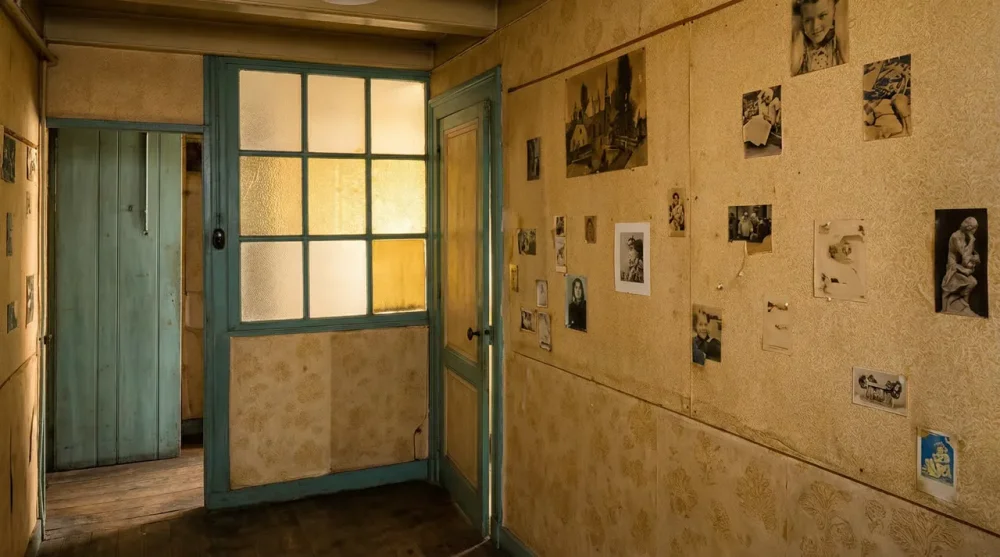
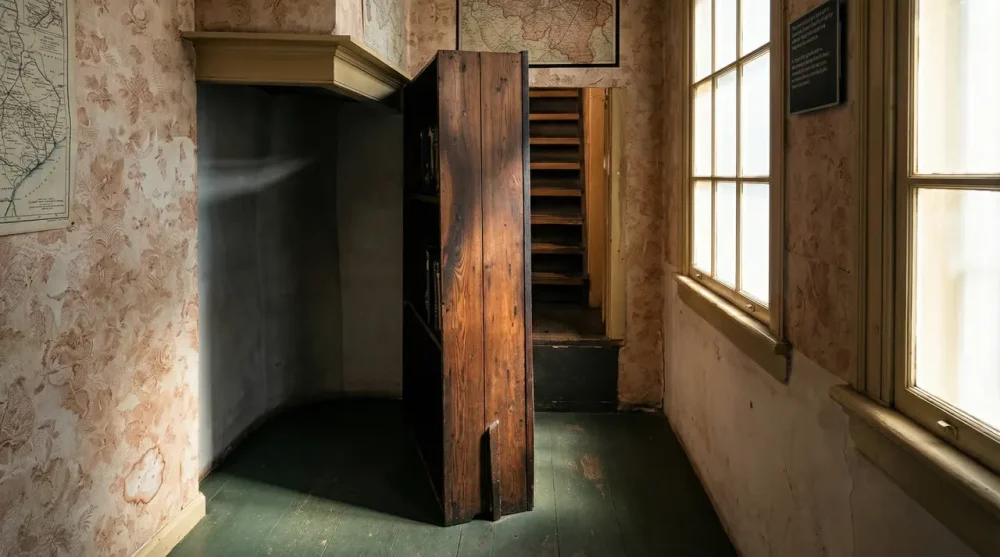
The defining moment of the visit happens when you reach the landing on the upper floor. You stand in front of the original movable bookcase that concealed the entrance to the hiding place. Stepping behind this bookcase feels surreal. From this point on, the audio guide falls silent in parts, and the museum relies on the power of the empty rooms to tell the story.
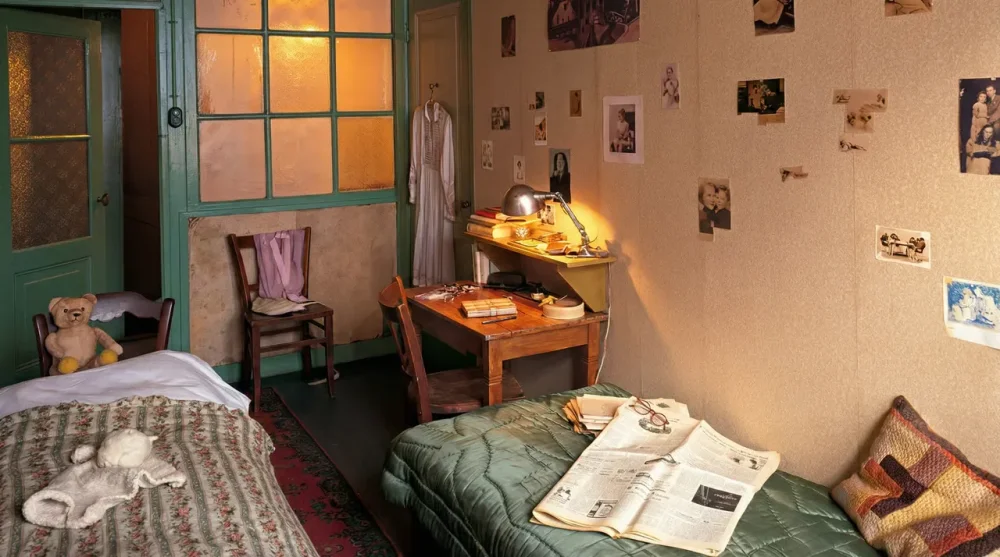
Otto Frank specifically requested that the Secret Annex remain unfurnished after the war. He wanted the emptiness to symbolize the void left by the millions of people who never returned from the concentration camps. You will see pencil marks on the wall where the Frank family marked the height of Anne and her sister Margot, and you will see the map Otto Frank used to track the Allied forces' advance. These small traces of life are far more powerful than any furniture could be.
Critical Rules for Visitors
There are two major rules you need to respect to preserve the dignity of this site.
No Photography or VideoYou are strictly forbidden from taking photos or videos inside the museum. This rule is enforced for two reasons. First, it protects the fragile original items like the diary. Second, and more importantly, it forces visitors to be present. Instead of viewing the Secret Annex through a phone screen, you are encouraged to connect directly with the space.
Silence: While it is not a library, the general atmosphere inside the Annex is one of hushed reverence. The audio guide creates a personal bubble for each visitor. Loud conversations break this immersion for others. You will find that most people naturally whisper once they step behind the bookcase.
Accessibility Warning
We must warn you about the physical layout. The route involves climbing very steep, narrow stairs that are almost like ladders. If you have mobility issues or difficulty with steep climbs, the old part of the museum - the Secret Annex - will be inaccessible. However, the modern part of the museum offers a VR experience that allows visitors with limited mobility to explore the hiding place virtually from the café area.
Decompressing After the Visit
Exiting the museum can feel disorienting. You step from the heavy, silent atmosphere of 1944 back into the bustling, modern Amsterdam of 2026.
Take a moment to visit the museum café. It offers a stunning view of the Prinsengracht and the Westerkerk, whose bells Anne wrote about in her diary. It is a good place to sit quietly and process what you have just experienced. Alternatively, you can walk a few steps to the Westermarkt square to see the small statue of Anne Frank.
Visiting this house is an intense experience. It is not just about seeing a famous location; it is about confronting the reality of intolerance. By booking your ticket well in advance and arriving prepared, you ensure that your focus remains on the powerful story of the girl who kept her hope alive in the shadows.