Arriving at the World Trade Center without a reserved museum ticket often means hours of waiting or being turned away, especially during peak tourist seasons. Booking your museum entry online ahead of time is the single best way to guarantee your access and avoid standing in massive lines.
- Memorial Plaza Entry: Free and open daily (8 AM - 8 PM).
- Museum Adult Ticket: $36
- Museum Hours: Wednesday to Monday, 9 AM - 7 PM. Closed on most Tuesdays.
- Recommended Time: 1 hour for the pools, 2 to 3 hours for the museum.
- Nearest Subway: WTC Cortlandt (1 train) or Fulton Street (2, 3, A, C, J, Z).
The Difference Between the Memorial Pools and the Museum
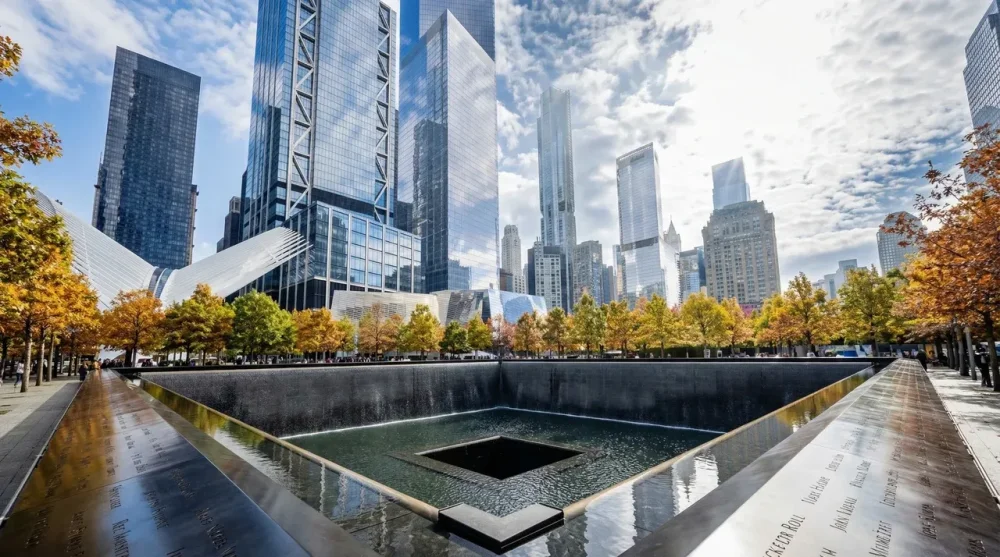
Many first-time visitors confuse the outdoor memorial with the indoor museum. The memorial consists of the two massive reflecting pools built into the exact footprints of the original Twin Towers, and you can walk around this outdoor plaza completely free of charge. The museum is a paid, underground institution holding thousands of physical artifacts, personal stories, and historical records.
Exploring the 9/11 Memorial Plaza (Free Access)
The North and South Pools (Reflecting Absence)
The atmosphere around the pools is incredibly distinct from the rest of Manhattan. The air is heavy but calm, the chaotic city noise completely muted by the massive waterfalls. These pools feature the largest man-made waterfalls in North America, with water cascading thirty feet down before disappearing into a dark central void. You might notice the South Pool occasionally drained for deep cleaning during the winter months, but the North Pool generally remains active year-round.
The Arrangement of Names (Meaningful Adjacencies)
The bronze parapets surrounding the pools hold the names of nearly three thousand victims. These names follow a highly specific placement system based on meaningful adjacencies rather than alphabetical order. Friends, colleagues, and flight crews rest together. Seeing a white rose placed delicately on a nameplate is a deeply poignant detail. This signifies that today is that individual's birthday, placed there early in the morning by memorial staff or loved ones.
Finding the Survivor Tree
Amidst the hundreds of swamp white oak trees on the plaza, one specific Callery pear tree stands out. Recovery workers pulled this severely damaged tree from the rubble weeks after the attacks, and the city parks department nursed it back to health before replanting it here. It serves as a living, breathing symbol of resilience and survival.
The 9/11 Memorial Glade
Tucked in the southwestern quadrant, the Glade honors a different group of heroes. This dedicated pathway, flanked by six large stone monoliths containing remnant steel, pays tribute to the rescue workers, first responders, and local residents. It specifically remembers those who became sick or passed away from exposure to toxins in the prolonged aftermath of the recovery efforts.
Inside the 9/11 Museum (Ticket Required)
Key Exhibitions and Artifacts
Descending into the museum takes you right down to the bedrock level of the original towers. The exhibits are intensely vivid and thoughtfully organized to walk you through the timeline of the day. You walk past mangled fire trucks, structural steel, and deeply personal belongings.
The museum holds three core permanent exhibitions. The September 11, 2001 historical exhibition reconstructs the day minute-by-minute using artifacts, audio recordings, and first-person testimony. The In Memoriam exhibition holds photos and personal remembrances of all 2,983 victims from both the 2001 attacks and the 1993 World Trade Center bombing. Foundation Hall is where you can stand in front of the original Slurry Wall, the retaining structure that held back the Hudson River during and after the collapse, and see the Last Column: the 36-foot steel beam that was the final piece of structural steel removed from Ground Zero.
Important: Photography is not permitted inside the historical exhibition. The outdoor memorial and most other areas of the museum allow personal photography, but this rule is strictly enforced in the main exhibit space.
Is the Museum Suitable for Young Children?
The outdoor pools offer a peaceful park-like setting suitable for all ages, but the indoor museum requires careful consideration. The exhibits contain authentic audio recordings from flights, raw footage of the day, and intense visual artifacts. It can easily overwhelm children under the age of ten. Preparing them beforehand and purposely skipping the more graphic historical exhibition rooms is a wise approach for families. Children aged 7 to 12 pay $24, while children 6 and under enter free (though a free ticket is still required at the entrance).
Tickets, Hours, and Practical Information
Securing your tickets for the year 2026 early is essential for a smooth trip. The outdoor plaza is accessible daily from morning until evening, but museum entry strictly requires a timed ticket.
Ticket pricing for 2026:
| Visitor Type | Price |
|---|---|
| Adult | $36 |
| College students, Seniors (65+), Youths 13-17 | $30 |
| Children 7-12 | $24 |
| Children 6 and under | Free (ticket required) |
Free admission is available for 9/11 family members, active and retired FDNY, NYPD, and Port Authority officers, active military with ID, and WTC Health Program members.
How to Get Free Admission on Mondays
The museum offers a limited number of free tickets every Monday evening from 5:30 to 7 PM. These tickets become available on their official website at exactly 07:00 every Monday morning. They run out within minutes, so having your browser open and refreshing the page right on time is the only way to grab them. New York City residents can also visit for free on the first Sunday of each month through a separate local program.
How to Get to the World Trade Center Site
Driving in Lower Manhattan is incredibly frustrating, and parking near the memorial is both scarce and prohibitively expensive. The subway is your best and most reliable option. Take the 1 train to WTC Cortlandt or the E train to World Trade Center. The Oculus, a stunning white transportation hub right next to the site, connects directly to the PATH trains as well, making the commute seamless from New Jersey.
Essential Rules and Etiquette for Visitors
The memorial is a sacred site of remembrance, not a typical tourist backdrop. Taking respectful photos is absolutely fine at the pools, but posing for glamour shots or filming social media dances is highly frowned upon by locals and staff. Keep your voice low, do not sit your children on the bronze nameplates, and remember that climbing the rails is strictly prohibited.
A few practical points before you enter: bags larger than 8" x 19" x 17" must be checked at the coat check. Once you exit the museum, re-entry is not permitted, so plan your timing carefully around the café and restrooms. Security screening with magnetometers applies to all visitors at the entrance.