Thinking a historical house visit in Estonia will just be looking at old objects behind glass cases is a mistake that causes many travelers to skip this place. Stepping inside the 19th Century Tartu Citizen's Home Museum plunges you into an authentic 1830s bourgeois household where the absence of electric lighting and a fully functional English stove create a highly immersive atmosphere.
The museum is located at Jaani 16 in Tartu Old Town, just steps from St. John's Church. During summer (April to September), it is open Wednesday to Saturday from 11:00 to 17:00 and Sunday from 11:00 to 15:00. In winter (October to March), the hours shift to Wednesday through Sunday, 10:00 to 15:00. Ticket sales end 30 minutes before closing.
| Ticket Type | Price |
|---|---|
| Regular | €7 |
| Discounted (students, seniors) | €5 |
| Family (2 adults + children) | €15 |
Admission is free with a valid Estonian Museum Card.
What to Expect Inside the Jaani 16 House
The street landscape surrounding this building remains almost identical to its layout from two centuries ago. The atmosphere inside feels remarkably still, the rooms wrapped in the soft glow of natural daylight.
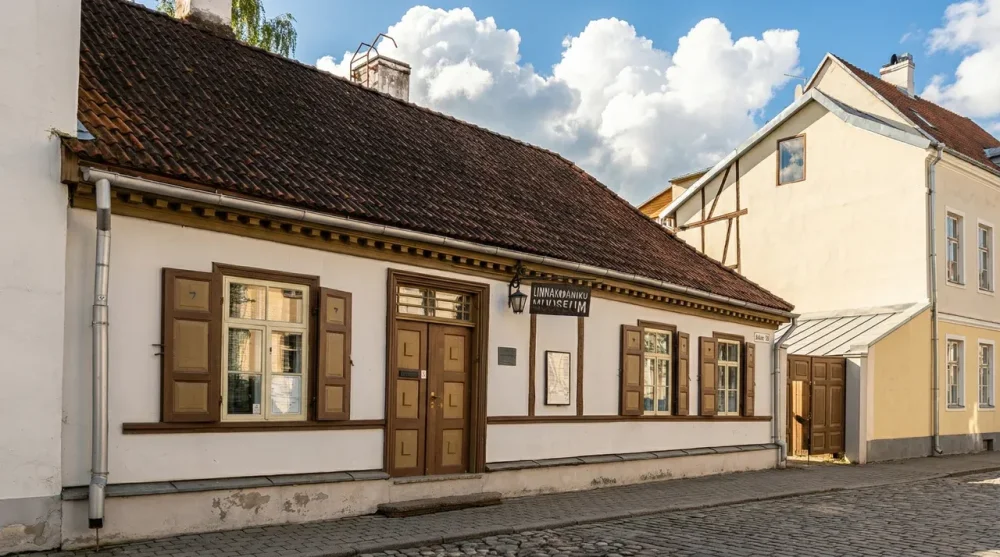
This small timber house miraculously survived the great fires of Tartu and a strict 1775 decree demanding the demolition of all wooden structures in the city center. The building itself dates back to the 1740s, making it one of the oldest surviving residential houses in the city.
Exploring the rooms without a guide leaves you guessing about the daily routines of the era. Request a guided tour from the staff to truly understand the historical weight of each household item. A guided tour in English costs €40 per group, on top of regular admission. A detailed English-language booklet is also available at the entrance for self-guided visits.
The 1830s Biedermeier Interior and Working English Stove
The interior layout closely mirrors the lifestyle of a wealthy middle-class family. A rare piano crafted by Tartu master Hasse sits in the living room, a centerpiece that often comes alive during special musical evenings. The dining area features an antique English clock that still ticks away the hours.
The kitchen space serves as a constant source of fascination for visitors. Copper, brass, and iron cookware line the wooden shelves, the massive English stove proudly taking up the center space. The staff actually fires up this stove during the colder months, filling the house with a comforting warmth.
The Authentic No-Electricity Experience
Modern lighting ruins the historical illusion in many restored buildings. The complete lack of electric lighting here forces you to experience the spatial dimensions exactly as a 19th-century citizen did. Winter visits feel especially dramatic. The shadows stretch long across the wooden floorboards, the Biedermeier furniture casting dark silhouettes against the pale walls.
Tickets, Accessibility and Practical Details
Securing your entry is straightforward, and the desk staff accepts card payments alongside cash.
Families with small children or visitors using wheelchairs can head directly to the courtyard side of the building. You will find an alternative entrance with much lower stairs for easier access. Bicycles and prams fit perfectly in this secure courtyard area.
The museum is small, with only a handful of rooms. Most visitors spend 20 to 40 minutes inside, so plan accordingly. If you are interested in a deeper dive into Estonian museum culture, consider combining your visit with the Estonian History Museum, which covers the broader national story across two locations in Tallinn.
How to Get to the Museum in Tartu Old Town
Walk directly behind the Town Hall along Ulikooli Street towards the main university building. The street turns into Jaani Street just past the cafe. Keep walking for about 100 meters until St. John's Church appears on your right. Look to your left just past the church. A single-story timber house with light plaster and traditional window shutters marks your destination. Buses 6, 21, and 22 stop nearby.
Park your vehicle in Zone A right in front of the museum if you only need a quick visit. This zone gives you 15 minutes of free parking, followed by a fee of €2 per hour. Use the Zone B parking area on Vabaduse Avenue for a more relaxed exploration. You get 90 minutes of free parking here, then it costs €1 per hour.
Best Time to Visit in 2026
Each season offers a distinct visual narrative. Summer visits allow you to explore the lush courtyard where a specially planted herb garden showcases the exact botanical varieties used in 19th-century kitchens. Winter visits offer a more raw, moody experience due to the natural lighting constraints and the active kitchen stove radiating heat through the rooms.
The museum draws fewer crowds than Tartu's bigger attractions like the Estonian National Museum or AHHAA Science Centre, so you rarely need to worry about long queues regardless of season.